
Performance parts for daily drivers are aftermarket components designed to improve a vehicle’s responsiveness, handling, and durability without sacrificing ride comfort or legal compliance. The industry term for this discipline is “street performance,” and it draws a clear line between track-only builds and cars that need to start reliably every morning. The best upgrades for daily drivers follow a matched system philosophy: fix the foundation first, then add power. Ozkonickustomz sources every part directly from vetted manufacturers, so fitment and quality are guaranteed before the part ever reaches your driveway.
What performance parts for daily drivers actually deliver
The most effective daily driver enhancements work by improving what you already use every day: braking, steering feel, and throttle response. They do not require a trailer to the track. High-quality tires are the single best mod per dollar for daily drivers, transforming steering feel and braking confidence more than most bolt-on parts. That means your first upgrade decision should almost never involve the engine.
Street performance also means staying legal. Emissions compliance, noise ordinances, and inspection requirements vary by state, and ignoring them turns a fun build into a liability. Every part you add should serve the car’s primary job: getting you to work, the grocery store, and back without drama.
What baseline checks should you do before any upgrade?
Poor baseline maintenance accelerates component failure when combined with modifications. A performance brake pad on a warped rotor will not save you. A cold air intake on a clogged fuel injector will not add power. Run through this checklist before spending a dollar on upgrades:
- Engine oil and filter: Fresh oil is non-negotiable. Dirty oil under higher stress fails faster.
- Air and fuel filters: Restricted airflow and fuel delivery cap any gains from intake or tune mods.
- Brake rotors and pads: Check for warping, cracking, and minimum thickness. Upgrades build on a healthy base.
- Tires: Inspect tread depth and sidewall condition. Uneven wear signals alignment or suspension issues.
- Suspension bushings and shocks: Worn bushings make handling upgrades feel vague and unpredictable.
- Wheel alignment: Out-of-spec alignment eats tires and fights every steering improvement you make.
Pro Tip: Pull a free alignment printout from your last tire rotation. If any angle is outside spec, correct it before touching suspension parts.
Addressing these items first protects your investment. A $400 tune on a car with a failing oxygen sensor will throw codes and underperform. Maintenance is not optional prep work. It is the upgrade.
Which parts have the highest impact on daily drivability and safety?
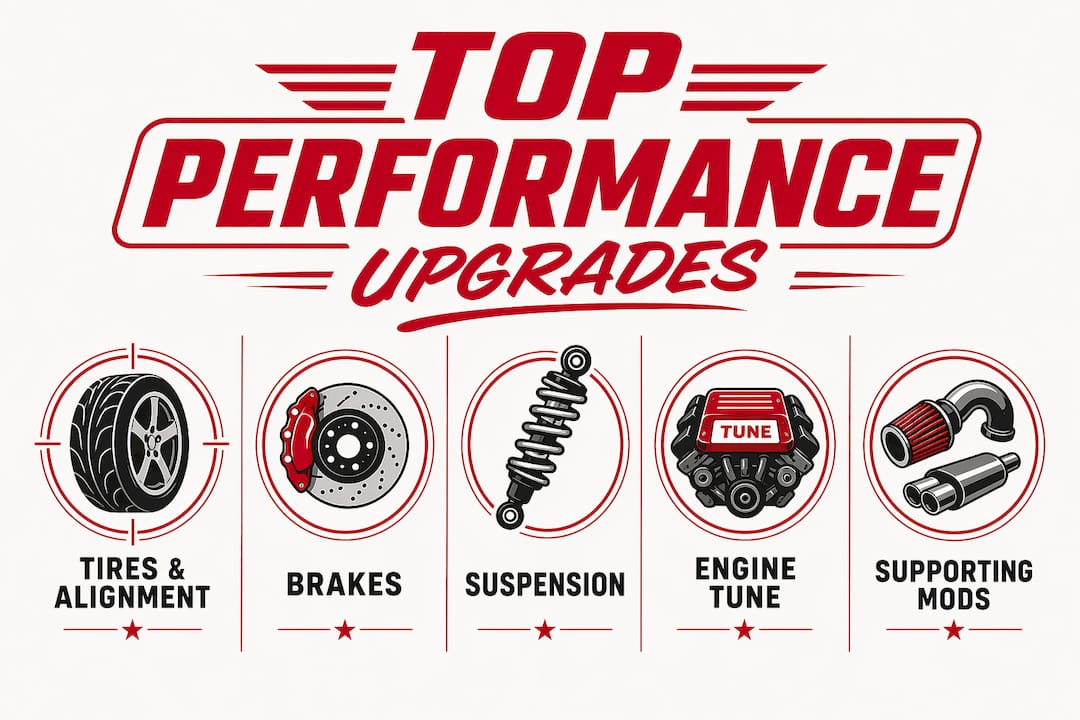
The highest-impact, best-value performance upgrades for cars fall into three categories: tires and alignment, brakes, and suspension. Work through them in that order.
1. Tires and wheel alignment
Performance-oriented tires deliver more grip, shorter stopping distances, and sharper turn-in than all-season tires at the same price point. Pair them with a four-wheel alignment and the improvement is immediate. You will feel it in the first corner.
2. Upgraded brake pads and fluid
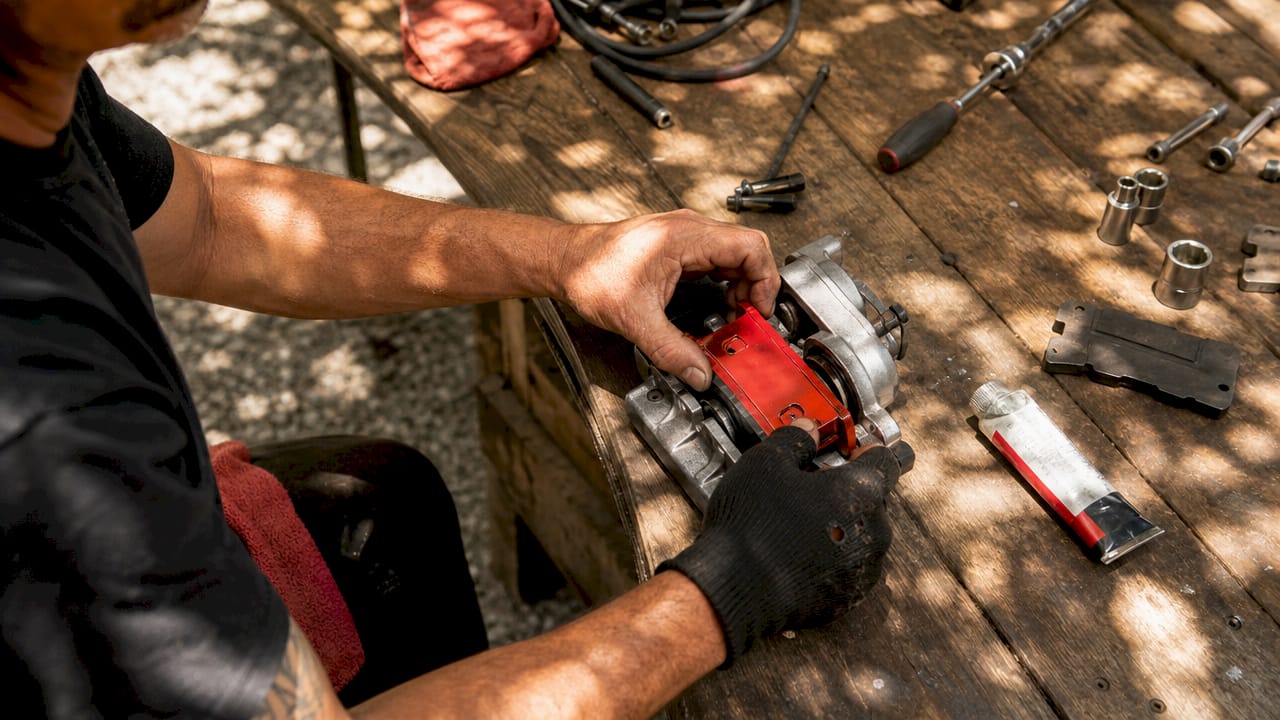
Brake pad and fluid upgrades improve pedal feel and reduce fade during hard street driving without requiring a full big brake kit. A street-performance pad compound and a higher-boiling-point fluid like Motul RBF 600 cost under $100 combined and make a measurable difference.
3. Suspension: mild lowering springs or comfort-biased coilovers
Suspension mods should preserve comfort and maintain proper alignment geometry for daily use. A 1.0–1.5 inch drop on quality springs lowers the center of gravity and sharpens handling without turning every pothole into a spine event. Comfort-biased coilovers give you adjustability without the harshness of track-spec dampers.
| Upgrade category | Daily driver benefit | Typical cost range |
|---|---|---|
| Performance tires | Grip, braking, steering feel | $400–$900 per set |
| Brake pads and fluid | Fade resistance, pedal feel | $60–$150 |
| Mild lowering springs | Handling, reduced body roll | $200–$500 |
| Sway bar upgrade | Cornering stability | $150–$400 |
Pro Tip: Buy tires one size wider than stock if your wheel wells allow it. The contact patch increase improves braking more than any pad upgrade alone.
If you want a structured starting point, the starter guide to performance parts at Ozkonickustomz walks through handling and power upgrades by vehicle type.
How and when should you add engine and software upgrades?
Engine and software upgrades belong after the chassis and braking foundation is solid. The most accessible powertrain upgrade for a daily driver is a Stage 1 ECU tune, which requires no hardware changes beyond supporting fuel quality.
Stage 1 ECU tunes improve driving between 30–70 mph, which is exactly where highway passing and merging happen. That mid-range torque improvement is practical, not just a dyno number. The tune also sharpens throttle response, which makes the car feel more alert in everyday traffic.
The tradeoff is real. Engine software modifications can unlock 20–40 horsepower on naturally aspirated engines but require higher octane fuel and more frequent maintenance intervals. Running 87 octane on a tune calibrated for 93 will cause knock retard and erase the gains. Shorter oil change intervals protect the engine under the added thermal load.
Key rules for daily driver ECU tuning:
- Use only a tune calibrated for your specific model, year, and transmission type.
- Match the fuel grade the tune requires, every fill-up.
- Shorten oil change intervals by 25–30% after tuning.
- Avoid aggressive Stage 2 or Stage 3 maps unless supporting hardware is already installed.
- Check with your state’s emissions testing schedule before tuning. Some OBD-II monitors reset after a flash.
For hybrid and modern turbocharged platforms, the tuning process differs significantly. The hybrid performance tuning guide at Ozkonickustomz covers the specific considerations for those powertrains.
What supporting mods complete a daily driver build?
Supporting modifications close the gap between a car that is fast in a straight line and one that is genuinely better to drive every day. These are the parts that make the whole system work together.
A matched system approach means upgrading power components without upgrading cooling or fueling leads to premature failure. The same logic applies to every category below.
- Differential covers: Thicker aluminum differential covers hold more fluid and dissipate heat better than the factory stamped steel units. Trucks and AWD cars benefit most.
- Traction bars: On rear-wheel-drive trucks and muscle cars, traction bars prevent axle wrap under hard acceleration. They protect the driveline and improve launch consistency.
- Power steering pumps: A worn pump makes performance steering upgrades feel vague. Replacing it before adding a quick-ratio rack or stiffer tie rods preserves the steering improvement.
- Upgraded shocks: Shocks matched to your spring rate keep the tire planted. Mismatched dampers and springs create a bouncy, unpredictable ride.
- Interior ergonomics: A flat-bottom steering wheel, short-throw shifter, and supportive seat bolsters reduce driver fatigue on long commutes. These are not glamorous, but they matter on a car you drive daily.
Quality mandrel-bent cat-back exhausts reduce backpressure and exhaust gas temperatures compared to factory piping. The mandrel-bending process maintains pipe diameter through bends, which keeps flow consistent. Material grade matters: 304 stainless resists corrosion far longer than aluminized steel in wet climates.
What mistakes do daily driver builders most often make?
The most common mistake is over-modding. Removing A/C, installing racing seats, or fitting overly stiff suspension harms daily usability to the point where owners revert the changes. A car that is miserable to drive on Tuesday morning is not a performance build. It is a failed experiment.
- Skipping emissions compliance. A deleted catalytic converter may add power but will fail state inspection and trigger federal fines. Keep emissions equipment intact on a daily driver.
- Ignoring warranty implications. Certain modifications void powertrain warranties. Read the Magnuson-Moss Warranty Act before tuning a car still under factory coverage. Ozkonickustomz has a detailed breakdown in their warranty implications guide.
- Stacking mods without a plan. Adding a turbo without upgrading fueling, intercooling, and cooling is how engines fail at 40,000 miles.
- Ignoring post-upgrade maintenance. New brake pads need a proper bedding procedure. Lowering springs need a realignment. Skipping these steps wastes the upgrade.
“The biggest mistake I see is treating the daily driver like a track car. The goal is a car that is faster, safer, and more enjoyable every single day. Not a car that needs a warm-up lap before it works properly.”
Pro Tip: After any suspension or brake upgrade, drive 500 miles before pushing the car hard. Components need time to seat and settle before they perform at their best.
Key Takeaways
The most effective daily driver build starts with maintenance and foundational upgrades, then adds power only after the chassis, brakes, and tires are sorted.
| Point | Details |
|---|---|
| Maintenance comes first | Fix oil, filters, brakes, and alignment before adding any performance part. |
| Tires deliver the best return | Performance tires improve grip, braking, and steering feel more than most bolt-ons per dollar spent. |
| Match the system | Upgrading power without supporting cooling and fueling causes premature component failure. |
| Stage 1 tunes need fuel discipline | ECU tunes require the correct octane fuel and shorter oil change intervals every time. |
| Avoid over-modding | Removing comfort features for performance gains on a daily driver usually leads to reverting the changes. |
What I’ve learned building daily drivers that actually stay daily drivers
The advice I give every builder who comes to me is this: the car has to work on a Tuesday. Not just on a Saturday at the autocross. That single constraint changes every decision you make.
I have seen builds where the owner spent $3,000 on a turbo kit and then spent another $1,500 fixing the cooling system that could not handle the added heat. A matched system approach would have cost less and lasted longer. The sequence matters more than the parts list.
The community aspect is underrated. Talking to other owners of your specific platform before buying saves money and prevents mistakes. Forum threads and owner groups surface real-world failure points that no product listing will tell you. I rely on that feedback when sourcing parts for customers at Ozkonickustomz, because a part that fits on paper but fails in practice is not a part worth selling.
Patience is the actual skill. The builders whose cars I respect most did not rush. They spent six months on tires, brakes, and alignment. Then they tuned. Then they addressed supporting systems. Their cars are faster, more reliable, and more enjoyable than the builds that tried to do everything at once. That is the path worth taking.
— Ozkonic Kustomz
Quality performance parts, sourced right
Ozkonickustomz carries a curated catalog of aftermarket parts built for daily drivers who want real gains without reliability trade-offs. Every part is sourced directly from vetted manufacturers, which means guaranteed fitment and no counterfeit risk.
Whether you are starting with a wiring harness upgrade to support new electrical accessories or working through a full suspension build, Ozkonickustomz has the parts and the expertise to match. The team provides direct support on compatibility questions, and the return policy is straightforward if something does not fit. For truck owners specifically, the Chevy 4x4 suspension kit is a proven starting point for improving handling and load capacity without sacrificing daily ride quality.
FAQ
What are the best first performance mods for a daily driver?
Tires, wheel alignment, and upgraded brake pads are the highest-impact first upgrades for daily drivability and safety. They improve the car’s behavior immediately and support every subsequent modification.
Will a Stage 1 ECU tune hurt my daily driver’s reliability?
A Stage 1 tune is safe when the car is in good mechanical health, the correct fuel octane is used every fill-up, and oil change intervals are shortened. Skipping any of these steps increases wear and reduces the tune’s benefit.
How do I know if I am over-modding my daily driver?
If a modification makes the car harder to live with on a normal commute, such as removing A/C, installing race seats, or fitting track-spec suspension, it has crossed into over-modding territory. Daily driver builds should improve the car, not make it a chore.
Do performance parts void my factory warranty?
Some modifications can affect warranty coverage depending on the part and the claim. The Magnuson-Moss Warranty Act protects consumers in many cases, but powertrain-adjacent modifications carry more risk. Review the specifics before tuning or modifying emissions equipment.
What is the matched system approach to performance upgrades?
The matched system approach means upgrading all supporting systems alongside any power increase. Adding horsepower without upgrading cooling, fueling, or braking creates weak points that fail under the added stress.
Recommended
- Performance Parts Online Shopping Guide for Enthusiasts – Ozkonic Kustomz LLC
- Your Starter Guide to Performance Parts: Boosting Horsepower & Handlin – Ozkonic Kustomz LLC
- Performance Car Parts Gift Buying Guide 2026 – Ozkonic Kustomz LLC
- How to Install Performance Parts at Home in 2026 – Ozkonic Kustomz LLC