
Performance car parts gift buying is the practice of selecting vehicle-specific upgrades, tools, or accessories for an automotive enthusiast, where fitment accuracy determines whether the gift gets installed or returned. The biggest variable is compatibility. A cold-air intake that fits a 2018 Ford Mustang GT with the 5.0L V8 will not fit the EcoBoost trim. Getting this right requires the recipient’s VIN, a clear understanding of their vehicle’s build, and a realistic read on their skill level. Done correctly, a well-chosen performance gift lands harder than almost anything else you can give a car person.
How to verify exact fitment for performance car parts gifts
Fitment verification is the single most important step in buying performance car parts as gifts. Skip it and you are gambling on a return.
What the VIN tells you
The VIN is a 17-character code that encodes the manufacturer, model year, engine type, assembly plant, and unique serial number. That level of detail eliminates the guesswork that causes wrong-part purchases. Two cars with the same year, make, and model can have completely different engine bays, brake setups, or suspension geometry depending on trim and factory options. The VIN cuts through all of that.
You can run a free VIN lookup through the National Highway Traffic Safety Administration (NHTSA) database or through most major parts retailer sites. The result gives you the exact vehicle configuration, not just a general match. That specificity is what separates a gift that gets bolted on immediately from one that sits in a box.
Why year, make, and model are not enough
Vehicle fitment depends on trim level, engine displacement, transmission type, and factory performance packages, not just the basic year, make, and model. A Chevrolet Silverado 1500 with the Z71 off-road package has different suspension geometry than the base trim. Sport brake packages on performance sedans use larger rotors that require specific calipers. If you buy brake rotors based only on “2020 Chevy Silverado,” you may get the wrong size entirely.
Fitment notes are the real compatibility source for performance parts. These are the fine-print exclusions and requirements listed on product pages. They tell you things like “does not fit vehicles with factory sport suspension” or “requires removal of OEM skid plate.” Reading them before purchasing is non-negotiable.
Pro Tip: Cross-check the OEM part number from the recipient’s existing part against the replacement or upgrade you are buying. A two-step fitment check using VIN lookup followed by OEM number verification is the industry standard for avoiding returns.
“Fitment notes are the ‘real compatibility’ source for performance parts, not just the year/make/model filters, making them critical for knowledgeable gift buyers.” — Vehicle Fitment Parts Guide for Smart Buyers
What are the best car parts for gifts by skill level?
The right gift depends on where the recipient sits on the automotive knowledge spectrum. A first-time wrench-turner needs something different from a seasoned builder with a lift in their garage.
Beginner-friendly gifts under $50
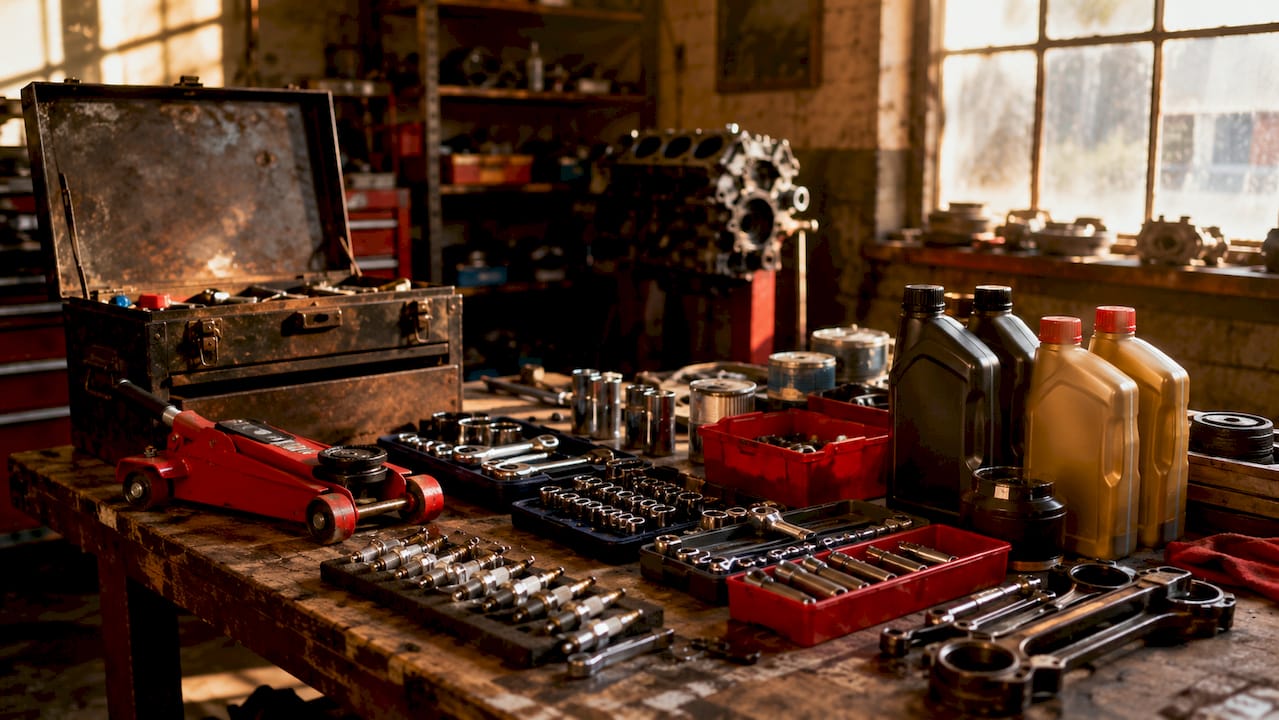
Practical, low-risk gifts work best for enthusiasts who are just getting started. Budget-friendly options like magnetic bolt trays, microfiber detailing towels, and quality work gloves are genuinely used and appreciated. These items do not require fitment verification, which makes them safe choices when you do not have the recipient’s VIN.
Other strong beginner picks include:
- Torque wrench sets (a 3/8-inch drive covers most basic jobs)
- Socket organizer rails for keeping a growing tool collection sorted
- Tire pressure gauges with digital readouts
- Detailing kits with clay bars and applicator pads
None of these require vehicle-specific compatibility. They are universally useful across every car, truck, or SUV.
Mid-range diagnostic tools: $50–$200
OBD-II scanners are among the most practical performance car accessories you can give. The Foxwell NT301 sits at around $50 and reads engine fault codes, which covers the most common use case for casual enthusiasts. The BlueDriver Bluetooth scanner connects to a smartphone and adds live data streaming, making it a step up for someone who wants more detail without a steep learning curve.
| Tool | Price Range | Best For |
|---|---|---|
| Foxwell NT301 | ~$50 | Basic code reading, beginners |
| BlueDriver Bluetooth | ~$100 | Live data, smartphone integration |
| Autel MaxiCOM MK808Z | $400–$500 | Full-system diagnostics, advanced DIYers |
The Autel MaxiCOM MK808Z delivers dealership-level diagnostics and is the right choice for a serious DIYer or a professional who works on multiple vehicles. Matching the tool to the recipient’s actual use case is what determines whether the gift gets used daily or collects dust.
Pro Tip: Diagnostic tool choice should align with the recipient’s goals. Basic code readers suit casual enthusiasts; full-system or bi-directional tools fit serious DIYers or pros.
Premium performance upgrades: $200 and up
For the enthusiast who already owns every tool, vehicle-specific performance upgrades make a lasting impression. Strong options include:
- Slotted or drilled brake rotors paired with high-performance brake pads
- Coilover suspension kits for improved handling
- Short-throw shifters for manual transmission vehicles
- Custom gauge clusters or instrument systems for classic builds
Products like the Dakota Digital VHX instrument system for 1973–87 Chevy pickups or the RTX gauge cluster for a 1969 Camaro are the kind of gifts that define a build. These require exact vehicle verification, so the VIN process described above is mandatory before purchasing.
How do you buy performance car parts as gifts without returns?
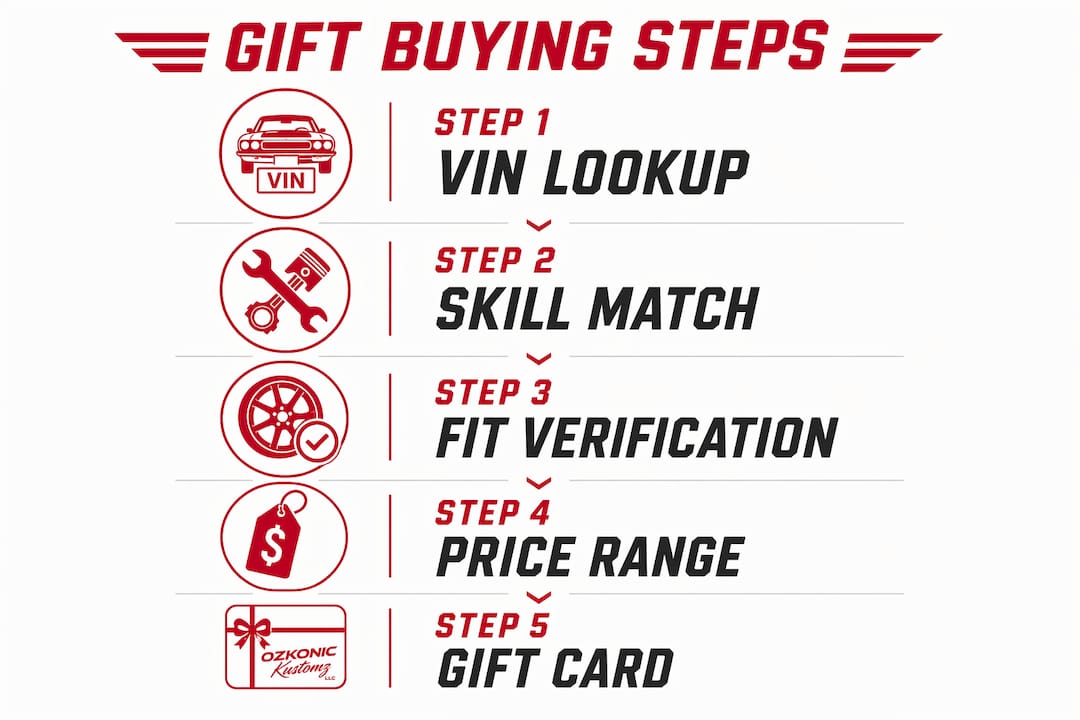
A structured buying workflow eliminates most of the risk in gifting performance upgrades. Follow these steps in order.
- Get the recipient’s VIN. Ask a mutual friend, check the windshield of their parked car, or look at their registration documents if you have access. The VIN is on the driver’s side dashboard, visible through the windshield.
- Run a VIN lookup. Use the NHTSA database or a parts retailer’s VIN decoder to pull the exact vehicle configuration, including engine, trim, and factory packages.
- Research using OEM part numbers. Find the OEM number for the part you want to upgrade or replace. Cross-reference it against the aftermarket or performance part you are buying to confirm compatibility.
- Read the fitment notes on the product page. Look for exclusions related to trim level, performance packages, or existing modifications.
- Check the seller’s return policy. Confirm the return window and whether opened parts are eligible. Ozkonickustomz lists fitment details on product pages, which simplifies this step.
- Confirm shipping timelines. Performance parts sometimes ship from specialty warehouses. Order early if the gift is for a specific date.
The biggest mistake in gifting performance parts is relying solely on year, make, and model without pulling the full vehicle data. That shortcut increases incompatibility risk significantly. If you cannot get the VIN, a gift card to a trusted performance parts retailer is a smarter move than guessing.
Pro Tip: When uncertain about fitment, include a handwritten note explaining the intended upgrade alongside a gift card. The recipient gets to confirm compatibility themselves and still feels the thought behind the gift.
Gifting performance parts to owners of modified vehicles
Modified vehicles require extra caution. A car that has been lowered, swapped to a different engine, or fitted with aftermarket suspension no longer matches its original VIN data for many performance parts. Standard fitment lookups will give you the stock configuration, not the actual current setup.
The most reliable approach is direct communication. Talk to the recipient’s mechanic or a trusted friend who knows the build. Ask specifically about what modifications have already been done and what the owner has mentioned wanting next. That conversation will tell you more than any parts catalog.
A few specific traps to watch for with modified vehicles:
- Brake upgrades: A car with a big brake kit already installed needs calipers and rotors sized to the aftermarket setup, not the OEM spec.
- Suspension parts: Lowered vehicles often use non-standard spring rates. A replacement part based on stock specs will not behave correctly.
- Engine accessories: Swapped engines change everything from oil dipstick fitment to intake routing. The VIN engine code is irrelevant after a swap.
For heavily modified builds, specialty accessories often work better as gifts than direct performance upgrades. Items like a power trunk hatch kit or a universal tilt hood kit are popular among custom builders and carry fewer fitment complications than engine or suspension parts. Aftermarket parts can affect resale value depending on quality and modification type, so choosing well-known, quality parts matters beyond just fitment.
Pro Tip: For a heavily modified vehicle, a gift card to a specialty performance retailer is not a cop-out. It is the most respectful choice. It tells the recipient you understand their build is unique.
Key takeaways
Successful performance car parts gift buying requires verified fitment through VIN lookup, matched to the recipient’s skill level and vehicle setup, to guarantee the gift gets used rather than returned.
| Point | Details |
|---|---|
| VIN is mandatory | A 17-character VIN lookup pulls exact vehicle specs and prevents wrong-part purchases. |
| Fitment notes override year/make/model | Read product fitment notes for trim, engine, and package exclusions before buying. |
| Match gift to skill level | Beginners benefit from tools and accessories; advanced enthusiasts want vehicle-specific upgrades. |
| Modified vehicles need extra research | Stock VIN data does not reflect aftermarket changes; consult the owner’s mechanic when possible. |
| Gift cards beat bad guesses | When fitment is uncertain, a gift card to a trusted performance retailer is the better call. |
Why fitment is the gift
I have seen more performance parts returned than I care to count, and almost every return traces back to the same mistake: someone bought a part based on the car’s year and model without checking the trim or engine variant. A set of slotted rotors for a “2019 Mustang” sounds specific. It is not. The base V6, the EcoBoost, and the GT all use different brake setups. That detail costs people time, money, and the goodwill behind the original gesture.
The enthusiasts I know do not want a generic gift. They want something that fits their exact build and reflects that you paid attention. A $60 OBD-II scanner chosen because you know they have been chasing a check engine light for months hits differently than a $200 part that does not fit. Specificity is the real gift.
My honest advice: if you cannot get the VIN, do not guess on a vehicle-specific part. Go with a quality tool, a detailing kit, or a gift card. Save the performance upgrade for when you have the exact vehicle data in hand. The recipient will respect you more for it.
— Nicholas
Find the right performance parts at Ozkonickustomz
Ozkonickustomz carries a wide selection of performance car parts, custom accessories, and hardware kits suited for gift buyers who want quality with confidence.
Every product page at Ozkonickustomz includes detailed fitment information, so you can verify compatibility before you buy. Whether you are looking for hardware like the AUTO-LOC solenoid kit for a custom build or a specialty exterior accessory, the catalog covers both classic and modern vehicles. Use the fitment details on each page alongside the recipient’s VIN to shop with confidence. Ozkonickustomz makes it straightforward to find a gift that actually gets installed.
FAQ
What is the best way to find a car’s VIN for gift buying?
The VIN is located on the driver’s side dashboard, visible through the windshield, and also appears on the vehicle registration and insurance card. Running it through the NHTSA database or a parts retailer’s decoder gives you the exact vehicle configuration needed for fitment verification.
Do aftermarket performance parts affect a car’s resale value?
Aftermarket parts can affect resale value positively or negatively depending on the modification type and part quality. High-quality, well-known brands tend to hold or add value, while lower-quality modifications often reduce it.
What performance car parts make good gifts for beginners?
Magnetic bolt trays, microfiber detailing towels, torque wrench sets, and digital tire pressure gauges are practical gifts that require no fitment verification. These suit enthusiasts at any skill level and get used regularly.
How do i choose an obd-ii scanner as a gift?
Match the scanner to the recipient’s experience level. The Foxwell NT301 at around $50 covers basic code reading for casual users, while the Autel MaxiCOM MK808Z at $400–$500 suits serious DIYers who need full-system diagnostics and bi-directional controls.
Is a gift card a good option for performance car parts?
A gift card is the right call when you cannot verify the recipient’s exact vehicle specs or modification setup. It respects the complexity of their build and lets them confirm fitment themselves before purchasing.