
A brake upgrade is defined as any modification that improves braking performance beyond what the factory system was designed to deliver. Stock brake systems are engineered for average driving conditions, not for vehicles with added horsepower, heavy towing loads, or repeated hard stops. When your driving demands exceed those factory limits, upgrading your brakes is not optional. It is a direct safety decision. Industry guidelines recommend brake upgrades when a vehicle gains more than 50 horsepower or when the driver regularly tows heavy loads, because the original system simply cannot manage the extra heat and force involved.
Why upgrade car brakes: the core reasons
The single most important reason to upgrade car brakes is heat management. Every time you press the brake pedal, friction converts kinetic energy into heat. Stock systems handle moderate heat well, but they reach their limits quickly under hard use.
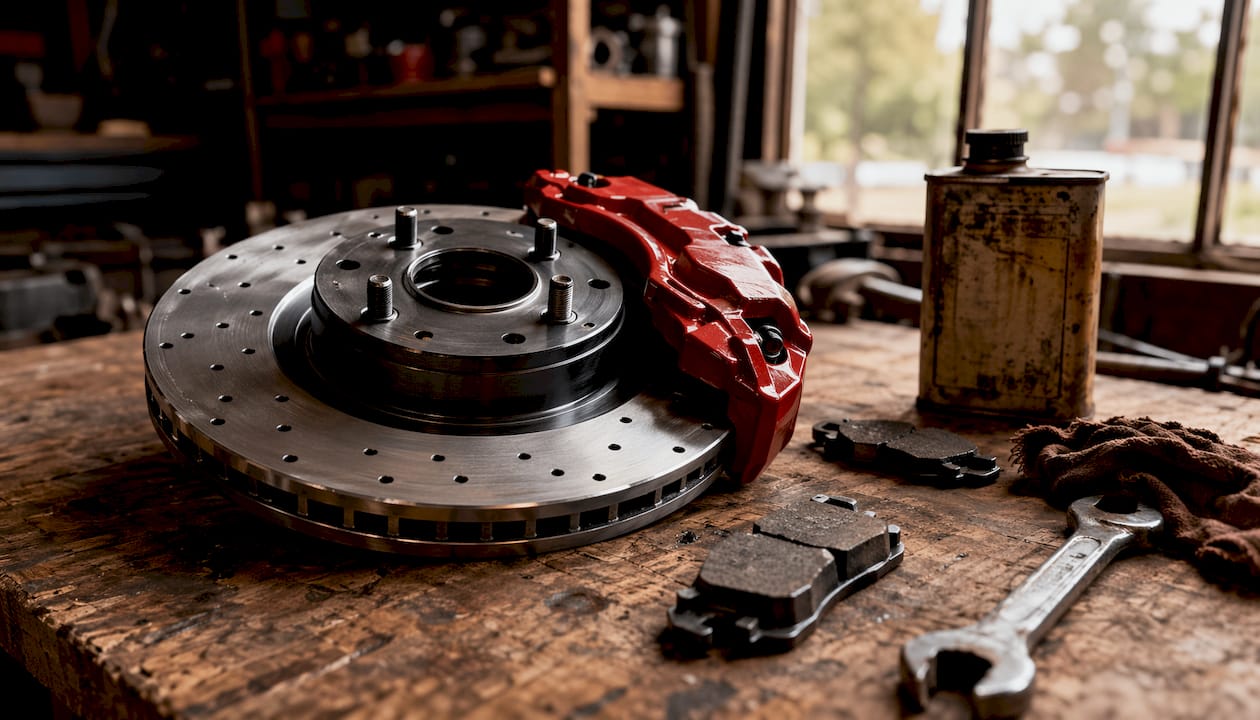
Brake fade is the most dangerous result of overheated brakes. It happens when pads and fluid get too hot to generate consistent friction, causing the pedal to feel soft and stopping distances to grow. Drivers who frequently descend mountain roads or make repeated stops in traffic are most vulnerable to this.
Upgrading brake components is specifically recommended when a vehicle’s demands exceed its factory design limits, such as after adding over 50 horsepower or during frequent heavy towing. That threshold matters because more power means more speed, and more speed means dramatically more energy the brakes must absorb.
Here are the most common reasons car owners choose to upgrade their brake systems:
- Increased horsepower or engine modifications that push the vehicle beyond stock braking capacity
- Towing or hauling heavy loads that stress factory pads and rotors beyond their design limits
- Repeated hard stops on mountain roads or during spirited driving that cause brake fade
- Soft or spongy pedal feel that signals hydraulic issues or degraded brake fluid
- Vibrations or pulsations during braking that indicate rotor or pad problems
- Worn pads below 3 mm of friction material, which risk rotor and caliper damage if ignored
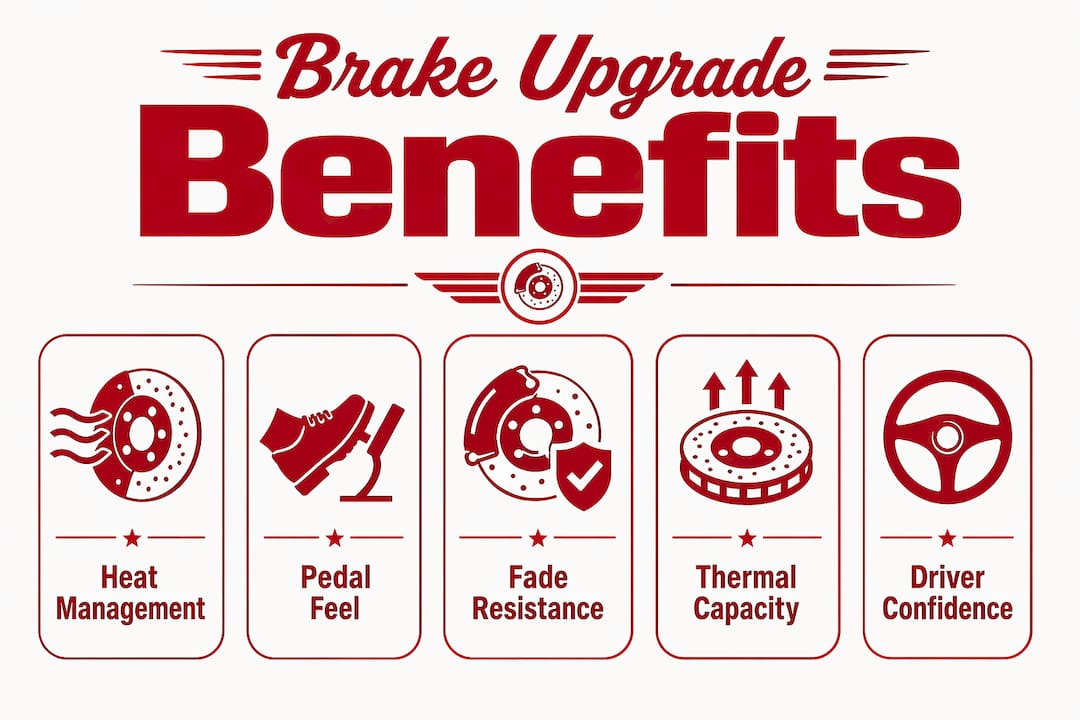
Brake upgrades also improve pedal firmness and driver confidence. A firm, predictable pedal gives you better control in emergency situations. That improvement alone is worth the investment for most drivers.
How do different brake components affect upgrade benefits?
Every component in the brake system plays a specific role. Upgrading only one part without considering the others limits your results and can create imbalances.
Brake pads
Brake pads impact brake bite, noise, dust, and fade resistance more than rotor or caliper changes alone. The friction material in the pad determines how the brake feels at different temperatures. High-performance pads use compounds that stay effective at higher heat levels, which directly reduces fade during repeated stops.
Rotors
Rotors absorb and dissipate heat. Larger rotors with slotted or drilled surfaces increase cooling surface area and help gases escape from between the pad and rotor face. This improves consistency during back-to-back stops. Rotors also affect smoothness. Uneven rotor surfaces cause vibrations that drivers often mistake for warped rotors, but brake glazing from overheated pads can create uneven deposits that produce the same symptom.
Brake fluid
Upgraded brake fluid with a higher boiling point reduces fade and improves pedal feel during repeated heavy braking. Standard DOT 3 fluid boils at relatively low temperatures. Switching to DOT 4 or DOT 5.1 raises that threshold significantly. This is one of the cheapest and most overlooked upgrades available.
Stainless steel brake lines
Rubber brake lines expand slightly under pressure, which softens pedal feel. Stainless steel braided lines resist that expansion, delivering a firmer, more direct pedal response. This upgrade is especially noticeable on older vehicles where rubber lines have aged and softened.
Big brake kits
Big brake kits increase thermal capacity and clamping force, which benefits repeated hard stops and track or heavy towing use. Larger calipers grip bigger rotors, spreading heat across more mass. The result is consistent braking performance over many hard stops, not just one.
Pro Tip: Upgrade your brake system as a complete package. Pads, rotors, fluid, and lines work together. Replacing only one component limits your gains and can create uneven performance across the system.
| Component | Primary benefit | Best for |
|---|---|---|
| High-performance pads | Better bite and fade resistance | Daily drivers, spirited driving |
| Upgraded rotors | Heat dissipation and smoothness | Towing, mountain driving |
| Stainless steel lines | Firmer pedal feel | Any vehicle with aging rubber lines |
| High-temp brake fluid | Reduced fade, improved pedal | Track use, mountain driving |
| Big brake kits | Maximum thermal capacity | Track builds, heavy towing |
What are the benefits and trade-offs of common brake upgrade options?
Not every driver needs a big brake kit. The right upgrade depends on how you actually use your vehicle.
Upgrading pads and fluid first often solves brake fade before more costly upgrades like big brake kits become necessary. This is the most cost-effective starting point for the majority of car owners. A set of high-performance pads and a fresh bottle of DOT 4 fluid can transform pedal feel and fade resistance for a fraction of the cost of a full kit.
Here is a practical breakdown of upgrade paths and their trade-offs:
- Pads only: Low cost, meaningful improvement in bite and fade resistance. Trade-off is that aggressive compounds can increase brake dust and noise, which is undesirable for daily driving. Check the performance parts guide for compound recommendations suited to street use.
- Pads plus rotors: Better heat management and reduced vibration. Adds cost but delivers a noticeable improvement in braking consistency. Slotted rotors help clear gas and debris from the pad surface.
- Fluid upgrade: The cheapest and most overlooked upgrade. Fresh high-temperature fluid eliminates a common cause of fade, especially during mountain driving or track days.
- Stainless steel lines: Moderate cost, direct improvement in pedal firmness. Particularly valuable on vehicles over five years old.
- Big brake kits: Maximum thermal capacity and clamping force. Best reserved for high-performance builds, frequent track use, or heavy towing. They add complexity, cost, and potential wheel clearance issues. Not necessary for most daily drivers.
Brake upgrades improve consistency and fade resistance rather than only one-time stopping distance, which is ultimately limited by tire grip. That distinction matters. Better brakes will not shorten your stopping distance on a single panic stop if your tires cannot grip the road. What they will do is keep your braking consistent across the fifth, tenth, and twentieth hard stop in a row.
Aggressive brake pads may increase dust and noise, which can be undesirable for daily driving. If your car sits in a driveway and you care about clean wheels, a street-compound pad is a smarter choice than a track compound.
How to know if your car needs brake upgrades instead of just replacements?
Routine maintenance and upgrades are not the same thing. Knowing which one your vehicle needs saves you money and keeps you safe.
- Brake fade during repeated stops. If your pedal gets softer or stopping distances grow after several hard stops in a row, your system is overheating. This is a clear signal that an upgrade, not just a replacement, is needed.
- Soft or spongy pedal. A soft or spongy pedal signals urgent hydraulic issues, often caused by boiling fluid or air in the lines. This requires immediate service.
- Vibrations or pulsations during braking. These often point to uneven rotor surfaces or glazed pads. Brake glazing from overheated pads creates deposits that simulate rotor warping and reduce effectiveness.
- Uneven pad wear or vehicle pull. If your car pulls to one side while braking, a caliper may be sticking or pads are wearing unevenly. A professional inspection is needed before any upgrade decision.
- Pads at or below 3 mm. Brake pads should be replaced when friction material measures 3 mm or less. At that point, you also have an opportunity to evaluate whether an upgrade makes sense given your driving needs.
A professional inspection should include caliper function, fluid condition, and rotor thickness. Fluid absorbs moisture over time, which lowers its boiling point and increases fade risk. Many drivers replace pads and rotors while ignoring fluid that is two years old and saturated with moisture.
Pro Tip: Have your brake fluid tested for moisture content at every brake service. A simple test strip costs almost nothing and tells you whether a fluid flush will solve your fade problem before you spend money on bigger parts.
Practical advice on choosing the right brake upgrades for different driving needs
The right upgrade path depends entirely on how you drive. A commuter and a weekend track driver have completely different needs from the same brake system.
For most daily drivers, starting with high-performance pads and fresh high-temperature fluid delivers the best return on investment. These two changes address the most common causes of brake fade and poor pedal feel without adding noise, dust, or complexity. You can also explore bolt-on upgrade options that fit your vehicle without major modifications.
- Daily drivers: Upgrade pads and fluid first. Choose a street-compound pad that balances bite with low dust and noise. Add stainless lines if the pedal still feels soft after a fluid flush.
- Towing and hauling: Add upgraded rotors with more thermal mass alongside high-performance pads. The extra heat generated by heavy loads demands more from the rotor, not just the pad.
- Spirited driving or mountain roads: Pads, fluid, and stainless lines cover most needs. Slotted rotors add an extra margin of safety for repeated hard stops on descents.
- Track use or high-performance builds: A big brake kit is justified here. The thermal capacity of a larger rotor and multi-piston caliper handles the sustained heat of lap after lap in a way stock components cannot.
Always check wheel clearance before installing a big brake kit. Larger calipers and rotors may not clear your existing wheels, requiring new wheels as part of the upgrade. Proper bedding in of new pads and rotors is also critical. Skipping the bedding process causes early noise, vibration, and reduced braking performance after installation.
Key Takeaways
Upgrading car brakes is a safety decision first, and the right upgrade path depends on your driving demands, not on appearance or marketing.
| Point | Details |
|---|---|
| Upgrade when demands exceed factory limits | Add horsepower gains over 50 hp or frequent towing as the trigger for a brake upgrade. |
| Start with pads and fluid | High-performance pads and fresh high-temp fluid solve most fade issues at the lowest cost. |
| Upgrade the full system | Pads, rotors, fluid, and lines work together; piecemeal upgrades deliver limited results. |
| Big brake kits are for sustained heat | BBKs improve repeated stop consistency, not single-stop distance, which is limited by tire grip. |
| Know the difference between replacement and upgrade | Worn pads below 3 mm need replacement; fade, soft pedal, or added power signals an upgrade. |
What I’ve learned about brake upgrades after years in the aftermarket parts business
The biggest misconception I see is that a big brake kit makes your car stop shorter. It does not work that way. Your stopping distance on a single panic stop is determined by your tires, not your brakes. What a big brake kit actually does is keep your braking consistent across repeated hard stops by managing heat better. That is the real benefit, and it is a meaningful one if you tow, drive mountain roads, or spend time on a track.
The second mistake I see constantly is piecemeal upgrading. A driver installs aggressive track pads on stock rotors with two-year-old fluid and wonders why the pedal still feels soft. The system works as a unit. Fluid, pads, rotors, and lines all contribute to the final result. Skipping any one of them limits what the others can do.
My honest recommendation for most car owners is to start with pads and a fluid flush. That combination is cheap, takes an afternoon, and solves the majority of fade complaints I hear. Save the big brake kit for when your driving genuinely demands it, not because it looks good behind a set of open-spoke wheels.
— Ozkonic Kustomz
Brake upgrades and performance parts at Ozkonickustomz
Ozkonickustomz sources aftermarket automotive parts directly from vetted manufacturers, which means every component meets strict standards for quality and fitment before it ships. If you are working through a brake upgrade or planning a broader performance build, the team at Ozkonickustomz can help you select parts that match your vehicle and your driving style.
Whether you need components for a daily driver or a high-performance build, Ozkonickustomz carries aftermarket performance parts with guaranteed compatibility and expert support. Fast shipping and straightforward returns make it easy to get the right parts without the usual frustration of online parts shopping. Browse the full catalog and get the support you need to make your upgrade count.
FAQ
Why upgrade car brakes instead of just replacing worn parts?
Routine replacement restores your brakes to factory condition. An upgrade improves on that baseline by adding heat resistance, better pedal feel, and greater consistency under hard use, which is necessary when your driving demands exceed what the stock system was designed to handle.
How often should you upgrade your brake system?
There is no fixed interval. Upgrades are triggered by changes in driving demands, such as added horsepower, increased towing, or recurring brake fade, rather than by mileage alone.
Do big brake kits actually shorten stopping distances?
Big brake kits are primarily designed to increase thermal capacity and manage heat during repeated heavy braking, not to shorten single-stop distances. Stopping distance on a single stop is limited by tire grip, not brake size.
What is the cheapest brake upgrade with the most impact?
Replacing brake fluid with a higher-boiling-point formula, such as DOT 4 or DOT 5.1, is the most cost-effective upgrade. Fresh fluid eliminates a common cause of fade and improves pedal feel for a fraction of the cost of pads or rotors.
When should brake pads be replaced versus upgraded?
Replace pads when friction material measures 3 mm or less, or when squealing or grinding appears. Consider an upgrade when you experience brake fade, a soft pedal, or when your vehicle’s performance demands have increased beyond the factory brake system’s design limits.
