
Aftermarket wheels are defined by three core construction methods: cast, flow-formed, and forged. Each type delivers a different balance of strength, weight, cost, and durability that directly shapes how your vehicle performs and looks. Choosing the wrong type for your build is not just an aesthetic mistake. It can compromise safety, handling, and fitment. This guide breaks down every major category across the types of aftermarket wheels available today so you can make a decision grounded in engineering, not just looks.
1. What are the types of aftermarket wheels?
Aftermarket wheel categories fall into three main types based on how they are manufactured: cast, flow-formed, and forged. Manufacturing method determines grain structure, which in turn controls strength, weight, and price. A cast wheel and a forged wheel can look identical on the shelf but perform completely differently under load. Understanding these differences is the foundation of any smart wheel upgrade.
2. Cast wheels: the budget-friendly starting point
Cast wheels are made by pouring molten aluminum into a mold and letting it cool. This process is fast and inexpensive, which is why cast wheels are the most affordable option in the aftermarket, generally priced around $100–$200 per wheel. The tradeoff is a less dense grain structure that makes them heavier and more prone to bending under hard cornering or pothole impacts.
Pros of cast wheels:
- Widest variety of styles and finishes available
- Lowest entry price for aesthetic upgrades
- Widely available across most vehicle fitments
- Good choice for daily drivers with normal road use
Cons of cast wheels:
- Heavier than flow-formed or forged options
- Higher risk of cracking or bending under aggressive driving
- Less suitable for track days or high-load applications
Cast wheels make sense when your goal is a visual upgrade on a daily driver without a big budget commitment. They are not the right call if you push your vehicle hard on weekends or carry heavy loads regularly.
Pro Tip: If you are upgrading cast wheels on a budget, prioritize correct offset and center bore over style. A wheel that fits perfectly but looks average beats a stylish wheel that stresses your hubs.
3. How flow-formed wheels blend performance and value
Flow-formed wheels start as cast wheels, but the barrel goes through a second step. The barrel is spun at high speed while rollers apply heat and pressure, compressing the metal grain structure. This process, sometimes called flow-forming or rotary forging, produces a stronger, denser barrel than basic casting without the full cost of forging. The result is a wheel that resists cracking and bending far better than a standard cast unit.
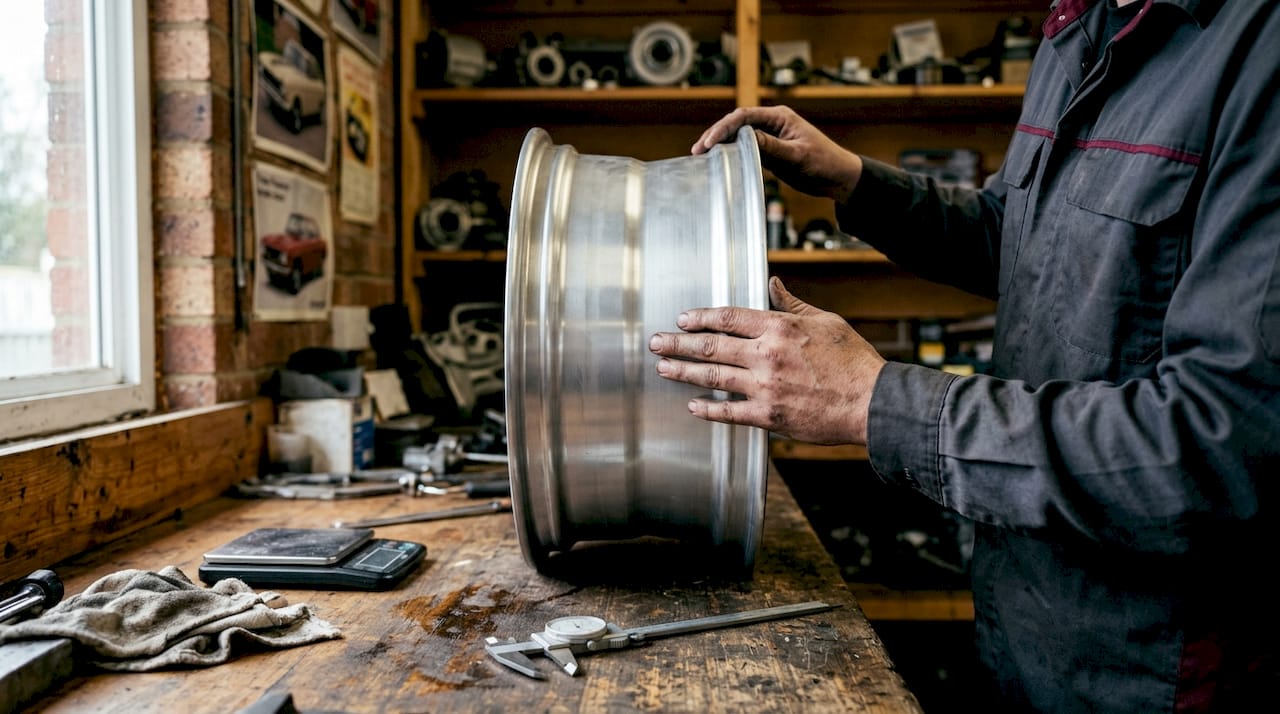
Flow-formed wheels are typically 15–25% lighter than comparable cast wheels. That weight reduction lowers rotational mass, which improves throttle response, braking feel, and fuel efficiency on the street. For most enthusiasts who drive hard on weekends but commute during the week, this is the category that delivers the most real-world benefit per dollar spent.
| Category | Cast | Flow-Formed | Forged |
|---|---|---|---|
| Weight | Heaviest | 15–25% lighter than cast | Lightest |
| Strength | Lowest | Mid-tier | Highest |
| Price per wheel | ~$100–$200 | Mid-range | Premium |
| Best use case | Daily driver | Street and occasional track | Dedicated track or prestige builds |
Advantages of flow-formed wheels:
- Better durability than cast at a lower price than forged
- Improved throttle response from reduced rotational mass
- Suitable for spirited street driving and occasional track use
- Work-hardened grain structure resists impact damage
Track and performance enthusiasts consistently rate flow-formed wheels as the sweet spot between cost and capability. That consensus is not marketing. It reflects real-world use where the weight savings and barrel strength make a measurable difference without a forged price tag.
4. Why forged wheels are the premium choice for serious builds
Forged wheels are machined from a solid billet of 6061-T6 aluminum that is compressed under extreme pressure before being shaped. This compression creates a uniform grain structure throughout the entire wheel, not just the barrel. The result is the highest strength-to-weight ratio available in any production wheel type. Forged wheels are lighter than flow-formed wheels and significantly stronger than cast units.
The price reflects the process. Forged wheels sit at the top of the cost range, and for casual street drivers, that investment rarely pays off in noticeable performance gains. Where forged wheels justify their cost is in dedicated track builds, high-horsepower applications, and vehicles where every pound of unsprung weight matters. Prestige is also a real factor. Many enthusiasts choose forged wheels for the craftsmanship and exclusivity as much as the engineering.
Pros of forged wheels:
- Best strength-to-weight ratio of any wheel type
- Uniform grain structure reduces failure risk under extreme loads
- Ideal for track, drag, and high-horsepower street builds
- Long service life under aggressive use
Cons of forged wheels:
- Highest price point, often several times the cost of cast
- Overkill for daily drivers or light-duty use
- Fewer off-the-shelf style options compared to cast
Pro Tip: Forged wheels are worth the investment if you run your vehicle at a track even a few times per year. If your car never leaves public roads, flow-formed wheels deliver most of the benefit at a fraction of the cost.
5. What engineering and safety factors must be considered?
Wheel selection is not just about construction type. Fitment parameters determine whether a wheel is safe and legal on your vehicle. Vehicle manufacturer guidelines explicitly warn against using tire and wheel sizes, load ratings, or speed ratings not specified for the vehicle. Unapproved combinations create safety and compliance risks that no aesthetic gain justifies.
Fitment experts verify engineering constraints before anything else. Size, load rating, speed rating, and offset all must align with OEM specifications or approved aftermarket equivalents. Getting these wrong can cause handling instability, premature bearing wear, and tire clearance failures.
Fitment checklist before buying any aftermarket wheel:
- Confirm bolt pattern matches your vehicle exactly
- Verify center bore diameter to prevent hub stress
- Check offset (ET value) against OEM spec or approved range
- Match load rating to vehicle gross axle weight rating
- Confirm speed rating meets or exceeds OEM requirement
- Plan for TPMS sensor transfer or relearning during installation
TPMS sensor integration deserves special attention. Aftermarket wheel installs that skip sensor transfer or relearning will disable real-time tire pressure monitoring. That is both a safety issue and a potential inspection failure. Treat TPMS as a required step, not an optional one.
6. How to choose the right aftermarket wheel type for your build
Wheel selection should match your actual use case, not your aspirational one. A track-spec forged wheel on a truck that never leaves the highway is wasted money. A cast wheel on a car that runs autocross events every month is a liability. Matching wheel type to driving pattern is the single most important decision in this process.
Use case guide:
- Daily driver, budget upgrade: Cast wheels deliver the style change you want without overspending. Prioritize fitment and finish over weight savings.
- Street enthusiast, occasional track: Flow-formed wheels are the right call. The weight reduction and barrel strength improve real driving feel without a forged price tag.
- Dedicated track or high-horsepower build: Forged wheels are the correct choice. The strength-to-weight advantage matters at the limits of performance.
- Off-road or heavy-duty truck: Construction type matters less than load rating and bead seat integrity. Prioritize wheels rated for your vehicle’s gross axle weight.
| Use Case | Recommended Type | Key Priority |
|---|---|---|
| Daily driver | Cast | Fitment and style |
| Street and weekend track | Flow-formed | Weight and durability |
| Dedicated track build | Forged | Strength-to-weight ratio |
| Off-road and heavy-duty | Load-rated cast or forged | Load rating and bead integrity |
Professional installation matters regardless of which type you choose. A correctly torqued, properly seated wheel with verified TPMS function performs better and lasts longer than a premium wheel installed carelessly. Budget for installation as part of the total cost, not as an afterthought.
Pro Tip: Balance aesthetics with engineering by choosing your wheel type first, then selecting a style within that category. Reversing that order leads to compromises you will regret on the road.
Key takeaways
The right aftermarket wheel type is determined by manufacturing method, use case, and fitment accuracy. Style is secondary to engineering.
| Point | Details |
|---|---|
| Cast wheels suit daily drivers | Affordable and stylish, but heavier and less durable under aggressive use. |
| Flow-formed wheels are the sweet spot | 15–25% lighter than cast with better barrel strength at a mid-range price. |
| Forged wheels lead in performance | Best strength-to-weight ratio, ideal for track builds and high-horsepower applications. |
| Fitment parameters are non-negotiable | Bolt pattern, offset, load rating, and TPMS integration must all be verified before purchase. |
| Use case drives the decision | Match wheel type to how you actually drive, not how you plan to drive someday. |
What I have learned from years of wheel upgrades
Most enthusiasts get this backwards. They pick a wheel style first, then try to make the engineering work around it. That approach causes more problems than it solves. Offset errors stress wheel bearings. Incorrect load ratings create failure risks under normal driving. And skipped TPMS steps turn a weekend project into a failed inspection.
The uncomfortable truth about aftermarket wheels is that the construction type matters far more than the finish or spoke design. A matte black cast wheel and a matte black flow-formed wheel look identical in photos. On the road, the difference in rotational mass and barrel stiffness is real and measurable. Enthusiasts who have driven both back-to-back rarely go back to cast for anything beyond a pure budget build.
My honest recommendation: if you are on the fence between cast and flow-formed, spend the extra money on flow-formed. The weight savings alone improve daily driving feel in ways that are hard to quantify but easy to notice. If you are debating flow-formed versus forged and your car never sees a track, save the money and put it toward tires or suspension. Tires connect to the road. Wheels connect to tires. Getting both right matters more than chasing the most expensive option.
Professional installation is not optional. I have seen enthusiasts spend serious money on premium wheels and then hand-torque lug nuts in a parking lot. That is how you damage a hub or lose a wheel. Budget for a shop to mount, balance, and verify TPMS function. It is the last step that protects everything else you invested in.
— Ozkonic Kustomz
Upgrade your build with the right hardware from Ozkonickustomz
Aftermarket wheels are only part of a complete vehicle upgrade. The wiring, sensors, and hardware that support your build need to meet the same standard as the wheels themselves.
Ozkonickustomz sources directly from vetted manufacturers, so every component meets strict quality and fitment standards. Whether you need a modular wiring kit to support sensor integration or a wiring harness for a custom build, Ozkonickustomz carries the hardware that serious builders rely on. Fast shipping, guaranteed compatibility, and expert support make it easier to finish your project right the first time. Browse the full catalog at Ozkonickustomz and find the components your build actually needs.
FAQ
What are the three main types of aftermarket wheels?
The three main types are cast, flow-formed, and forged wheels. Each is defined by its manufacturing process, which determines strength, weight, and price.
Are flow-formed wheels worth the extra cost over cast?
Flow-formed wheels are 15–25% lighter than cast wheels and resist cracking and bending better. For street enthusiasts and occasional track drivers, the performance gain justifies the price difference.
What fitment specs must I verify before buying aftermarket wheels?
Verify bolt pattern, center bore, offset, load rating, and speed rating against your vehicle’s OEM specifications. TPMS sensor compatibility is also a required check for legal and safety compliance.
Can I use forged wheels on a daily driver?
Forged wheels work on any vehicle but are overkill for standard street use. The cost premium is best justified on track builds or high-horsepower applications where strength-to-weight ratio directly affects performance.
Why does TPMS matter when installing aftermarket wheels?
TPMS sensors monitor real-time tire pressure and are required for safety inspections in most U.S. states. Skipping sensor transfer or relearning during a wheel install disables this system and can result in a failed inspection.