
Differential upgrades are modifications to a vehicle’s differential unit that improve traction, torque delivery, durability, or all three. The main types of differential upgrades include limited-slip differentials (LSDs), locking differentials, reinforced differential cases, and gear ratio changes. Each category solves a different problem. LSDs sharpen cornering grip, lockers maximize off-road traction, reinforced cases handle extreme torque, and gear ratio swaps reshape acceleration and power delivery. Knowing which upgrade fits your build is the difference between a well-sorted drivetrain and an expensive mistake.
1. What are limited-slip differentials and when should you choose one?
Limited-slip differentials improve cornering traction by transferring torque to the wheel with more grip instead of letting it spin freely. They sit between an open diff and a full locker, making them the most versatile upgrade option for street and track builds. Three distinct LSD types exist, and each suits a different driving profile.
Clutch-type LSDs
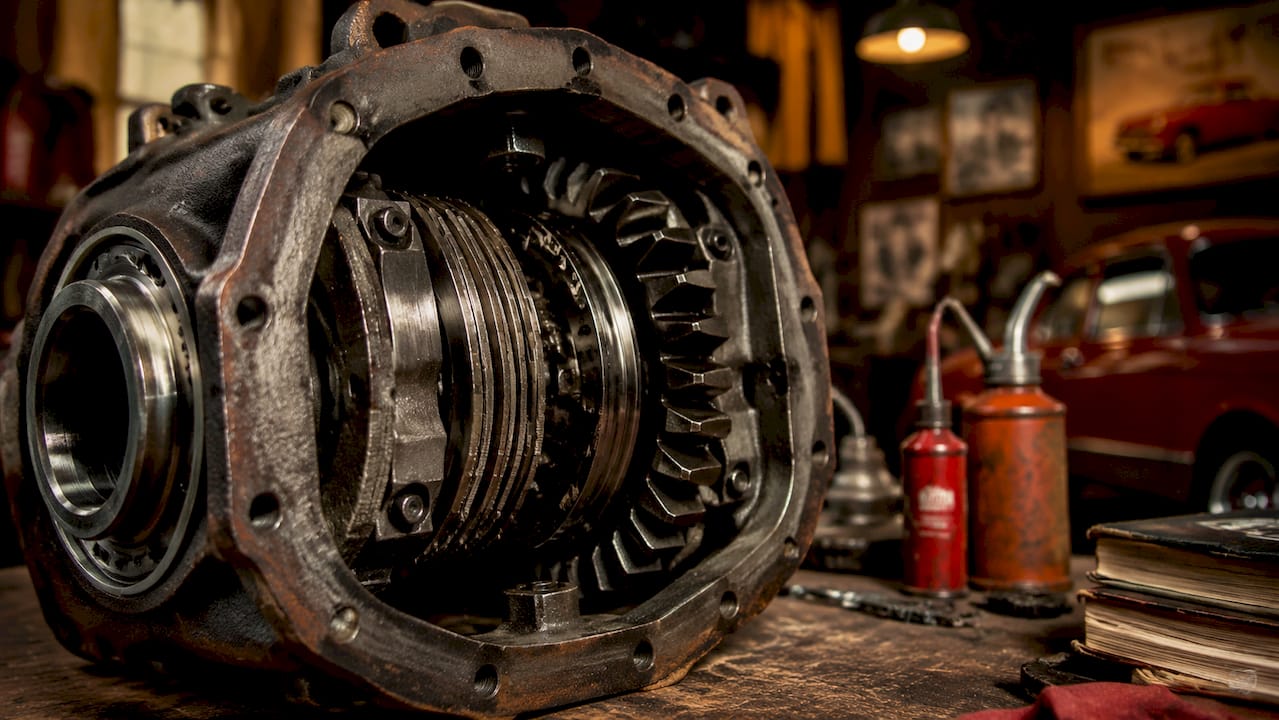
Clutch-type LSDs use friction plates to lock the differential under load. They deliver the most aggressive traction gains and are the go-to choice for drag racing and road course work. The trade-off is maintenance. Friction plates wear over time and require periodic fluid changes with the correct additive to prevent chatter.
Helical or torque-sensing LSDs
Helical LSDs like the Eaton Truetrac operate through worm gears that bias torque automatically without clutch packs. They engage smoothly, require no special maintenance, and work well in daily drivers and street performance builds. The Eaton Truetrac is one of the most widely installed helical units in the aftermarket because it needs no friction modifier and produces no chatter.
Electronic LSDs
Electronic LSDs use sensors and actuators to modulate torque split in real time. They appear in modern performance cars like the Ford Mustang GT500 and BMW M3. These units integrate with stability control and traction management systems, making them the most capable option for mixed-condition driving but also the most complex to retrofit.
Key LSD trade-offs at a glance:
- Clutch-type: strong lockup, periodic maintenance required, best for track and drag
- Helical: smooth, maintenance-free, best for daily driving and street performance
- Electronic: most adaptive, requires ECU integration, best for modern platform builds
Pro Tip: If you drive your car to the track and back home, a helical LSD gives you the best of both worlds. Clutch-type units are better reserved for dedicated race cars or builds with a separate track setup.
2. How do locking differentials enhance off-road traction and control?
Locking differentials like the Detroit Locker mechanically lock both axle shafts together, forcing both wheels to rotate at the same speed regardless of traction conditions. The Detroit Locker was patented in 1941 and has since been used in NASCAR, snowplows, and monster trucks. That track record speaks to its reliability under extreme load.
Full lockup means 100% of available torque reaches both wheels simultaneously. On loose terrain, mud, or rock crawling, that capability is unmatched by any LSD. The limitation is equally clear: a locked differential cannot allow wheel speed differentiation in corners, which causes tire scrub, understeer, and handling challenges on paved roads.
Locking differential types:
- Mechanical lockers (e.g., Detroit Locker): Engage automatically via a ratchet mechanism when wheel speed difference is detected. No driver input required.
- Selectable lockers (e.g., ARB Air Locker): Driver-controlled via air or electric actuator. Open like a standard diff until you lock them manually.
- Automatic locking diffs: Speed-sensitive units that lock at low speeds and unlock at higher speeds, offering a middle ground for light off-road use.
A selectable locker like the ARB Air Locker gives you the best of both worlds: open differential behavior on the highway and full lockup when the terrain demands it. For serious off-road builds, a selectable locker front and rear is the gold standard.
Locking diffs are the right choice for rock crawlers, overlanders, and any build that regularly encounters severe traction loss. For street-only vehicles, the handling penalties make them a poor fit.
3. Why reinforced differential cases matter for high-torque builds
Reinforced differential cases and covers are the most overlooked category in any differential upgrade guide. The diff unit inside a stock housing is only as strong as the housing itself. Under high torque, stock cast iron or thin steel covers flex, which causes bearing misalignment, gear wear, and eventual failure.
Aftermarket differential covers and girdles increase fluid capacity and housing rigidity, reducing bearing deflection and preventing gear failure under high torque. Upgraded covers also improve heat dissipation, which extends fluid life and protects gear surfaces during sustained hard driving.
Material options for differential cases and covers:
- Reinforced OEM-style iron or alloy: Direct replacement with thicker walls. Good for mild performance builds.
- Nodular iron: Higher impact resistance than standard cast iron. Suits moderate to high-power applications.
- Aluminum: Lightweight with good heat dissipation. Common in racing applications where weight savings matter.
- Forged steel: Maximum strength for extreme power levels. Used in purpose-built drag and off-road rigs.
Pro Tip: A differential cover girdle bolts around the outside of the housing and ties the bearing caps together. It prevents the housing from spreading under load, which is a common failure mode on Ford 8.8 and GM 10-bolt rear ends running big power.
| Material | Strength | Weight | Best Use |
|---|---|---|---|
| Reinforced OEM iron/alloy | Moderate | Heavy | Street performance |
| Nodular iron | High | Heavy | High-power street/strip |
| Aluminum | Moderate | Light | Road racing |
| Forged steel | Maximum | Heavy | Extreme drag/off-road |
Nodular iron and forged steel offer the highest impact resistance for builds pushing serious horsepower. Aluminum cases reduce weight for racing applications where every pound counts.
4. Comparing gear ratio upgrades and their effect on performance
Gear ratio upgrades change the relationship between driveshaft rotation and axle rotation. A numerically higher ratio like 4.10 multiplies torque more aggressively than a lower ratio like 3.08. That multiplication improves off-the-line acceleration but raises engine RPM at highway speeds, which increases fuel consumption and engine wear over time.
Upgrading to a shorter gear ratio like 3.73 improves acceleration and off-the-line torque but raises engine RPM and lowers fuel economy at highway speeds. The 3.73 is one of the most popular upgrades for V8 muscle cars and trucks because it delivers a meaningful performance gain without destroying highway manners.
Common gear ratio trade-offs:
- 3.42: Mild improvement over stock ratios in many trucks. Good balance of acceleration and fuel economy.
- 3.73: Strong acceleration gain. Works well with stock or mildly oversized tires.
- 4.10: Aggressive acceleration. Best suited for drag racing or heavily modified builds with large tires.
- 4.56 and above: Purpose-built for off-road or drag strip use. Highway driving becomes impractical.
Tire diameter directly affects how a gear ratio performs in practice. Running larger tires effectively lowers your numerical ratio. A truck geared at 3.73 with 35-inch tires will feel sluggish compared to the same ratio with stock 31-inch tires. Matching gear ratio to tire size is critical for usable performance improvements.
5. How to choose the right differential upgrade for your driving style
The right diff upgrade depends entirely on how and where you drive. Matching the upgrade type to your primary use case prevents wasted money and avoids compatibility problems that can compromise safety systems.
Match upgrade to use case:
- Daily driver: Helical LSD. Low maintenance, smooth operation, no handling penalties.
- Track or drag racing: Clutch-type LSD with appropriate friction modifier. Strong lockup under power.
- Off-road or overlanding: Selectable locker front and rear. Full control over when to lock.
- High-power street build: Reinforced case or cover girdle paired with an LSD upgrade.
- Towing or hauling: Gear ratio upgrade to a numerically higher ratio matched to tire size.
Electronic stability control and factory brake-based torque vectoring systems can conflict with mechanical LSD upgrades and may require ECU coding or calibration. Some vehicles need ECU recalibration when installing a mechanical LSD to prevent error codes and maintain system integration. This is especially relevant for late-model European and Asian performance cars.
Proper gear pattern setup and shim calibration are critical to avoid noise and premature failure. Professional installation with specialized gear pattern tools is strongly recommended for any ring and pinion or LSD swap. A poorly set gear pattern will destroy a new ring and pinion set within a few thousand miles.
Many drivers over-modify stock differentials. For city or commuting use, open differentials are often sufficient and upgrades are best reserved for track or high-performance applications where the gains justify the cost and complexity.
Key takeaways
The most effective differential upgrade strategy matches the unit type to your primary driving environment, then reinforces the housing to handle the added stress.
| Point | Details |
|---|---|
| Match upgrade to use case | LSDs suit street and track; lockers suit off-road; gear ratios suit towing and drag builds. |
| Reinforce the housing | Cover girdles and upgraded cases prevent housing flex and bearing failure under high torque. |
| Helical LSDs need no maintenance | Eaton Truetrac-style units require no friction modifier and suit daily-driven performance cars. |
| Gear ratio requires tire matching | Running larger tires without a corresponding ratio change reduces effective torque multiplication. |
| Professional installation is non-negotiable | Incorrect gear pattern setup causes noise and premature failure regardless of part quality. |
What I’ve learned after years of differential builds
The most common mistake I see is enthusiasts upgrading the diff unit while leaving the stock cover and housing untouched. You can install the best clutch LSD on the market, but if the housing flexes under load, the bearing preload shifts and the gears wear unevenly. The housing upgrade is not optional on any build making serious power.
The second mistake is choosing a locking differential for a street-driven vehicle because it sounds impressive. A full locker on a daily driver creates real handling problems in corners and wears tires aggressively. The Detroit Locker earned its reputation in NASCAR and off-road racing, not on public roads. Use the right tool for the right job.
My honest recommendation for most enthusiasts is to start with a helical LSD and a quality cover upgrade. That combination improves traction meaningfully, requires almost no maintenance, and does not fight your car’s stability systems. If you are building a dedicated track or off-road rig, then step up to a clutch LSD or selectable locker with a full housing reinforcement package.
Always consult a specialist before finalizing your diff upgrade selection. ECU compatibility, axle shaft strength, and carrier bearing size all affect which units will actually fit and function correctly in your application. The parts cost is often less than the labor to fix a compatibility mistake.
— Ozkonic Kustomz
Upgrade your drivetrain with parts from Ozkonickustomz
Ozkonickustomz stocks performance differential parts for enthusiasts who want real results, not guesswork. The catalog covers LSD kits, locking differentials, reinforced covers, and gear sets for a wide range of domestic and import applications.
Every part in the Ozkonickustomz performance catalog is selected for quality and fitment. Whether you are building a track car, an off-road rig, or a high-power street machine, the right differential upgrade is in stock. Browse the full selection and get your drivetrain sorted with parts that hold up under real-world abuse.
FAQ
What are the main types of differential upgrades?
The main types are limited-slip differentials, locking differentials, reinforced differential cases and covers, and gear ratio upgrades. Each addresses a different performance need, from cornering traction to off-road grip to structural durability.
Is a locking differential good for street driving?
Locking differentials like the Detroit Locker cause tire scrub, understeer, and handling challenges on paved roads. They are best reserved for dedicated off-road vehicles or purpose-built drag cars.
Do I need to recalibrate my ECU after installing an LSD?
Some vehicles require ECU recalibration when installing a mechanical LSD, particularly late-model cars with electronic stability control or brake-based torque vectoring. Skipping this step can trigger fault codes and disable safety systems.
What gear ratio should I choose for a performance build?
A 3.73 ratio is the most popular upgrade for V8 muscle cars and trucks, balancing strong acceleration with acceptable highway fuel economy. Builds with larger tires need a numerically higher ratio to compensate for the effective ratio drop.
Can I install a differential upgrade myself?
Professional installation is strongly recommended. Correct ring and pinion gear pattern setup and shim calibration require specialized tools, and errors cause noise and premature gear failure regardless of part quality.