

Counterfeit auto parts are defined as unauthorized replicas of genuine components, manufactured without quality controls and sold as legitimate replacements. The U.S. market faces an estimated $3 billion in counterfeit auto parts annually, affecting everything from airbags to fuel injectors. Authorities like the NHTSA and the Automotive Anti-Counterfeiting Council actively warn consumers about these risks. Knowing how to avoid counterfeit auto parts online is the single most effective step you can take to protect your vehicle, your wallet, and your safety.
How do you recognize counterfeit auto parts online?
Price is the fastest signal. Parts listed 60%–80% below MSRP are almost always counterfeit, because genuine brands enforce strict pricing controls with their authorized distributors. A brake rotor that normally sells for $120 should not appear at $25 from an unknown seller. That gap is not a deal. It is a warning.
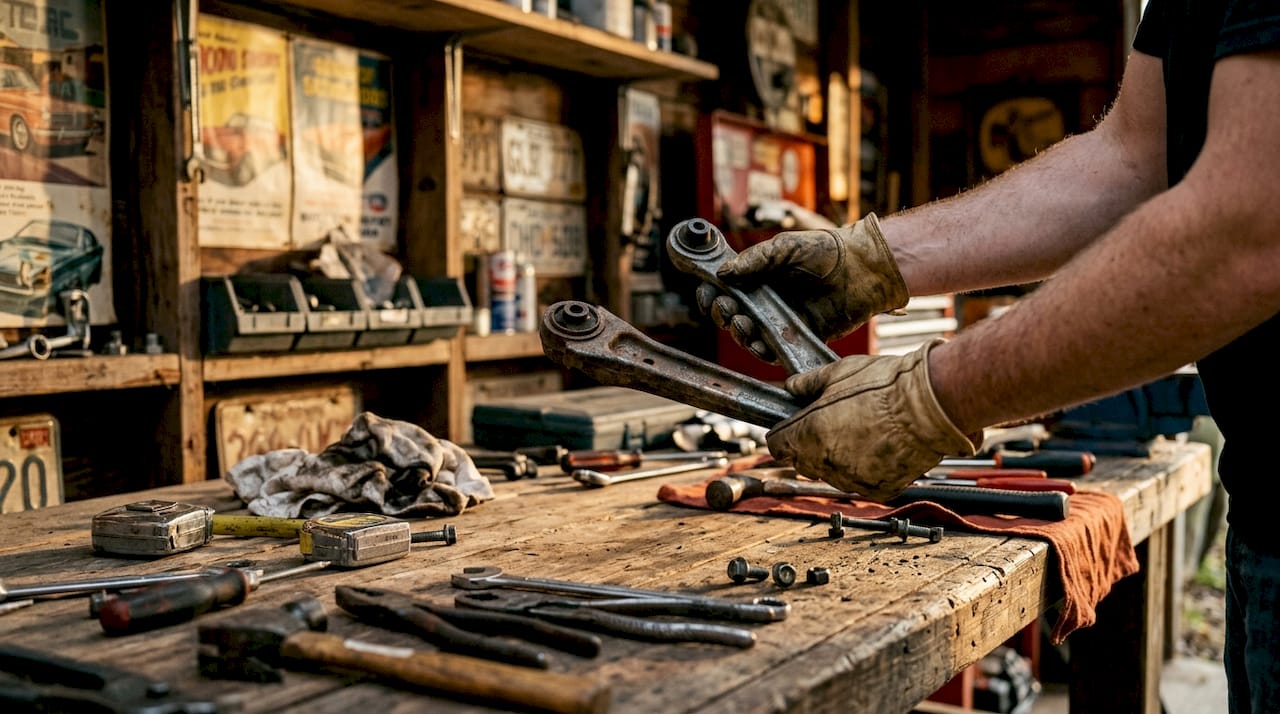
Packaging tells the next part of the story. Genuine parts arrive with consistent branding, part numbers, and manufacturer details printed clearly on the box. Counterfeit parts often have blurry logos, missing serial numbers, or packaging that looks slightly off compared to the real product. Run a reverse image search on the product photos to check whether the same images appear on multiple unrelated listings. Many fakes recycle stolen photos from legitimate product pages.
Seller credibility matters just as much as the part itself. Check the seller’s location, return policy, and customer review history before buying. Sellers with no physical address, no return policy, or reviews that appeared within a short window are high-risk. Request documentation, including an invoice and a certificate of authenticity, before completing any purchase.
- Price check: Compare the listed price against the manufacturer’s suggested retail price on the official brand website.
- Packaging inspection: Look for clear part numbers, lot codes, and manufacturer contact details on the box.
- Reverse image search: Upload product photos to Google Images to verify they are not copied from another listing.
- Seller history: Review the seller’s rating, location, and the age of their account on any marketplace.
- Documentation request: Ask for a receipt, invoice, or certificate of authenticity before completing the purchase.
- VIN verification: Use a VIN lookup tool on a legitimate site to confirm the part matches your specific vehicle.
Pro Tip: Sites that require your full VIN rather than just make and model access proprietary OEM databases, making them significantly more secure against counterfeit listings.
Where and how to safely buy genuine auto parts online
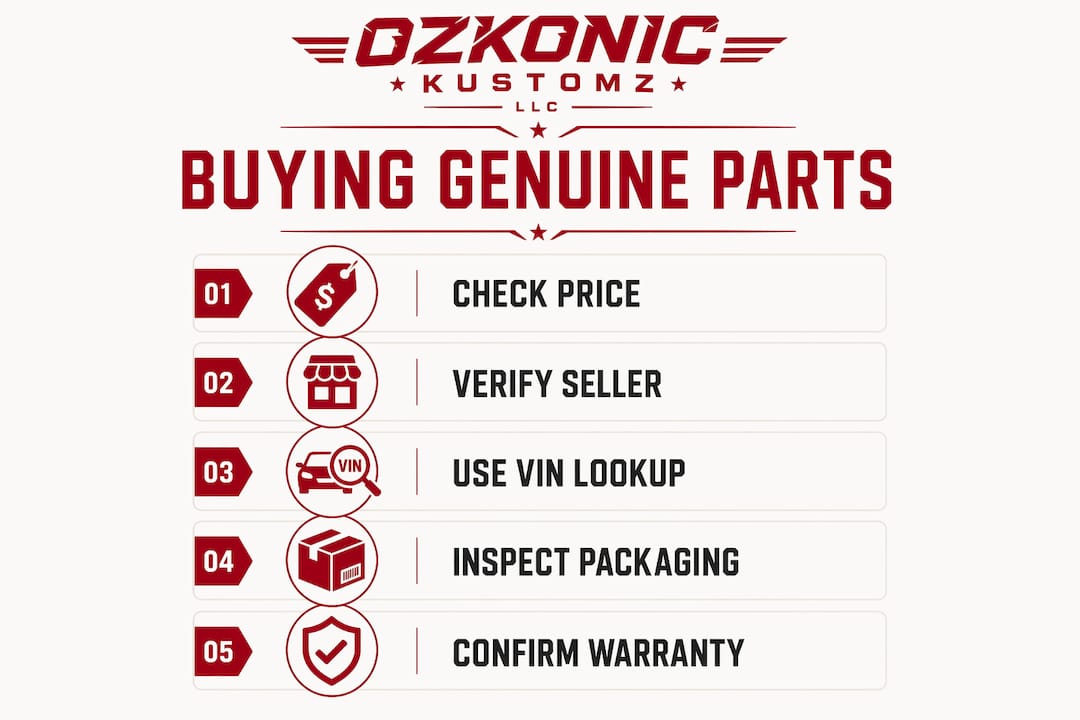
Buying from the right source is more reliable than any inspection technique. The Automotive Anti-Counterfeiting Council advises buying mission-critical parts exclusively through dealerships or authorized distributors because those channels maintain traceable supply chains. That traceability is what separates a genuine part from a convincing fake.
Here is a practical framework for choosing where to buy:
- Check the manufacturer’s authorized retailer list. Major brands publish these lists on their official websites. If a seller is not on that list, treat them as unverified.
- Buy direct from dealerships for safety-critical components. Airbags, brake pads, and sensors should come from a franchised dealer or a manufacturer-authorized distributor, not a third-party marketplace seller.
- Use established chain auto parts retailers for standard maintenance parts. These retailers source from vetted distributors and carry return policies that protect you if a part fails.
- Verify aftermarket sellers carry authorization documentation. Authorized aftermarket sellers can provide proof of their supply chain. If a seller cannot produce that documentation, move on.
- Avoid third-party marketplace listings without clear authorization. A listing on a major marketplace does not mean the seller is authorized. Check the seller’s profile, not just the platform’s name.
Understanding the difference between OEM and authorized aftermarket parts helps here. OEM parts come directly from the original equipment manufacturer. Authorized aftermarket parts come from third-party manufacturers who meet the OEM’s specifications and hold a formal agreement with the brand. Both are legitimate. Parts sold outside these channels, with no traceable supply chain, are where counterfeits enter the market. For a deeper breakdown, the OEM vs. aftermarket guide at Ozkonickustomz explains the distinctions in practical terms.
What verification steps confirm a part is genuine after purchase?
Receiving a part does not end your responsibility. Physical inspection after delivery is a critical step that most buyers skip. Compare the part’s packaging, labels, and markings against the manufacturer’s official product page. Any discrepancy in font, color, or part number format is a red flag.
- VIN-based verification: Use a VIN lookup tool to confirm the part number matches your vehicle’s exact specification in the OEM database.
- Label comparison: Hold the packaging next to an image from the manufacturer’s website. Check font consistency, logo placement, and part number formatting.
- Mechanic consultation: Ask a trusted mechanic or dealership technician to inspect the part before installation. Experienced technicians recognize counterfeit components by weight, finish, and fit.
- Receipt and documentation: Keep every receipt and order confirmation. These records are your proof of purchase if a warranty claim or safety issue arises.
- Contact the manufacturer: If you have doubts, call or email the manufacturer’s customer service line with the part number and lot code. Most genuine brands can verify authenticity directly.
- Report suspected fakes: If you believe a part is counterfeit, report it to the NHTSA, the National Intellectual Property Rights Coordination Center (IPR Center), or local law enforcement.
Pro Tip: Repair shops that request receipts and use vetted supply chains provide greater traceability and reduce your counterfeit risk during professional service. Always ask your mechanic where they source their parts.
For a broader guide on evaluating parts sources, Ozkonickustomz has published a detailed resource on choosing reputable aftermarket brands that covers supplier vetting in depth.
What safety risks do counterfeit auto parts actually cause?
Counterfeit parts are not just a financial problem. They are a safety crisis. The NHTSA issued urgent warnings after counterfeit airbag inflators caused fatalities in vehicles where drivers believed they had legitimate replacements installed. An airbag that deploys incorrectly or not at all eliminates the single most important passive safety system in your vehicle.
The problem extends well beyond airbags. Counterfeit spark plugs fail under load, causing misfires and engine damage. Fake fuel injectors deliver incorrect fuel ratios, degrading performance and potentially damaging catalytic converters. Counterfeit sensors send false data to your vehicle’s ECU, triggering warning lights and causing the system to make incorrect adjustments. Each of these failures compounds over time.
The Automotive Anti-Counterfeiting Council states that counterfeit parts bypass the engineering tolerances and quality testing that genuine components must pass. A part that looks identical can fail catastrophically under real-world stress, with no warning.
Installing a counterfeit part also voids your vehicle’s warranty in most cases. Manufacturers require that replacement parts meet their specifications. A fake part, even one that functions temporarily, gives the manufacturer grounds to deny warranty coverage on any related system. The economic damage to individual consumers and the broader automotive industry runs into billions of dollars annually, and the personal safety cost is incalculable.
Key Takeaways
Avoiding fake auto parts online requires price awareness, source verification, and post-purchase inspection at every step of the buying process.
| Point | Details |
|---|---|
| Price is the first red flag | Parts priced 60%–80% below MSRP are almost always counterfeit. |
| Buy from authorized sources | Dealerships and manufacturer-authorized distributors maintain traceable supply chains. |
| Use VIN lookup tools | Full VIN input confirms part compatibility against OEM databases and filters out fake listings. |
| Inspect packaging after delivery | Compare labels and part numbers against the manufacturer’s official product page before installation. |
| Report suspected fakes | File reports with NHTSA and the IPR Center to protect other buyers and trigger enforcement action. |
What I have learned sourcing parts for truck and performance builds
Counterfeit parts do not always look cheap. That is the part most buyers do not expect. I have seen fake sensors in professional-grade packaging, complete with holographic stickers and printed lot codes, that only revealed themselves when a mechanic noticed the weight was off. The counterfeiting operations targeting the automotive market have become sophisticated enough to fool casual inspection.
The buyers who get burned most often are the ones chasing the lowest price on a third-party marketplace without checking the seller’s authorization status. I understand the appeal. Performance builds are expensive, and saving $40 on a sensor feels reasonable. But a counterfeit sensor that feeds bad data to your ECU can cost you a $1,200 repair and a failed emissions test. The math does not work in your favor.
My honest recommendation is to treat safety-critical components differently from cosmetic or convenience parts. For airbags, brake components, suspension parts, and sensors, buy only from sources with a documented supply chain. For everything else, verify the seller’s authorization status before you click purchase. The Automotive Anti-Counterfeiting Council’s guidance on bypassing secondary marketplaces for critical parts is not overly cautious. It reflects what actually happens when those supply chains break down.
One habit that has served me well: always use a full VIN lookup before ordering any mechanical component. It takes 90 seconds and eliminates a category of risk that no amount of post-delivery inspection can fully address. If a site only asks for make and model, it is not accessing OEM data. That distinction matters more than most buyers realize.
— Ozkonic Kustomz
Genuine performance parts, verified from source to delivery
Ozkonickustomz sources directly from vetted manufacturers, which means every part in the catalog carries a documented supply chain. That is not a marketing claim. It is the operational difference between a part you can trust and one you are hoping works.
Truck owners and performance builders can shop wiring kits and suspension components with the confidence that each product meets the manufacturer’s specifications. The Air Lift rear suspension kit for Chevy 4x4 pickups is one example of a certified replacement part available with full authenticity documentation. Ozkonickustomz also offers expert assistance to confirm fitment before you order, so compatibility is confirmed before the part ships. Browse the full catalog at Ozkonickustomz and buy with a verified supply chain behind every order.
FAQ
What makes a counterfeit auto part dangerous?
Counterfeit parts skip the engineering tolerances and quality testing that genuine components must pass. Critical parts like airbags and brake components can fail under real-world stress, causing accidents or injuries.
How do I know if an online auto parts seller is authorized?
Check the manufacturer’s official website for a published list of authorized retailers. If the seller does not appear on that list, treat them as unverified and look for an authorized alternative.
Are parts on major online marketplaces always genuine?
No. Third-party sellers on major marketplaces are not automatically authorized. Always check the individual seller’s authorization status, location, and documentation before purchasing.
What should I do if I receive a counterfeit auto part?
Stop the installation immediately and report the part to the NHTSA and the IPR Center. Keep all packaging and documentation as evidence, and contact your payment provider to dispute the charge.
Does a VIN lookup really help avoid fake parts?
Yes. Sites that require a full VIN input access proprietary OEM databases, confirming exact part compatibility and filtering out listings that do not match your vehicle’s specifications.