
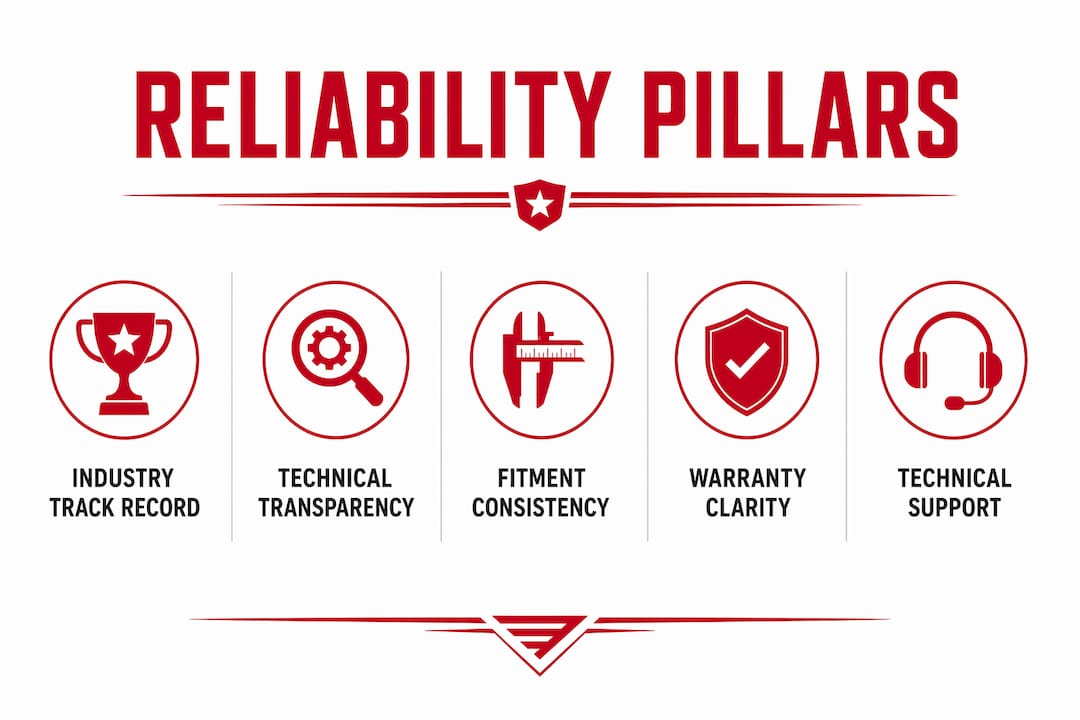
Choosing reputable aftermarket parts brands is defined by five measurable criteria: industry track record, technical transparency, fitment consistency, warranty clarity, and direct technical support. The counterfeit automotive parts market exceeds $3 billion annually in the U.S. alone, making brand verification a safety issue, not just a preference. Enthusiasts who skip this evaluation risk installing parts that fail under load, void their factory coverage, or simply don’t fit. The good news is that a structured approach to sourcing quality replacement auto parts removes most of that risk before you spend a dollar.
What are the five core reliability pillars for reputable aftermarket brands?
The five core pillars that identify trustworthy aftermarket brands are industry track record, technical transparency, fitment consistency, warranty clarity, and technical support. Each pillar tells you something different about a brand’s real-world reliability. Skipping even one of them leaves a gap that counterfeit or low-grade suppliers exploit.
Industry track record
A brand’s decades-long presence in the market signals consistent quality management and workshop-tested performance. New brands with no verifiable history carry real risk, especially for safety-critical components. Look for manufacturers with documented OEM supply relationships or long-standing catalog histories.
Technical transparency
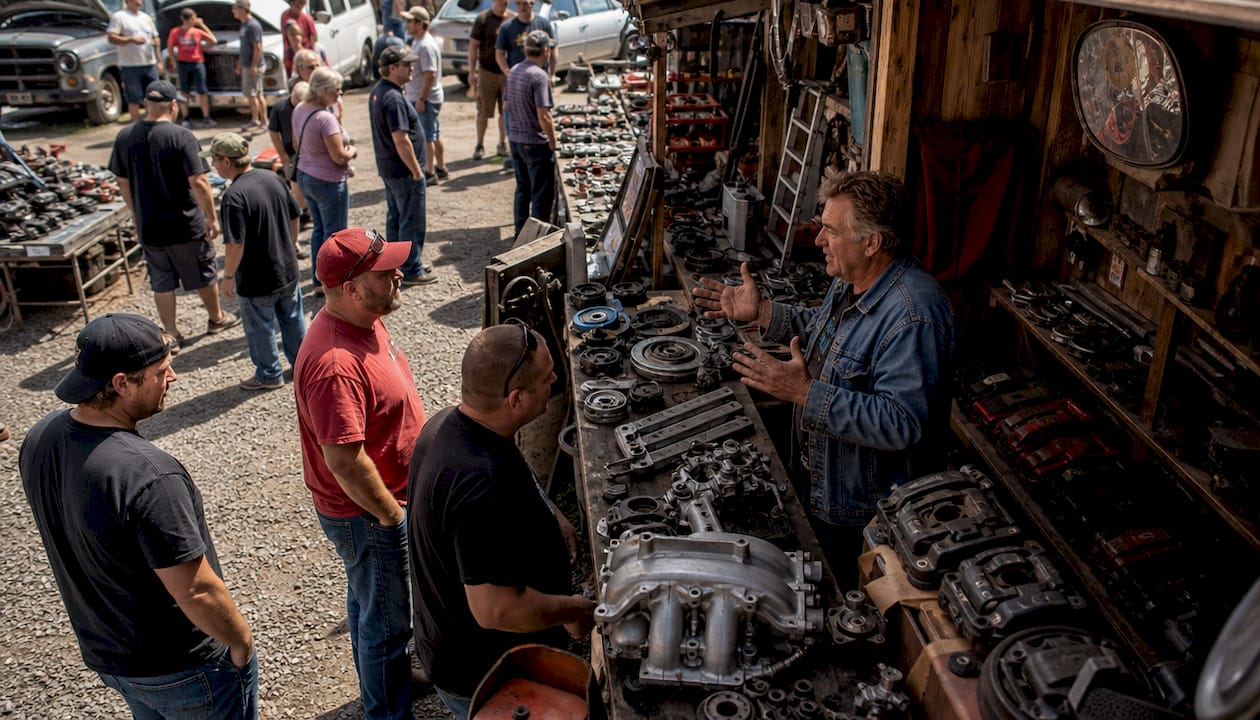
Reputable manufacturers publish detailed technical specifications, material grades, and installation documentation. A brand that hides its origins or refuses to share spec sheets is a brand worth avoiding. Transparent documentation lets you cross-reference a part against OEM standards before you buy.
Fitment consistency and warranty clarity
Fitment consistency means the brand verifies compatibility down to the specific trim level and production year, not just the model name. Warranty strength and claims handling predict long-term reliability better than initial price. A transferable warranty is a particularly strong signal. Transferable warranties usually indicate better quality and more responsive service.
Technical support access
Direct access to a brand’s technical team separates serious manufacturers from catalog resellers. You should be able to call or email and get a specific answer about your vehicle’s configuration. If a supplier can only point you to a generic FAQ, treat that as a red flag.
Pro Tip: Ask any supplier for the part’s material specification sheet before purchasing. A legitimate brand will send it within 24 hours. A brand that can’t produce one is telling you everything you need to know.
How do you use your VIN to confirm part fitment accuracy?
Your Vehicle Identification Number is a 17-digit code that identifies your vehicle’s exact production configuration, including mid-year factory changes that a model year alone won’t reveal. Using your VIN for fitment checks is the single most reliable method to avoid misfit parts. Two trucks with the same model year and trim can have different brake caliper brackets, suspension geometry, or sensor configurations depending on when they rolled off the line.
Follow these steps to confirm fitment before you buy:
- Locate your VIN. Find it on the driver’s side dashboard, the door jamb sticker, or your registration. Every character matters.
- Decode the VIN. Use the VIN to identify your plant code, production sequence, and any mid-year specification changes. Free VIN decoders from NHTSA or your manufacturer’s portal work well for this.
- Cross-reference with OEM part numbers. Pull the OEM part number for the component you’re replacing. Use that number to cross-reference the aftermarket option directly. This eliminates guesswork about compatibility.
- Distinguish direct-fit from universal-fit parts. Direct-fit parts are engineered for your specific vehicle. Universal-fit parts require modification and carry higher installation risk. Know which type you’re buying before you order.
- Contact the supplier directly. Engaging suppliers directly for fitment confirmation, installation difficulty, and warranty details is more reliable than relying on forum posts alone. Ask specifically whether any drilling, trimming, or adapter hardware is required.
- Review brand-specific fitment notes. Many quality brands publish fitment notes that flag known exceptions. Read them even when the general listing shows your vehicle as compatible.
The VIN method catches problems that year-make-model searches miss entirely. A performance builder who skips this step often discovers the issue only after the part is unboxed and the return window has closed.
What risks should you avoid when buying aftermarket auto parts online?
The counterfeit parts market is the most serious risk in online purchasing. Counterfeit parts often mimic legitimate packaging, making detection difficult without knowing what to look for. Safety-critical components including brakes, suspension parts, and sensors carry the highest risk because failures in these areas can be catastrophic.
Watch for these specific red flags when evaluating any listing:
- Unusually low prices. A brake rotor priced at 40% below the market average is not a deal. It signals a counterfeit or a severely substandard product.
- No manufacturer information. Legitimate parts carry a brand name, part number, and country of origin. Anonymous listings with vague descriptions are a hard pass.
- Missing or inconsistent serial numbers. Authentic parts have traceable serial numbers that match the packaging. Mismatched or absent numbers indicate a fake.
- No clear warranty terms. Reputable brands state their warranty duration, coverage scope, and claims process in writing. Vague “satisfaction guaranteed” language is not a warranty.
- Unverified third-party sellers. Purchasing from authorized dealers or established retailers dramatically reduces counterfeit exposure. Marketplace listings from unknown sellers carry the highest risk.
Counterfeit automotive parts entering the U.S. market are valued at over $3 billion annually. These fakes target the same safety-critical components that enthusiasts trust most, including brake pads, wheel bearings, and airbag sensors. One failed counterfeit part can cause an accident, void your insurance claim, and cost far more than the original part ever would have.
Poor-quality parts also shorten the lifespan of surrounding components. A substandard gasket can warp a head. A cheap wheel bearing can destroy a hub assembly. The cost of a failed part is never just the part itself.
Step-by-step process for verifying and selecting the best aftermarket parts brand
A structured verification process removes emotion and urgency from the buying decision. Follow this sequence every time you source aftermarket auto parts for a build or repair.
- Research brands with documented track records. Start with manufacturers that have been supplying the market for at least a decade. Check whether they supply OEM programs. Many premium aftermarket brands are original equipment suppliers who sometimes exceed factory specifications.
- Run your VIN and pull the OEM part number. Confirm the exact specification before you search for an aftermarket equivalent. This step alone eliminates the majority of fitment errors.
- Request technical documentation. Ask the supplier for the spec sheet, material grade, and any installation notes specific to your vehicle configuration. A brand that provides this without hesitation earns serious credibility.
- Evaluate the warranty in writing. Confirm the duration, what voids coverage, and how claims are filed. Prioritize brands with transferable warranties, as these signal confidence in long-term durability.
- Review the return and exchange policy before purchasing. Know the return window, condition requirements, and who pays return shipping. A clear, fair return policy is a trust signal. A vague or punitive one is a warning.
- Make one change at a time. Changing one modification at a time lets you assess its effect and detect issues early. Installing multiple parts simultaneously makes it nearly impossible to identify the source of a problem.
| Verification step | Why it matters |
|---|---|
| VIN-based fitment check | Catches mid-year production variants that model-year searches miss |
| OEM part number cross-reference | Confirms direct compatibility without guesswork |
| Technical documentation request | Separates legitimate brands from catalog resellers |
| Written warranty review | Predicts long-term reliability and claims responsiveness |
| Single-part installation sequence | Isolates performance changes and simplifies troubleshooting |
Pro Tip: When you contact a supplier, ask specifically: “Does this part require any modification for my exact VIN?” The answer tells you more about the brand’s fitment rigor than any product listing ever will.
For a deeper look at shopping for performance parts online, including platform-specific tips, Ozkonickustomz has a dedicated guide worth bookmarking before your next build.
Key Takeaways
Selecting trustworthy aftermarket parts brands requires verifying five reliability pillars, confirming fitment with your VIN, and purchasing only from authorized sources with clear warranty terms.
| Point | Details |
|---|---|
| Five reliability pillars | Evaluate track record, technical transparency, fitment consistency, warranty clarity, and support access. |
| VIN-based fitment | Use your 17-digit VIN and OEM part numbers to confirm compatibility before ordering. |
| Counterfeit risk | The U.S. counterfeit parts market exceeds $3 billion annually; buy only from authorized dealers. |
| Warranty as a quality signal | Transferable warranties with clear claims processes indicate genuine long-term confidence from the brand. |
| One change at a time | Install parts individually to isolate performance effects and catch problems before they compound. |
What I’ve learned after years of sourcing aftermarket parts
The biggest mistake enthusiasts make is treating price as a proxy for quality. It isn’t. The brands worth trusting are the ones that publish their specifications openly, answer technical questions without hesitation, and back their products with warranties that actually mean something.
One pattern I’ve seen repeatedly: a brand that supplies OEM programs rarely needs to compete on price. Their quality speaks through workshop reports, installer feedback, and repeat orders from professionals who can’t afford comebacks. That’s the kind of track record worth paying attention to.
Mixing OEM and aftermarket parts is generally safe when you verify compatibility carefully. The risk isn’t the mix itself. The risk is installing an aftermarket part without confirming it meets or exceeds the OEM specification for that specific position. For safety-critical systems like brakes and suspension, I always request the material grade and testing documentation. If a brand won’t provide it, I move on.
The other thing most guides won’t tell you: installation sequencing matters as much as part selection. Swapping multiple components at once and then chasing a vibration or a warning light is a frustrating and expensive lesson. One part, one test drive, one assessment. That discipline has saved me more time and money than any discount ever has.
— Ozkonic Kustomz
Ozkonickustomz: vetted parts with real fitment support
Ozkonickustomz sources directly from vetted manufacturers, which means every part in the catalog has already passed a quality and fitment review before it reaches you. That process eliminates the counterfeit risk and the fitment guesswork that plague generic online marketplaces.
Truck owners, performance builders, and off-road enthusiasts will find hard-to-find components with confirmed compatibility, including the American Autowire Highway 22 wiring kit for truck mounts, a product that reflects exactly the kind of documented, brand-backed quality the reliability pillars demand. Expert support is available to answer fitment questions before you order, and the return policy is straightforward. Visit Ozkonickustomz to browse the full catalog and get the technical answers your build actually needs.
FAQ
What makes an aftermarket parts brand reputable?
A reputable brand has a multi-decade market presence, publishes technical specifications openly, and backs its products with a clear, transferable warranty. Brands that supply OEM programs are especially reliable indicators of consistent quality.
How do I use my VIN to check part fitment?
Enter your full 17-digit VIN into the manufacturer’s fitment tool or contact the supplier directly. The VIN identifies mid-year production changes that a simple year-make-model search will miss.
Are aftermarket parts as good as OEM parts?
Many premium aftermarket parts come from original equipment suppliers and meet or exceed factory specifications. The key is verifying the brand’s documentation and warranty rather than assuming OEM is always superior.
How do I spot counterfeit automotive parts?
Look for missing or inconsistent serial numbers, unusually low prices, vague manufacturer information, and unclear warranty terms. Purchasing from authorized dealers is the most reliable way to avoid fakes.
Is it safe to mix OEM and aftermarket parts on the same vehicle?
Mixing OEM and aftermarket parts is safe when each aftermarket component meets or exceeds the OEM specification for its specific position. Always confirm compatibility using your VIN and request material documentation for safety-critical systems.
Recommended
- Comparing the Top Aftermarket Car Parts Websites – Ozkonic Kustomz LLC
- OEM vs Aftermarket Parts: Performance, Warranty & Value | Ozkonic Kustomz – Ozkonic Kustomz LLC
- Repair vs Replace Car Parts: OEM vs Aftermarket Guide | Ozkonic Kustomz – Ozkonic Kustomz LLC
- Performance Parts Online Shopping Guide for Enthusiasts – Ozkonic Kustomz LLC