
A weekend truck build is not a single Saturday project. It’s a phased, milestone-driven approach to customizing your truck across multiple weekend sessions, each one moving you closer to a finished, reliable machine. The builders who actually finish their builds share one habit: they break the project into concrete checkpoints like “chassis complete” or “first engine start” rather than chasing a vague finish line. Quality parts, honest planning, and patience matter more than raw enthusiasm.
Three products worth knowing before you start: the AutoMeter 15101 Gauge Mount for clean, driver-focused data visibility; the American Autowire Automotive Hardware 500839 for dependable electrical connections; and Ozkonickustomz as a vetted source for compatible aftermarket parts. Get those three things right and you’re already ahead of most builders.
Table of Contents
- How to plan your weekend truck build for real results
- Why following installation instructions prevents costly mistakes
- How to source high-quality, compatible aftermarket parts
- What to expect from your timeline, effort, and finishing process
- Ozkonickustomz has the parts your build actually needs
- Key Takeaways
How to plan your weekend truck build for real results
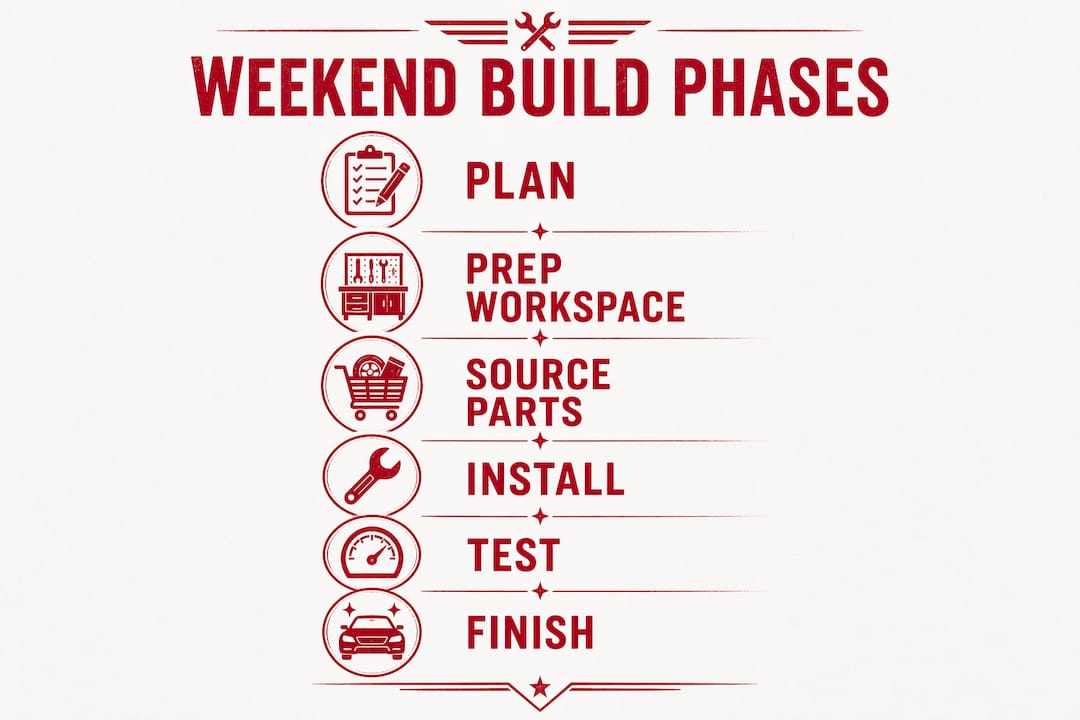
Solid planning is what separates a truck that gets finished from one that becomes a permanent garage ornament. Before you touch a wrench, write a build sheet listing every major component, the tools each phase requires, and a realistic budget with a 20% contingency built in for the surprises that always show up.
Break the project into phases and assign each one to a weekend block:
- Phase 1: Frame inspection, rust repair, and structure
- Phase 2: Drivetrain (engine, transmission, fuel system)
- Phase 3: Suspension and brakes
- Phase 4: Electrical and wiring harness
- Phase 5: Body, paint, and interior
- Phase 6: Final assembly, fluids, and shakedown
Your workspace matters as much as your parts list. You need a level floor, adequate lighting, a quality floor jack with rated stands, and enough room to move around all four corners of the truck. A cluttered bay slows every task.
Pro Tip: Experienced builders recommend scheduling no more than one major phase per weekend. Trying to rush two phases into 48 hours is how cross-threaded bolts and missed steps happen.
Why following installation instructions prevents costly mistakes
Skipping the manual is the single most common reason a fun weekend project turns into a week of troubleshooting. Ignoring torque specs and wiring diagrams leads directly to stripped bolts, electrical fires, and poor fitment. Spending 15 minutes reading the instructions before you start genuinely prevents hours of rework.
Common mistakes that derail builds:
- Cross-threading fasteners by rushing the initial hand-tightening
- Skipping a post-lift alignment after suspension work
- Ignoring driveline angles on lifts over 2.5 inches
- Forgetting to extend brake lines after a lift kit install
- Guessing at torque specs instead of using a calibrated torque wrench
Test fitting parts loosely before final torque catches clearance and alignment issues while they’re still easy to fix. Once everything is torqued down and reassembled, finding a misaligned bracket costs three times the effort. Use correct tools throughout. A torque wrench, bushing press, and digital caliper are not optional for a quality build.
Worth knowing: A professional lift kit installation typically takes 4–8 hours even for experienced technicians. Budget your weekend accordingly and never assume a complex install will go faster than the manufacturer estimates.
How to source high-quality, compatible aftermarket parts
Part compatibility is where builds go wrong before a single bolt is turned. Every component you order needs to match your truck’s exact year, make, and model. A lift kit designed for a 2020 Ford F-150 is not the same as one built for a Jeep JK with a solid front axle, even if the box looks identical.
Sourcing tips from seasoned builders:
- Cross-reference part numbers against the manufacturer’s website before ordering
- Measure critical dimensions with digital calipers and compare to the original part
- Buy from sellers who offer expert support and a clear return policy
- Avoid no-name panels and brackets that require significant fitment work, costing more in labor than the part saves
Ozkonickustomz sources directly from vetted manufacturers, which eliminates the counterfeit and fitment-mismatch problems that plague generic online retailers. For electrical work, the American Autowire Automotive Hardware 500839 delivers reliable, clearly labeled connections that hold up under real driving conditions. The AutoMeter 15101 Gauge Mount positions critical performance data exactly where a driver needs it, without improvised bracket work.
Pro Tip: If you’re running a performance fuel setup, understanding E85 fuel benefits early in the build helps you spec the correct fuel system components from the start rather than retrofitting later.
For a deeper look at upgrade options by truck platform, the classic trucks upgrade guide at Ozkonickustomz covers compatibility considerations across popular build platforms.
What to expect from your timeline, effort, and finishing process
A full restomod build typically spans 1,500–2,500 labor hours. For a hobbyist working weekends, that translates to two to five years depending on scope. A driver-level build with mechanical reliability as the goal takes far less. Set your expectations by build level, not by enthusiasm.
Before the first weekend session, inspect the frame with a magnet and flashlight. Body filler won’t attract a magnet, which reveals patch repairs hiding serious structural damage. Finding frame rot after you’ve already ordered $3,000 in suspension parts is a painful lesson.
Key practices for the finishing stretch:
- Document every step with photos before disassembly; you will need them during reassembly
- Bleed brakes and clutch, fill all fluids, and torque-check every fastener before the first start
- Run a short, low-speed shakedown before any highway driving
- Check for fluid leaks, unusual sounds, and vibrations during the first few drives
- Address each issue before adding miles
Safety during the build itself deserves the same attention as the finished product. Always use rated jack stands, never work under a truck supported only by a floor jack, and disconnect the battery before any electrical work. For installation guidance on specific components, the performance parts installation guide at Ozkonickustomz covers correct technique and common errors worth avoiding.
Ozkonickustomz has the parts your build actually needs
Finding compatible, quality parts is the bottleneck most builders hit hardest. Ozkonickustomz solves that directly: parts sourced from vetted manufacturers, guaranteed fitment for your specific truck, fast shipping, and real support when you have a question mid-build. No counterfeit risk, no guessing on compatibility.
Whether you’re fitting an Air Lift suspension kit for a smoother ride or a complete wiring harness to replace decades of electrical gremlins, Ozkonickustomz carries the components that hold up under real use. Browse the catalog, confirm your fitment, and get the right part the first time at ozkonickustomz.com.
Key Takeaways
A successful weekend truck build comes down to phased planning, correct installation, and parts that actually fit your truck from the start.
| Point | Details |
|---|---|
| Plan in phases | Break the build into milestones like chassis, drivetrain, and electrical to maintain steady progress. |
| Budget a contingency | Add a 20% contingency to your total estimate to cover the surprises every build produces. |
| Follow installation instructions | Reviewing torque specs and wiring diagrams before starting prevents stripped bolts and electrical failures. |
| Test fit before final torque | Loosely assembling parts first catches clearance and alignment issues while they are still easy to fix. |
| Ozkonickustomz for parts | Ozkonickustomz supplies vetted, fitment-guaranteed aftermarket parts with expert support and fast shipping. |
Recommended
- Performance Parts for Daily Drivers: 2026 Guide – Ozkonic Kustomz LLC
- Best Classic Trucks & Upgrade Guide – Ozkonic Kustomz LLC
- Complete Guide to Vehicle Detailing | OzKonic Kustomz – Ozkonic Kustomz LLC
- Front Spindles Guide: Wide 5 vs 2in 5x5 for Performance Builds | Ozkonic Kustomz – Ozkonic Kustomz LLC