

Wheel offset is the distance, in millimeters, between a wheel’s centerline and the mounting surface where it bolts to the hub. That single number decides whether a wheel tucks under the fender or pokes out past it, and it changes clearance and steering feel more than most buyers expect.
Positive offset pushes the mounting surface toward the outside of the wheel, which tucks the wheel inward under the vehicle. Negative offset does the opposite, pulling the mounting surface toward the inside so the wheel pokes outward. Zero offset sits the mounting surface right on the centerline.
- Positive offset = tucked look, more room near control arms and struts
- Negative offset = aggressive poke, more room for big brakes but less room near fenders
- Stay close to factory numbers. A shift of about 5 mm from stock is usually the acceptable range(https://www.wheel-size.com/articles/what-is-the-wheel-offset/) before clearance or steering issues show up
Key Takeaways
Wheel offset in millimeters determines fitment and steering behavior, and staying within roughly 5 to 15 mm of factory offset prevents most clearance and handling problems.
| Point | Details |
|---|---|
| Offset defines fitment | Positive offset tucks the wheel inward; negative offset pushes it outward and increases poke. |
| Convert with a formula | Backspace (in) = (Width ÷ 2) + (Offset ÷ 25.4), useful for checking any listing’s real fitment. |
| Offset changes handling | Altering offset shifts scrub radius and kingpin offset, which can multiply steering forces. |
| Stick close to factory | Deviations beyond 5 to 15 mm from stock raise bearing wear and steering-feel risks. |
| Test-fit before finalizing | Check clearance at full steering lock and full suspension compression before committing. |
Table of Contents
- What Is Wheel Offset When You Break Down Positive, Zero, and Negative
- How to Measure Wheel Backspacing and Convert It to Offset
- Why Offset Changes Affect Steering Feel and Bearing Wear
- Your Fitment Checklist Before You Buy or Mount New Wheels
- Typical Offset Ranges by Vehicle Type and What They Mean
- Getting Fitment Right the First Time With Ozkonic Kustomz
- Editorial Take: What the Offset Conversation Usually Gets Wrong
- Sources
What Is Wheel Offset When You Break Down Positive, Zero, and Negative
Positive offset is what most factory cars run. Front-wheel-drive sedans and crossovers typically sit in the +35 to +45 mm range, which keeps the wheel tucked close to the suspension and avoids rubbing on struts or brake calipers. Automakers like this setup because it keeps scrub radius small and steering predictable.
Zero offset places the mounting surface exactly on the wheel’s centerline, giving a flush, neutral stance. You see it more on classic muscle cars and some drift-oriented setups where a centered look matters more than tucked clearance.
Negative offset flips the geometry, pushing the wheel face outward past the hub. Trucks and off-road builds gravitate here because it widens the stance and creates room for larger tires and beefier brake components, as seen in many off-road and ATV/UTV wheel size specs.
- Positive offset (+20 to +50 mm): common on sedans, minivans, and crossovers
- Zero offset (0 mm): flush look, common on restomods and drift cars
- Negative offset (−12 to −25 mm or more): favored by trucks, Jeeps, and off-road rigs for stance and tire clearance
The trade-off is real. Suspension engineers note that pushing offset negative increases leverage on the hub and bearing, which is a fine trade for a rock crawler but a bad one for a daily-driven commuter car.
How to Measure Wheel Backspacing and Convert It to Offset
You don’t need a shop lift to check offset math. Backspace measures the distance from the wheel’s inner edge to the mounting surface, and it converts directly to offset with a simple formula.
Backspace (inches) = (Wheel Width ÷ 2) + (Offset ÷ 25.4) Offset (mm) = (Backspace − Wheel Width ÷ 2) × 25.4
Say you’re looking at a 17x8.5 wheel with +35 mm offset. Half the width is 4.25 inches. Offset in inches is 35 ÷ 25.4, or about 1.38 inches. Add them together and you get roughly 5.63 inches of backspace, according to the standard conversion method.
To measure backspace yourself:
- Lay the wheel face down and place a straightedge across the back lip
- Measure from the straightedge down to the mounting surface
- Compare that figure against the formula above to confirm the listed offset
Sellers list both offset and backspace because each answers a different clearance question. Offset tells you the stamped ET number for cross-referencing fitment guides. Backspace tells you, in plain terms, how much room you’ve got on the inner side before something hits a strut or control arm.
Why Offset Changes Affect Steering Feel and Bearing Wear
Every offset change shifts something called scrub radius, the distance between the tire’s contact patch centerline and the steering axis (kingpin) line. Automakers keep this number small on purpose, because a wider scrub radius multiplies the steering forces that travel back through the wheel, the hub, and eventually into your hands on the wheel.
Suspension engineers who’ve analyzed aftermarket spacers found that a 50 mm spacer can multiply scrub radius and kingpin offset several times over, in some cases reversing the steering moments the manufacturer designed into the car.
That’s not a small detail. A reversed steering moment can turn predictable understeer into a twitchy, unpredictable front end, especially under braking or on uneven pavement. Torque steer gets worse too, since the drive axle now pulls at a different angle than the factory engineer accounted for.
The mechanical side matters just as much as the handling side. Pushing offset outward increases the bending moment on the wheel bearing and hub, because the tire’s contact patch now sits farther from the bearing’s centerline. Off-road and competition builders accept this trade-off deliberately, but they usually pair it with upgraded bearings and reinforced suspension components. A stock daily driver running the same negative offset without those upgrades is asking for premature bearing failure.
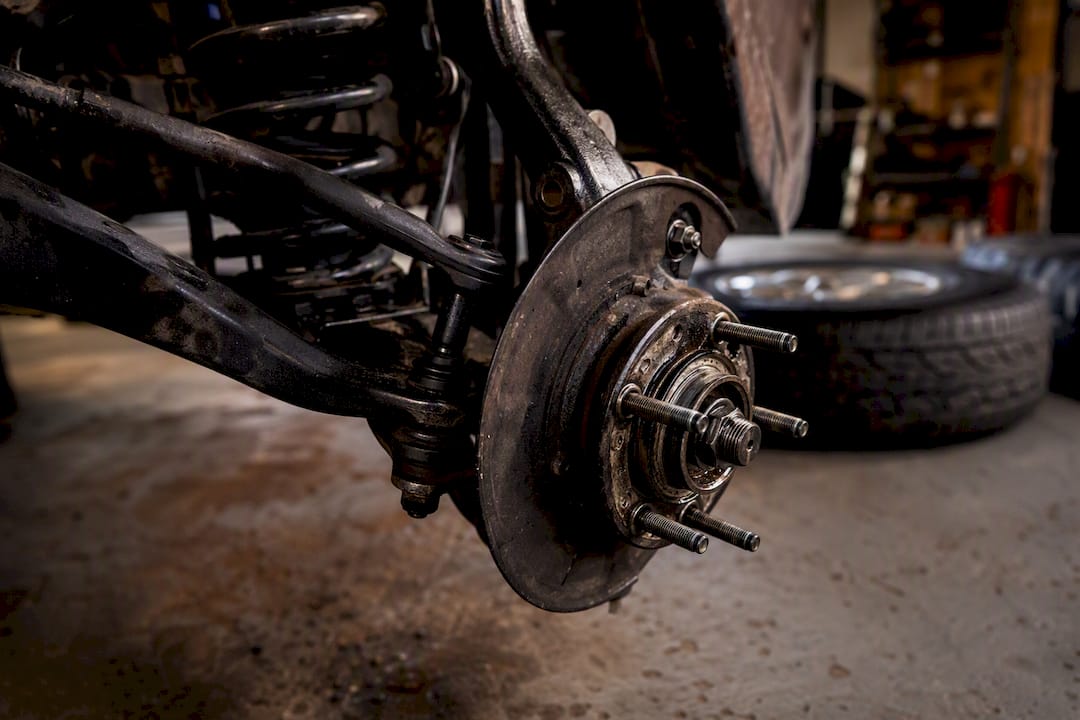
Pro Tip: If you’re adding more than 15 mm of offset change from factory, budget for a bearing and suspension inspection within the first few thousand miles. The extra load doesn’t always announce itself with noise before it fails.
Your Fitment Checklist Before You Buy or Mount New Wheels
Skipping a test fit is how enthusiasts end up with a wheel rubbing on a strut tower at full lock. Run through these steps before you commit to a purchase.
- Record your factory offset and width. Check your door jamb sticker, owner’s manual, or the wheel’s inner barrel stamp for the ET number.
- Measure wheel well clearance. Use a straightedge across the fender opening and measure down to the tire or wheel lip on both the inner and outer sides.
- Test-fit before final torque. Mount the bare wheel, turn the steering to full lock, and cycle the suspension through full compression to check for contact with brake lines, calipers, or control arms.
- Follow the offset tolerance rule. Staying within roughly 5 to 15 mm of factory offset avoids most handling surprises; anything beyond that calls for a proper suspension check.
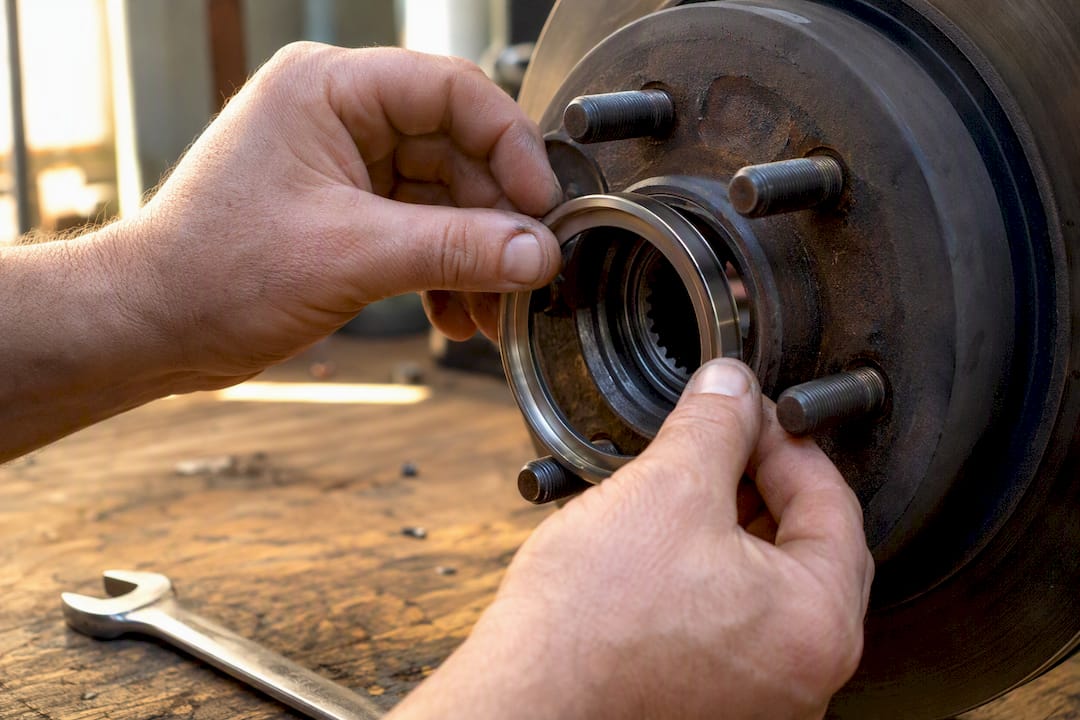
If you need to bridge a gap between wheel and hub, hub-centric spacers installed correctly and re-torqued after a break-in period are the safer route, but they still add a joint and a load path that wasn’t there before.
Pro Tip: Never trust a spacer that relies on the wheel studs alone for centering. Hub-centric rings keep the load on the hub face where it belongs, not on the lug threads.
Typical Offset Ranges by Vehicle Type and What They Mean
Knowing what’s normal for your vehicle class helps you spot a listing that’s wildly out of range before you buy. Front-wheel-drive compacts and midsize cars typically run +35 to +50 mm. Rear-wheel-drive sports cars sit lower, often +15 to +35 mm, to allow for wider staggered setups. Trucks and SUVs range from −12 to +25 mm depending on how aggressive the stance is meant to be.
- FWD sedans/crossovers: +35 to +50 mm
- RWD sports cars: +15 to +35 mm
- Trucks/SUVs: −12 to +25 mm
- Off-road/aggressive builds: often more negative than −12 mm
Width matters just as much as the offset number itself. Two wheels with identical offset but different widths sit differently in the wheel well, since the extra width adds material on both the inner and outer sides equally. A quick reference: a 10 mm offset change shifts the wheel face about 0.39 inch laterally, so a 20 mm swing toward negative offset moves the tire nearly three-quarters of an inch farther out.
Getting Fitment Right the First Time With Ozkonic Kustomz
Ozkonic Kustomz sources parts directly from vetted manufacturers instead of gambling on marketplace listings with vague fitment specs. Every wheel and hardware component gets checked against real fitment data before it ever reaches a customer, which cuts out the guesswork that leads to rubbing tires or mismatched bolt patterns.
- Browse fitment-first wheel picks for truck owners built around confirmed offset and backspace specs
- Compare wheel construction and styles in the guide to aftermarket wheel types
- Talk to Ozkonic Kustomz directly if you need a fitment check or hub-centric hardware before you mount anything new
Editorial Take: What the Offset Conversation Usually Gets Wrong
Most fitment advice online treats offset as a cosmetic decision. Pick a number, check a fitment chart, done. That framing skips the part that actually matters: offset is a suspension geometry decision wearing a stance decision’s clothes. Scrub radius and bearing load don’t care whether you wanted a flush look or extra tire clearance. They respond to the millimeters the same way regardless of intent.
The conventional wisdom to “just stay within 5 mm” is good advice, but it undersells why that number exists. It’s not an arbitrary buffer. It’s the point past which steering forces and bearing loads start climbing fast enough to matter on a street-driven vehicle. Enthusiasts chasing a look should prioritize the math first: run the backspace conversion, test-fit at full lock, and only then decide if the visual trade-off is worth the mechanical one.
What gets overlooked most is that a spacer or offset change is never just a fitment change. It’s a suspension modification you’re making without touching the suspension.
— Ozkonic Kustomz
Sources
- Wheel-size
- Our suspension engineer tells you his opinion on wheel spacers (The Autopian)
- Wheel offset and backspace guide (MechanicsCalculator)
- Wheel sizing — Wikipedia
Recommended
- Aftermarket Truck Wheels: Fitment-First Picks for Truck Owners – Ozkonic Kustomz LLC
- Front Spindles Guide: Wide 5 vs 2in 5x5 for Performance Builds | Ozkonic Kustomz – Ozkonic Kustomz LLC
- Tread Pattern Performance: What Drivers Need to Know – Ozkonic Kustomz LLC
- Types of Aftermarket Wheels: 2026 Guide for Enthusiasts – Ozkonic Kustomz LLC