
A wheel bolt pattern is the lug count times the pitch circle diameter, like 5×114.3, and it has to match your hub exactly or the wheel simply will not mount. Measure it or pull the spec before you buy anything. Even a close match fails: a millimeter off means the studs won’t line up. Offset and center bore matter too, but bolt pattern is the gate you have to clear first.
TL;DR:
- Matching the bolt pattern exactly is essential; even a 1-millimeter difference prevents proper mounting and can cause uneven load distribution.
- Measure lug distances accurately by counting lugs, then cross-check with factory specifications to avoid ordering incompatible wheels.
- Common patterns include 4×100, 5×114.3, and 6×139.7mm, but patterns can vary by vehicle, so precise measurement and verification are crucial.
- Other fitment factors like offset, center bore, and lug seat type are equally important for proper seating and safety beyond just matching the bolt pattern.
- Using adapters or spacers can enable pattern changes but introduce handling and safety risks, making factory-matched wheels a safer and more reliable choice.
Table of Contents
- What a Wheel Bolt Pattern Actually Tells You
- How to Measure Bolt Pattern Yourself
- Common Bolt Patterns and Which Vehicles Use Them
- Fitment Specs That Matter Beyond Bolt Pattern
- Adapters, Spacers, and Changing Your Bolt Pattern
- Tools to Confirm Your Pattern Before You Order
- Why Ozkonic Kustomz Backs Every Fitment Claim
- The One Habit That Prevents Most Fitment Mistakes
- Get Wheels and Hardware Matched to Your Exact Fitment
- Sources
What a Wheel Bolt Pattern Actually Tells You
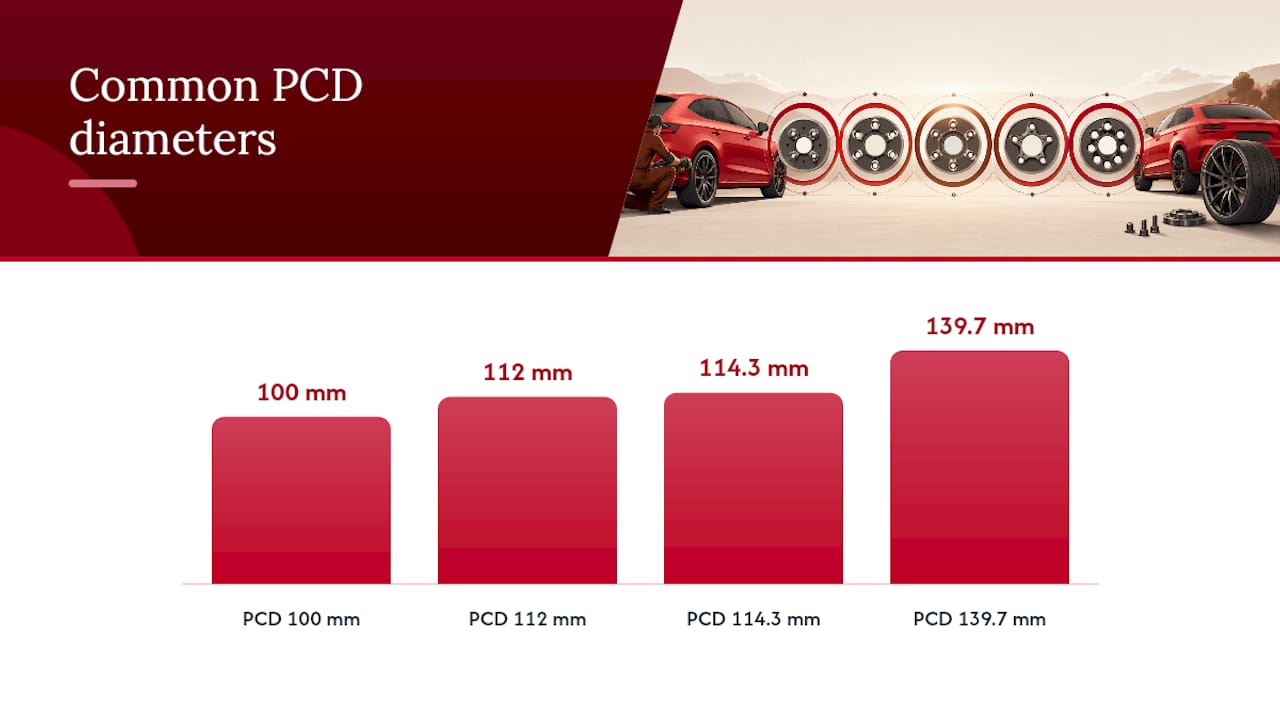
The pitch circle diameter, often shortened to PCD or bolt circle diameter, is the diameter of an imaginary circle drawn through the center of every lug hole on the wheel. Notation always follows the same format: lug count, then diameter, written as something like 5×114.3 or 6×139.7. That second number can appear in millimeters or inches depending on where the wheel was designed, and Wikipedia’s technical breakdown of bolt circles covers the common diameters you’ll run into, including 100mm, 112mm, and 114.3mm.
You’ll also see this called the wheel lug pattern, PCD, or BCD interchangeably. They’re the same thing.
Here’s why exact matching isn’t optional:
- A wheel with the wrong bolt pattern physically won’t line up with the studs, no exceptions
- Even a fraction of a millimeter off puts the studs at an angle rather than straight through the hub, which stresses the threads
- Mismatched patterns concentrate load unevenly across fewer contact points, which is a safety issue at speed, not just an inconvenience
How to Measure Bolt Pattern Yourself
Grab a tape measure, a caliper if you have one, and count your lug holes before you do anything else. The counting matters because even-numbered and odd-numbered patterns get measured differently.
For even lug counts (4, 6, 8 lugs): Measure straight across, center to center, between two lug holes directly opposite each other. On a 4-lug wheel, this is simple: measure hole one to hole three. On a 6-lug or 8-lug wheel, pick the two holes directly across the circle from each other.
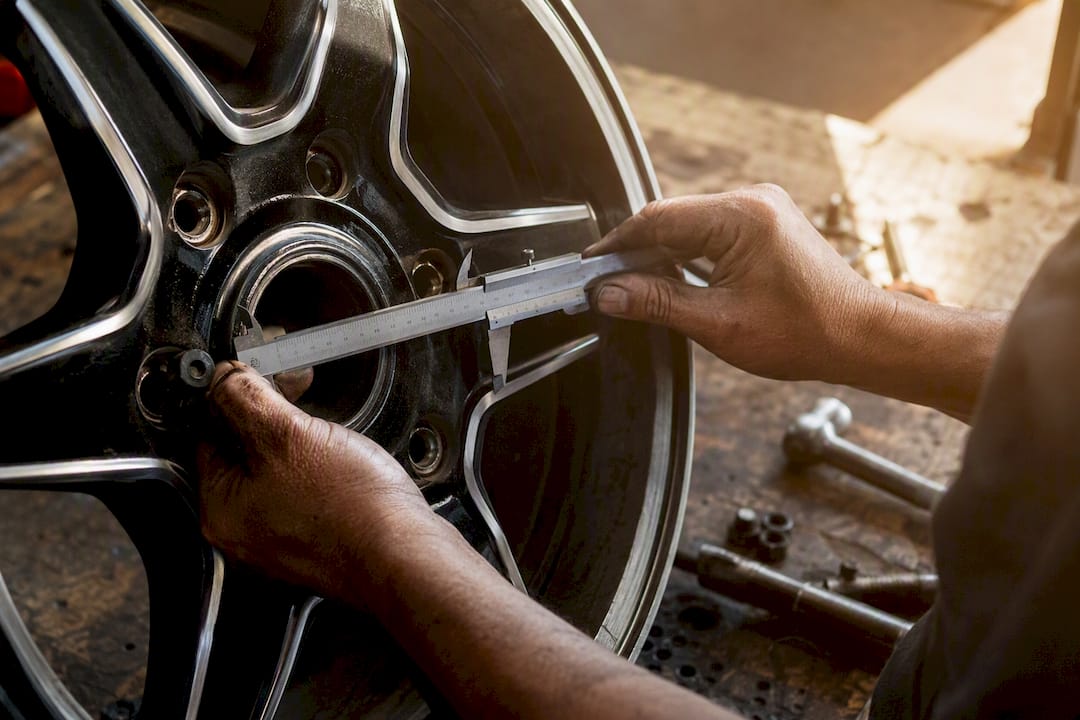
For odd lug counts (5 lugs, most common on cars and trucks): There’s no hole directly opposite another, so you either measure from the center of one hole to the outer edge of the hole across from it, or use a bolt pattern gauge, which removes the guesswork entirely. Tire Forge’s step-by-step measurement guide also walks through the sine-based formula if you want the exact PCD without a gauge.
Follow this sequence:
- Count the lugs and confirm even or odd
- For even counts, measure center-to-center across opposite holes
- For odd counts, measure center to far edge, or use a gauge/app for a direct readout
- Record the number in millimeters and convert to inches if needed for cross-referencing
- Measure a second time from a different angle to confirm you got the same figure
- Compare your result against your vehicle’s factory spec sheet or owner’s manual
Pro Tip: Measure twice from two different hole pairs before you trust the number. A worn lug hole or a slightly off angle on your tape measure is the most common reason people order the wrong wheels, and it’s an easy mistake to catch if you double-check before checkout.
Common Bolt Patterns and Which Vehicles Use Them
Most passenger vehicles cluster around a small handful of patterns, which makes cross-checking easier once you know your number. According to WheelPrice’s fitment reference, the patterns you’ll encounter most often include:
- 4×100 — common on older compact cars and some small hatchbacks
- 5×100 — widely used on Japanese sedans and hatchbacks, including many Subaru and Volkswagen models
- 5×114.3 — the most widespread passenger car pattern, found across Japanese, Korean, and American sedans and crossovers
- 5×120 — common on BMW and some European performance sedans
- 6×139.7 — the standard for full-size trucks and SUVs from most American and Japanese manufacturers
- 8×165.1 — heavy-duty trucks, including 3/4-ton and 1-ton pickups
Notice that inch and millimeter notations often describe the same pattern. A 5×4.5-inch pattern is the same physical layout as 5×114.3mm, just measured differently. Trucks and SUVs skew toward 6-lug and 8-lug setups because they need to spread braking and load forces across more contact points, as noted in Apex Wheels’ centerbore guide. None of this is a guarantee for your specific vehicle. Manufacturers change patterns between model years more often than people expect, so treat this list as a starting point, not a final answer.
Fitment Specs That Matter Beyond Bolt Pattern
A wheel with the right bolt pattern can still fit poorly. Four other specs determine whether it actually seats and torques correctly.
- Center bore is the hole in the middle of the wheel that fits over the hub. If it’s larger than your hub, centering rings close the gap and keep the wheel hub-centric instead of relying only on the lugs to center it.
- Lug seat type refers to the shape of the lug nut’s contact surface, conical, ball, or flat, and it has to match the wheel’s lug holes. Using the wrong seat type means the nut never seats properly, even if it threads on fine.
- Thread pitch is the spacing of the threads on your studs or bolts. Get this wrong and the lug nut either won’t turn smoothly or won’t torque to spec, both of which are dangerous at highway speed.
- Offset determines how far the wheel’s mounting face sits from its centerline, and it interacts directly with bolt pattern choice since a wider pattern often demands a different offset to clear suspension components.
Pro Tip: Check center bore before you assume centering rings will solve every fitment gap. Rings work for small differences, but if the gap is too large, the wheel won’t seat evenly no matter how tight you torque the lugs.
Adapters, Spacers, and Changing Your Bolt Pattern
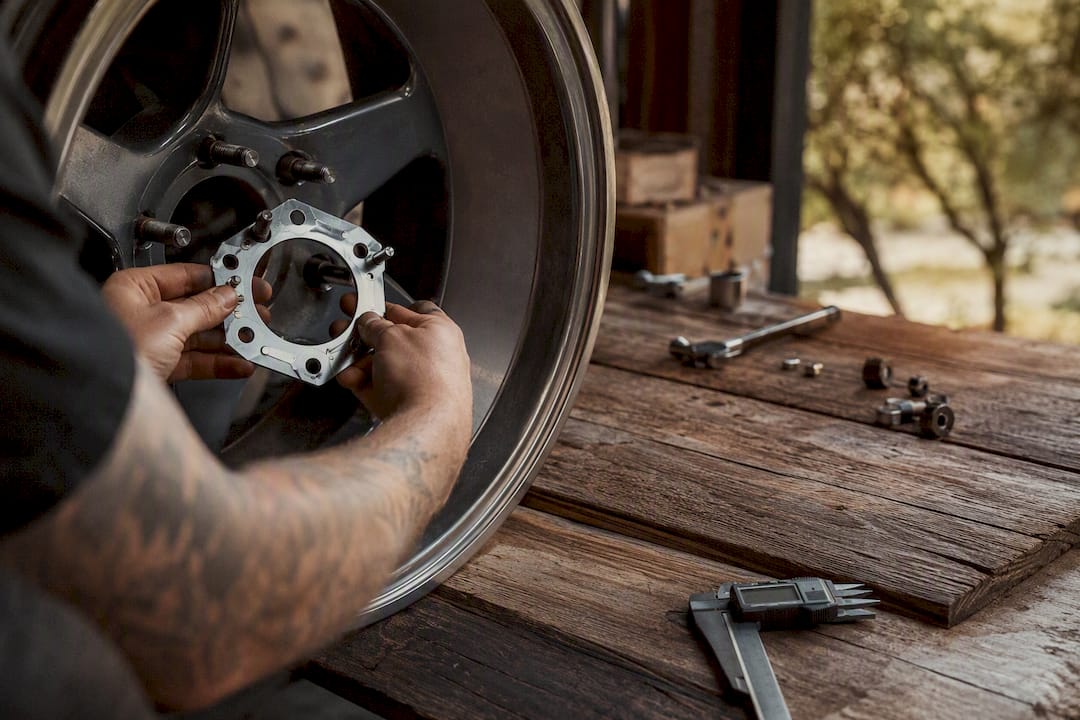
Wheel adapters and spacers let you run a wheel with a different bolt pattern than your hub, most commonly 5-lug to 6-lug conversions, or you can buy dual-drilled wheels that already have holes for two patterns. They work by bolting to your existing studs and providing a new mounting face with the pattern you need.
They also introduce real trade-offs:
- Adapters and spacers can change offset, affecting handling and adding load on studs and bearings. Quality and correct installation are critical to avoid vibration and potential failures. Using adapters may also affect warranty coverage.
If you go this route, stick to hub-centric adapters with load-rated studs, and torque everything to the adapter manufacturer’s spec, not just your wheel’s spec. In most cases, buying wheels that already match your factory pattern, or having a machine shop handle a proper conversion, beats stacking an adapter onto your hub.
Tools to Confirm Your Pattern Before You Order
A bolt pattern gauge remains the fastest way to get an exact reading, especially on 5-lug wheels where manual measuring gets fussy. Digital calipers work well as a backup, particularly for confirming center-to-center distances on even-lug patterns.
Apps and online fitment databases are useful as a second opinion, but they shouldn’t be your only source. Wheel-size is a solid example, mapping PCDs to make, model, and year, though it should always be paired with a physical measurement or your vehicle’s own documentation.
Before checkout, run through this:
- Confirm your pattern against your owner’s manual or a VIN lookup through the manufacturer
- Cross-check that number against a fitment database
- Verify offset and center bore for the specific wheel you’re buying
- Check lug seat type matches the hardware you already have
Why Ozkonic Kustomz Backs Every Fitment Claim
Ozkonic Kustomz sources parts directly from vetted manufacturers, so the fitment specs listed on a product page are the specs you actually get. No counterfeit sizing, no guessing games. Fast shipping, straightforward returns, and access to knowledgeable support mean a wrong assumption about your bolt pattern doesn’t turn into a shipping headache. If you’re outfitting a truck build, our aftermarket truck wheels guide breaks down fitment-first picks by application.
The One Habit That Prevents Most Fitment Mistakes
The most common errors we see: measuring to a hole’s near edge instead of its center, and ignoring lug seat mismatches entirely. Adopt one habit: measure, verify against spec, and photograph your hub before ordering. Reach out if you need a fitment check.
— Ozkonic Kustomz
Get Wheels and Hardware Matched to Your Exact Fitment
Ozkonic Kustomz built its parts sourcing around the exact problem this article just walked you through: guessing wrong on fitment costs you time, money, and a return shipment. Every part we sell comes from vetted manufacturers with fitment specs you can actually trust, not a generic listing hoping it fits. If you’re finishing out a steering or hub project alongside your wheel search, our old school steering column page shows how bolt-circle precision applies beyond just wheels, and our types of aftermarket wheels guide walks through how bolt pattern and offset interact when you’re choosing a new set.
Once you’ve confirmed your pattern and specs using the steps above, browse our hardware and accessories to round out your build with parts backed by the same fitment guarantee.
Sources
- Bolt circle — Wikipedia
- How to Measure Your Wheel Bolt Pattern (Step-by-Step) – Tire Forge
- How to Measure Your Bolt Pattern: Find Your PCD & Check Wheel Compatibility | WheelPrice
- Bolt Pattern & Centerbore Guide: What They Are and How to Measure Them | Apex Wheels
Recommended
- Aftermarket Truck Wheels: Fitment-First Picks for Truck Owners – Ozkonic Kustomz LLC
- Front Spindles Guide: Wide 5 vs 2in 5x5 for Performance Builds | Ozkonic Kustomz – Ozkonic Kustomz LLC
- Types of Aftermarket Wheels: 2026 Guide for Enthusiasts – Ozkonic Kustomz LLC
- Tread Pattern Performance: What Drivers Need to Know – Ozkonic Kustomz LLC