
Most tire rubbing is a clearance problem, not a wheel or suspension failure. Start with a dynamic clearance check, then try quick, reversible fixes like trimming a liner or adjusting a mud flap before you touch wheels or suspension. If those don’t solve it, the cause is probably a fitment mismatch or worn suspension hardware, and parts like the ride control air spring kit can help once you know what’s actually wrong.
TL;DR:
- Most tire rubbing issues stem from clearance problems caused by fitment, worn suspension parts, or loose liners, not wheel or suspension failure.
- Dynamic clearance checks, including turning the wheel and loading the vehicle, are essential before considering wheel or suspension changes, as static checks are insufficient.
- Fixes like correcting tire pressure, repositioning liners, or trimming plastic are reversible and should be attempted first, with permanent solutions reserved for confirmed mechanical issues.
- Proper diagnosis involves inspecting contact points under various conditions, checking alignment after fixing physical conflicts, and testing the repair under load and turn conditions.
- Replacing worn or bent suspension components, adjusting ride height, or installing correctly matched parts ensures long-term resolution, with OEM-fit parts preferred for safety and durability.
Table of Contents
- How Do You Diagnose a Tire Rub Fix?
- What Actually Causes Tire Rubbing on a Fender?
- What’s the Best Tire Rubbing Fix, Ranked From Easiest to Hardest?
- When Should You Stop Driving and Replace the Tire?
- How Do You Confirm the Fix Actually Worked?
- What Ozkonic Kustomz Recommends Before You Buy Parts
- What the Textbook Advice on Tire Rub Gets Wrong
- Parts That Actually Solve Rubbing Problems
- Sources
- FAQ
How Do You Diagnose a Tire Rub Fix?
You can’t fix what you haven’t located. A rub that only shows up at 40 mph over a bump is a different animal than one that happens every time you turn into a driveway, and guessing wastes money on parts you didn’t need.
Work through this sequence before you touch a wrench:
- Run the finger test. With the vehicle on level ground, slide two fingers between the tire and the fender lip at several points around the wheel. Tight spots show up fast this way.
- Turn the wheel full lock, both directions, while cleaning and inspecting for brake dust following safe removal practices. Inspect the inner fender liner and any brake lines or sway bar links for contact marks while the wheel is turned all the way.
- Bounce and compress the suspension. Push down hard on the bumper near each wheel and release. A scraping or thumping sound on rebound usually means the tire is meeting the fender or liner under compression.
- Drive slowly and turn lock-to-lock, then repeat while braking and with a passenger or cargo load aboard. Loaded, braking turns compress the suspension and steer the tire at the same time, which is exactly when a lot of rubs first appear.
- Mark the contact point. Chalk or tape on the tire’s shoulder will transfer to the liner or fender and show you precisely where contact happens. Photograph it.
- Check your numbers. Read the tire size stamped on the sidewall against what the door jamb sticker calls for, note the wheel width, and if you know it, the offset or backspacing. Confirm tire pressure is at spec, since a low tire grows in diameter and width more than most people expect.
Fitment specialists treat clearance as several separate tests rather than one pass/fail check. A car that clears fine parked and straight can still make contact under steering, compression, or braking loads, so skipping the dynamic steps is the most common reason a “fixed” rub comes back.
What Actually Causes Tire Rubbing on a Fender?
Once you know where and when the rub happens, match it to a cause.
- New wheels or tires. A wider tire, a lower offset wheel, or a taller profile can eat clearance that used to exist, even though the truck looks fine sitting still in the driveway.
- Lowered suspension. Rub usually shows up at the top of the fender or inner liner first, since the wheel travels up into a tighter space.
- Lifted trucks. Contact tends to hit the front outer fender edge or mud flap during hard steering, since the geometry changes how far the tire swings.
- Non-fitment problems. A liner that’s shifted or come loose, a bent control arm, worn control arm bushings, or a caliper bracket that’s slightly off can all cause contact with no wheel or tire change involved.
Alignment gets blamed a lot here, and it’s usually the wrong diagnosis. An alignment adjusts camber, caster, and toe to fix wear patterns and handling. It does not usually create physical space in the wheel well. If the tire is physically hitting something, align after you fix the interference, not instead of it.
Pro Tip: Before you assume it’s a suspension problem, pull the liner and check for a missing fastener. A liner that’s dropped an inch on one side is a five-minute fix that gets misdiagnosed as a lift or wheel issue all the time.
What’s the Best Tire Rubbing Fix, Ranked From Easiest to Hardest?
Work down this list in order. Most rubs get solved in the first three or four steps.
- Check and correct tire pressure. Underinflated tires bulge outward and grow in overall diameter, which alone can cause an intermittent rub over bumps.
- Rotate the tires. Wear patterns can shift a tire’s effective width slightly; a fresh rotation sometimes clears marginal contact.
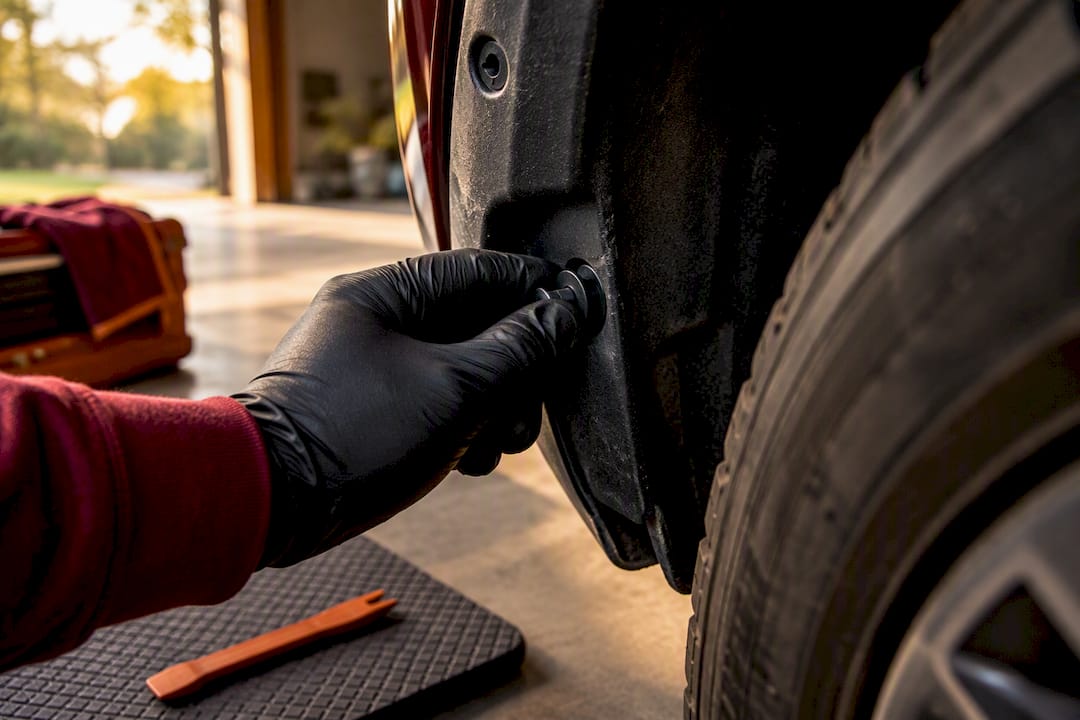
- Tighten or reposition the fender liner. Loose liner clips are a common, overlooked cause of first-turn rubbing.
- Adjust or remove mud flaps. Aftermarket flaps mounted too low or too far out are an easy first suspect on trucks.
- Trim the liner or a soft bumper edge. This is reversible on plastic liners but permanent on painted metal, so measure twice and remove the minimum material needed.
- Roll the fender lip with heat. A professional fender roll bends the lip flatter without cutting anything, buying real clearance without touching paint elsewhere.
- Add bump stops or adjust ride height. Extending bump stop travel limiters can stop compression-induced rub without changing a single wheel or tire spec.
- Change wheel offset or go to a narrower tire. This solves fitment-caused rub directly, but changes handling feel and may need new hardware. A wheel offset guide walks through how backspacing changes clearance before you buy.
- Install a leveling kit or lift. This raises the wheel well relative to the tire on trucks and SUVs, but changes ride height, alignment angles, and sometimes driveline geometry.
- Replace worn or bent suspension parts. A bent control arm or collapsed bushing can shift the whole wheel’s travel path; no wheel or tire change will fix that.
Pro Tip: If you’re adding wheel spacers to fix an offset problem, stick to a modest size and torque the hardware correctly. A guide on wheel spacer safety covers why 20mm and up starts putting real stress on studs and bearings.
Stop and call a shop if you see structural tire damage, any hint the tire is contacting a brake line or caliper, a bent steering knuckle, or rubbing that persists after a legitimate fitment change. Those aren’t DIY situations.
When Should You Stop Driving and Replace the Tire?
A scuffed liner mark is cosmetic. A cut, bulge, or exposed cord is not, and the difference matters more than most drivers assume.
Inspect the rubbed area closely. Sidewall bulges, visible cords, cuts deeper than the tread, or rapid air loss all mean the tire needs to come off the wheel for a full inspection, and possibly replacement, rather than a cosmetic patch. A tire that looks fine from outside can still have damaged internal cords.
Ford’s 24S21 field action on 2023 to 2024 Transit Trail vans is a real-world reminder of how seriously this gets treated at the manufacturer level. Under braking and tight turns while loaded near the vehicle’s rated capacity, tires were contacting the wheel arch liner repeatedly enough that Ford issued a dedicated clearance inspection.
If you’re not sure whether damage is cosmetic or structural, don’t guess. Stop driving and have a technician demount the tire for a proper look.
How Do You Confirm the Fix Actually Worked?
Fixing the rub on paper and fixing it on the road are two different things. Confirm it under the same conditions that caused the problem in the first place.
- Repeat the full dynamic test. Lock-to-lock turns, suspension compression, and loaded or braking turns, exactly like your original diagnosis.
- Inspect for fresh marks. Chalk or tape again, then check after a short drive.
- Drive 50 to 200 miles and watch for vibration, pressure loss, or new uneven wear, any of which can point to a fix that only partially worked.
- Get an alignment only after fixing the physical interference or replacing suspension parts. Doing it first wastes money, since alignment doesn’t create clearance on its own.
- Write down what you changed. Parts swapped, liner trimmed, spacer size, whatever it was. That record matters if a warranty claim or recall notice ever comes up later.
Watch your tire load rating too if the rub happened while towing or hauling, since a loaded vehicle compresses suspension differently than an empty one, and our tire load rating guide breaks down why that matters for clearance specifically.
What Ozkonic Kustomz Recommends Before You Buy Parts
Parts are sourced from vetted manufacturers and fitment is verified before shipping, because a wrong-fit spacer or suspension component just creates a new version of the same rubbing problem you started with.
Try reversible fixes first: liner trimming, bump stop adjustment, mud flap repositioning. Save wheel, tire, or suspension changes for confirmed fitment or mechanical causes, and lean toward OEM-fit replacement parts over generic ones when a bushing or control arm is worn out. Before ordering anything, photograph the contact point and note your exact wheel and tire specs. A fitment-verified product page can only match a part correctly when you give it the same detail you’d give a shop.
What the Textbook Advice on Tire Rub Gets Wrong
Most guides treat tire rubbing as a wheel-and-tire math problem: get the offset right, get the width right, done. That’s true often enough to be dangerous, because it skips the two causes we see cause the most repeat comebacks: worn suspension bushings and loose liners. Both are cheap to check and easy to miss if you jump straight to new wheels.
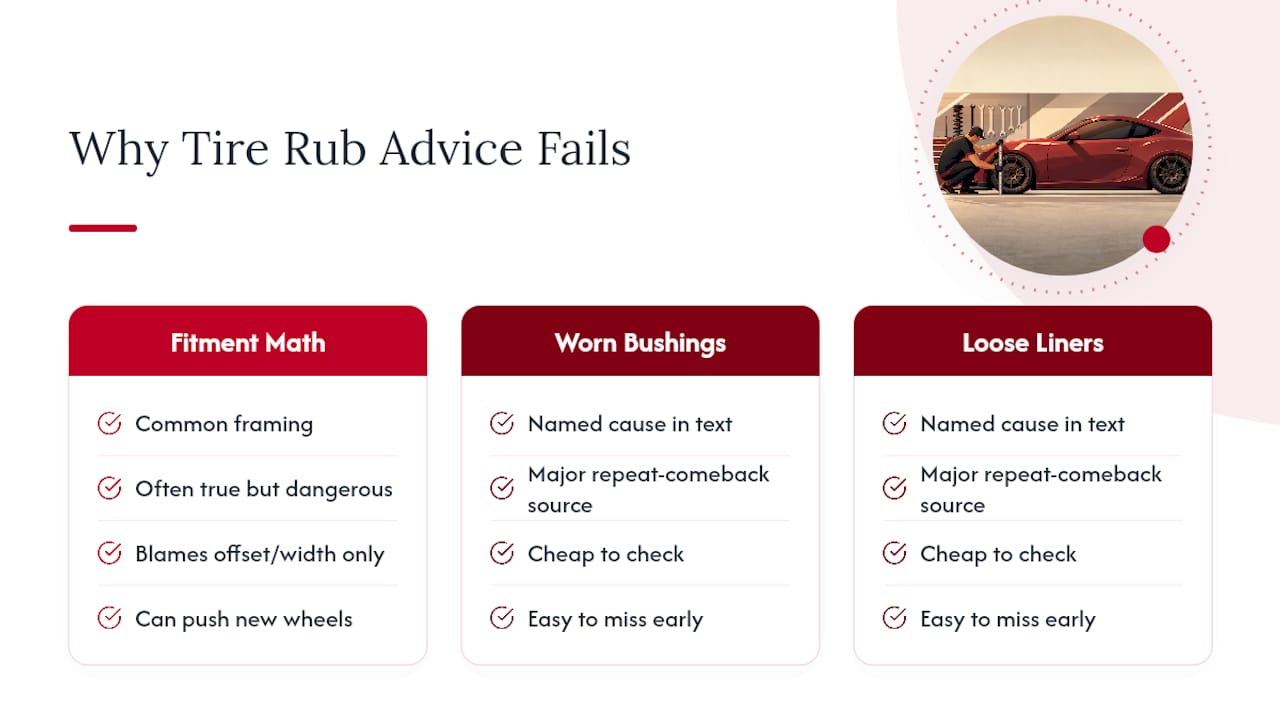
The other overrated fix is alignment. It gets recommended as a cure for rubbing more than it should, when its real job is correcting wear and handling after the clearance problem is already solved. Chase alignment first and you’ll often spend money to fix the wrong thing.
What actually matters is sequence: diagnose dynamically, fix the cheapest reversible cause first, and only escalate to parts or suspension changes once you’ve ruled out the simple stuff. Owners who want to do the work themselves and still want a fitment-verified part waiting when they need one get the best of both worlds. That’s a more useful goal than chasing a single “correct” offset number.
— Ozkonic Kustomz
Parts That Actually Solve Rubbing Problems
Once you’ve diagnosed the real cause, the right part makes the fix permanent instead of temporary.
If worn bushings or a sagging control arm are letting the tire travel too far under load, our Suspension & Chassis collection covers the components that restore correct wheel travel. If you’re raising the truck to gain fender clearance the right way instead of hoping a spacer solves it, our Lift Kits selection is built around known ride height and geometry changes, not guesswork. For fitment corrections, the Wheels & Wheel Accessories category covers offset and spacer options sized correctly for your setup. If you’re hauling loads that compress the suspension and trigger rub only when loaded, a ride control air spring kit adds adjustable support without a permanent lift.
Before you order anything, have your year, make, model, and trim ready, along with your current wheel and tire specs and a photo of the rub area. Send those details in and ask for fitment verification. That’s how you avoid buying a part that solves nothing.
Sources
- What You Need to Know About Tire Alignment
- 24S21 - Tire clearance inspection - 2023-2024 Ford Transit
- SAE Mobilus (fitment and vehicle dynamics resources)
- Signs your car needs a wheel alignment (Discount Tire)
FAQ
Is Tire Rubbing a Big Deal?
Yes, treat it seriously rather than ignoring it. Repeated contact under load and braking can escalate to sidewall damage or even trigger manufacturer field actions, as Ford’s Transit clearance notice shows.
Will an Alignment Fix Tire Rubbing?
Usually not on its own. Alignment corrects camber, caster, and toe angles for wear and handling, but it typically doesn’t create additional physical clearance, so fix the interference first and align afterward.
Will Wheel Spacers Fix Tire Rub?
Spacers can fix rub caused by an offset that’s too aggressive, but only when sized correctly and installed with proper hardware. Our wheel spacer safety guide covers how much spacer is safe before you strain studs or bearings.
Will a Lift Kit Stop My Tires From Rubbing?
A lift or leveling kit can solve rubbing caused by insufficient ride height on trucks and SUVs, since it raises the wheel well relative to the tire. It won’t help if the real cause is a loose liner, worn bushing, or wrong wheel offset, so diagnose first.
What Vehicle Info Does Ozkonic Kustomz Need for Fitment Verification?
Provide your year, make, model, and trim, your current wheel and tire specs, and a photo of the contact point. That lets Ozkonic Kustomz confirm a part fits before it ships.