
For a daily driver, a Bilstein 5100 or Old Man Emu BP-51 kit gives you a comfortable, reliable lift without breaking the bank. Overlanders hauling a roof-top tent should look at Old Man Emu or Dobinsons for load-rated springs and stable towing manners. Desert runners want King 2.5 or Fox 2.5 bypass shocks for heat management at speed. Rock crawlers lean toward Icon Vehicle Dynamics Stage kits or Camburg long-travel arms, and anyone towing regularly should pair a rear leaf upgrade from Deaver or a helper kit like SumoSprings with whatever front shocks they choose.
- Daily driver: Bilstein 5100 for OE-quality valving and easy install.
- Overland/roof-top tent: Old Man Emu BP-51 for load-rated comfort under real cargo weight.
- Desert/high-speed: King 2.5 remote-reservoir coilovers for heat control and rebuildability.
- Rock-crawling: Icon Stage 4 for bypass tuning and control-arm geometry.
- Towing/hauling: Deaver leaf springs or SumoSprings paired with upgraded shocks.
Ozkonic Kustomz can help you source the right hardware and confirm fitment before you order, which matters more than most buyers realize until they’re stuck with a part that doesn’t clear their tires.
Key Takeaways
The right Tacoma suspension upgrade depends on matching shock type, spring rate, and rear load solution to your actual driving weight and terrain, not just your budget.
| Point | Details |
|---|---|
| Match shocks to use case | King and Fox bypass shocks suit desert speed; Bilstein 5100 suits daily comfort. |
| Rear matters as much as front | Pair stiffer front coilovers with a rear spring or helper kit rated for your load. |
| Budget realistically | Expect $600 to $1,500 for basic upgrades, $4,500 to $6,000 for premium full kits. |
| Alignment is not optional | Every lift or control arm swap changes geometry enough to require realignment. |
| Source parts through a vetted supplier | Ozkonic Kustomz checks fitment before you buy, reducing mismatched-part returns. |
Table of Contents
- Comparing Tacoma Suspension Upgrades Side by Side
- What Each Suspension Option Actually Gives You
- How Do You Choose the Right Suspension for Your Truck?
- What Does Installation Actually Cost and How Long Does It Take?
- Sourcing Parts and Getting Fitment Right the First Time
- Sources
Comparing Tacoma Suspension Upgrades Side by Side
The gap between a $600 leveling kit and a $6,000 Icon Stage 4 setup isn’t just price. It’s the difference between a truck that looks lifted and a truck that’s actually built to handle the terrain you drive. Budget spacers reduce droop and travel, which often makes off-road performance worse even though the truck sits higher. Mid-level shock swaps like the Ask a Counter Guy shop team recommends solve that problem by keeping factory geometry while upgrading valving.
| Option | Best For | Price (Parts / Installed) | Lift / Travel Gain | Ride Quality On-Road | Off-Road / Heat Handling | Serviceability | Install Difficulty |
|---|---|---|---|---|---|---|---|
| Ozkonic Kustomz (supplier) | Buyers needing fitment help and parts sourcing | Varies by parts ordered | Depends on kit chosen | Depends on kit chosen | Depends on kit chosen | Vendor support for service parts | Fitment verified before purchase |
| Bilstein 5100 | Daily drivers wanting OE-plus reliability | $1,000–$1,500 installed | 1–2.5 in lift | Comfortable, controlled | Good, moderate heat resistance | Sealed monotube, not rebuildable | Moderate, bolt-on |
| Old Man Emu BP-51 | Overlanders carrying real payload | $2,500–$4,000 installed | Load-adjustable, up to 3 in | Firm but planted under load | Strong under sustained weight | Rebuildable reservoir design | Moderate to advanced |
| Fox 2.0/2.5 IFP/Bypass | Weekend trail and moderate desert use | $2,000–$4,000 installed | 2–3 in, more travel with bypass | Firmer, controlled | Very good with IFP cooling | Rebuildable at Fox service centers | Advanced |
| King 2.5 Series | Desert and high-speed off-road | $4,500–$6,000 installed | 2.5–3 in, long travel | Firm, connected feel | Excellent, remote reservoir cooling | Fully rebuildable | Advanced, may need mounts |
| Icon Stage 4 | Rock-crawling and technical trails | $4,500–$6,000 kit | 2.5–3 in with bypass tuning | Firm, performance-oriented | Excellent, bypass valving | Rebuildable, factory-supported | Advanced, full arm swap |
| Dobinsons IMS | Balanced overland and trail use | $1,800–$3,000 installed | 2–3 in | Comfortable to firm | Good, solid mid-tier damping | Serviceable, replaceable parts | Moderate |
A few trade-offs stand out once you look past the price tags:
- Spacers and leveling kits are the cheapest route but cut travel, which hurts the off-road performance you probably bought a truck for in the first place.
- Reservoir-equipped shocks from King and Fox cost more but hold up better on long, fast desert runs because the extra fluid capacity resists heat fade.
- Icon Stage 4 and similar full kits change more than ride height. New control arms alter camber curves and often need a fresh alignment baseline.
Pro Tip: If you’re upgrading front coilovers, don’t ignore the rear. A stiffer front paired with tired factory rear leafs creates a lopsided, harsh ride that owners often blame on the wrong component.
What Each Suspension Option Actually Gives You
Bilstein 5100 / 6112 / 5160 cover a wide range. The 5100 is a direct shock swap that raises ride height slightly while keeping stock springs, making it the easiest entry point into better damping. The 6112 pairs a coilover front with a 5160 reservoir shock in back for a more complete kit. Owners consistently report the 5100 as the best value upgrade for a truck that’s mostly a daily driver with occasional trail use.
Old Man Emu (OME / BP-51) kits are built around load capacity first. The BP-51 uses a remote reservoir and adjustable valving, which makes it a favorite for guys running rooftop tents, drawer systems, and long-range fuel tanks. Standard OME leaf packs and coils are rated by load, so picking the right spring rate for your actual gear weight matters more here than with lighter-duty options.
Fox (2.0, IFP, 2.5 bypass) shocks scale from a basic 2.0 series (similar tier to the Bilstein 5100) up to 2.5 bypass shocks with separate compression and rebound tuning zones. The bypass design lets the shock ride softer over small chatter but stiffen up during big compression events, which is exactly what desert and rock trails demand.
King 2.5 Series shocks are the shop-recommended step up when you’re doing serious high-speed off-road driving. A 5,000-mile owner review found rebuild intervals landing around 10,000 to 30,000 miles under heavy use, with a noticeably firmer, more connected road feel than stock. That firmness is the trade-off: some daily commuters find King shocks too stiff for pothole-heavy city streets.
Icon Vehicle Dynamics Stage kits, especially the Stage 4, bundle bypass coilovers, uprated upper control arms, and new rear coil springs into one system. A 2024 install writeup put total kit pricing between $4,500 and $6,000 depending on retailer and configuration, positioning it as a top-tier, rock-crawling-focused build.
Dobinsons IMS kits sit in the middle ground, offering solid damping and load capacity without the reservoir-shock price tag. Camburg control arms are less about ride height and more about geometry correction for long-travel builds. MaxTrac and budget lift kits tend to focus on cosmetic height gain, so temper expectations if off-road capability is the goal. Deaver leaf springs and SumoSprings helper kits solve rear sag under towing loads, a common complaint on trucks that see regular trailer or camper duty.
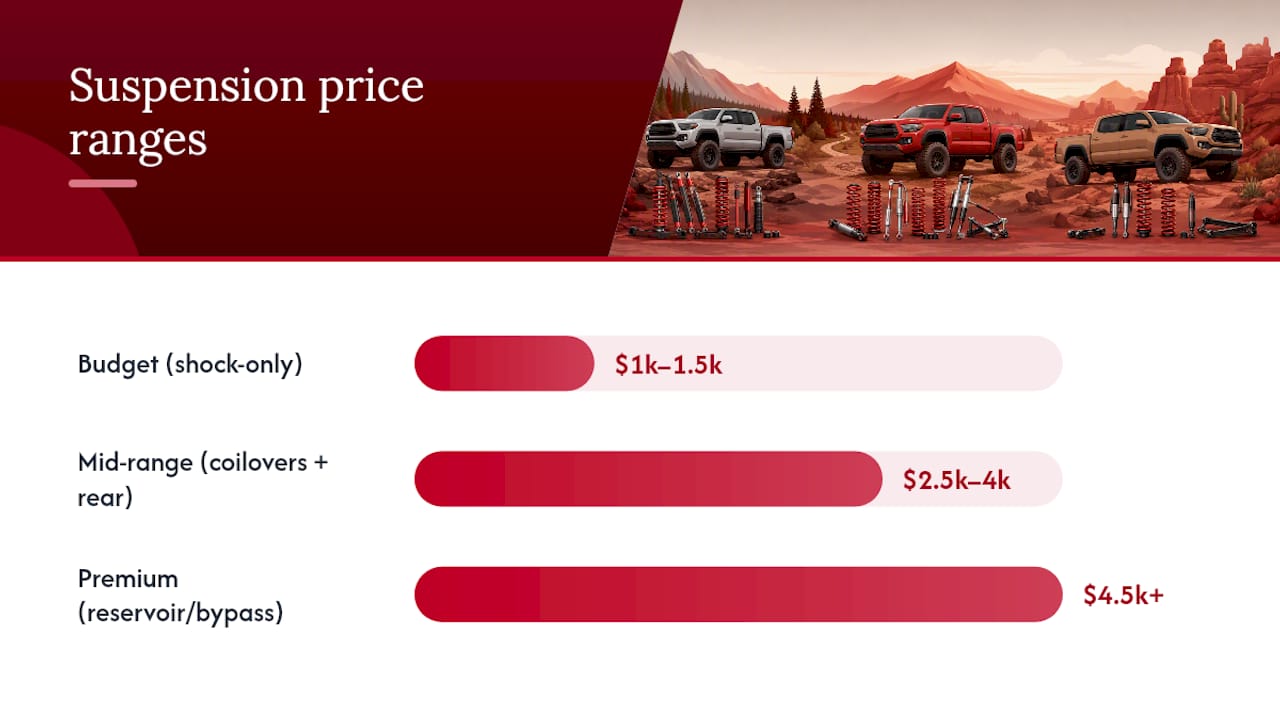
Budget shoppers should expect $1,000 to $1,500 for a shock-only swap. Mid-range builds with coilovers and rear shocks run $2,500 to $4,000. Premium reservoir and bypass setups start around $4,500 and climb from there once labor and alignment are included.
How Do You Choose the Right Suspension for Your Truck?
Start with how you actually use the truck, not how you want to use it someday. A Tacoma that hauls camping gear on weekends needs a different spring rate than one that sees a dedicated desert race course twice a year.
- Weigh your actual gear. Load the truck the way you normally drive it and get a real weight reading before picking spring rates.
- Pick shocks before springs. Shop advisors note that shocks are the single easiest component to change for meaningful ride improvement.
- Match your rear to your front. A stiff front coilover paired with soft factory rear leafs creates uneven handling.
- Budget for alignment. Every lift changes suspension geometry enough to need a fresh alignment.
- Confirm tire clearance before ordering a lift height you can’t actually run.
- Ask your shop if they’ve installed this exact kit on a Tacoma before, not just “a truck.”
- Confirm whether the shop performs alignment in-house or sends it out, and factor that into your timeline.
- Walk away from any installer who can’t explain why they’re recommending a specific spring rate for your weight.
Pro Tip: Never adjust coilover preload while the shock is still mounted on the truck. Roughly 0.25 inches of preload change equals about 0.50 inches of ride height, and you need to drive the truck to settle the suspension before measuring anything.
What Does Installation Actually Cost and How Long Does It Take?
Budget kits (spacers, basic shock swaps) typically run $600 to $1,500 installed and take a few hours of shop labor. Mid-range coilover and shock combos land between $2,500 and $4,000, with a full day of install time plus alignment. Premium reservoir or bypass kits like King or Icon Stage 4 often require $4,500 to $6,000 total and can take a full day to a day and a half once you account for control arm swaps and alignment work.
- DIY installation works for straightforward shock swaps if you have basic tools and a lift, but always finish with a professional alignment.
- Full coilover and control-arm kits, especially Icon Stage 4 builds, often need related hardware like sway bar end links and brake line brackets replaced during install.
- Reservoir shocks from King or Fox should get inspected on a service schedule, not just when something feels wrong.
What Do Long-Term Owners Report About Durability?
Premium reservoir shocks like the King 2.5 need rebuilding roughly every 10,000 to 30,000 miles under heavy use, but owners say that serviceability keeps long-term costs reasonable compared to replacing sealed units. Many describe the ride shifting from stock’s soft, floaty character to something firmer and more “planted,” a trade-off 4th Gen Tacoma forum members debate is worth it only if you actually drive fast off-road regularly.
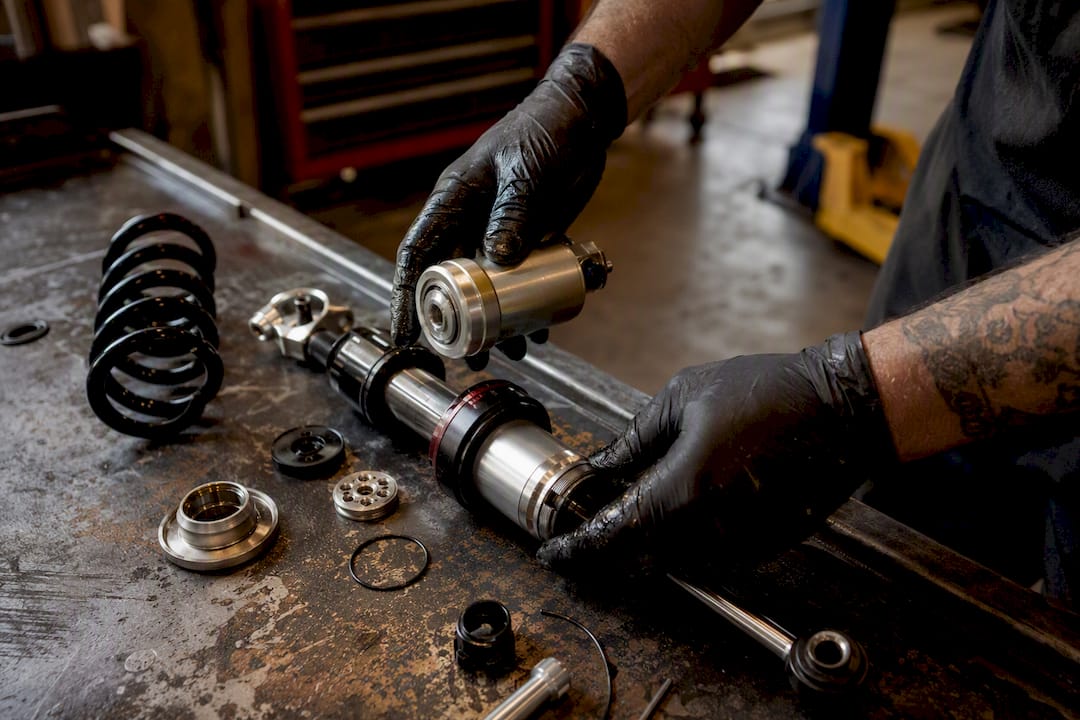
Pro Tip: Check spherical bearings and reservoir mounts at every oil change interval. Catching wear early is cheaper than a full rebuild.
Should You Spend Up or Keep It Simple?
If you daily-drive your Tacoma and hit trails occasionally, a mid-tier shock swap covers most of what you need. Frequent off-roaders should budget for rebuildable kits and always check clearance with your installer.
Sourcing Parts and Getting Fitment Right the First Time
Buying suspension parts online without fitment confirmation is how owners end up with control arms that hit the frame or shocks that need custom mounts. Ozkonic Kustomz sources directly from vetted manufacturers, checks fitment against your specific Tacoma trim and year, and helps you avoid the counterfeit and mismatched-part problems that plague generic marketplace listings.
Beyond the core suspension components, matching your rear load solution matters just as much as picking the right shocks. If you’re dealing with sag under a topper or trailer tongue weight, an air spring kit can level the truck without changing your ride height at rest. Ozkonic Kustomz also stocks the small hardware, like fitting elbows for reservoir plumbing, that custom builders need but rarely find at a regular parts counter. Once your parts arrive, schedule an alignment with your installer, and reach out to Ozkonic Kustomz if you need help confirming a spring rate or bolt pattern before you order.
Sources
- King Shocks 2.5 Lift Kit For 4th Gen Tacoma - 5,000 Mile Review
- Ask a Counter Guy: Which Suspension Upgrades For A Tacoma And Why?
- 2024 Tacoma ICON Stage 4 Suspension Upgrade and Install Guide
- 4gtaco