

A performance chip is a software recalibration of your vehicle’s engine control unit (ECU) that unlocks extra power, torque, and efficiency by rewriting factory-set calibration maps. The term “performance chip” is the popular name for what the industry calls ECU remapping or ECU tuning. Modern tuning does not involve swapping a physical chip. Instead, a tuner rewrites the software stored in your ECU’s flash memory, adjusting how your engine manages fuel, air, and ignition. For U.S. car enthusiasts and DIYers in 2026, understanding this performance chip explained guide means knowing exactly what changes, what you gain, and what risks you take on.
How does a performance chip work inside your ECU?
The ECU is the brain of your engine. It controls fuel injection timing, boost pressure, torque limits, and throttle response using a set of calibration maps stored in flash memory. A tuner accesses these maps through the OBD2 port or a direct bench connection, edits the values, recalculates the internal checksums, and writes the new file back to the ECU. The result is a vehicle that behaves differently without a single mechanical part being changed.
Modern chip tuning is a software edit on ECU flash memory via the OBD2 port. Physical chip swaps are a legacy method, mostly obsolete by 2026. If someone tries to sell you a plug-in “chip” for a late-model Ford F-150 or Chevrolet Silverado, be skeptical. Real gains come from rewriting the calibration file, not from adding hardware.
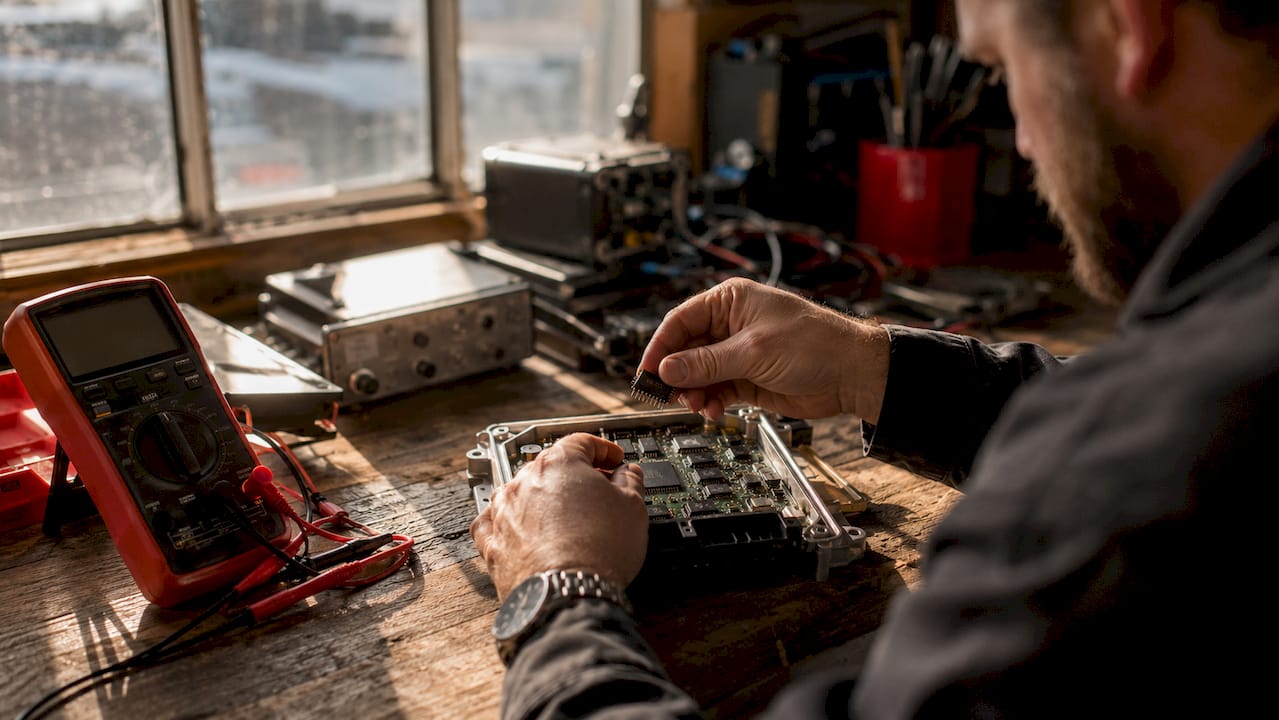
Factory ECUs carry significant safety margins to handle global fuel quality differences, emissions regulations, and warranty buffers. Manufacturers deliberately cap boost pressure below the turbo’s potential, limit fuel injection before the smoke threshold, and artificially restrict torque output. Tuning reclaims this unused headroom. The engine hardware is already capable of more. The software is simply holding it back.
The table below shows the main ECU calibration parameters a tuner adjusts during a Stage 1 remap.
| ECU Parameter | What Gets Changed | Effect on Performance |
|---|---|---|
| Boost pressure | Raised toward turbo limit | More power across the RPM range |
| Fuel injection timing | Advanced for better combustion | Improved torque and efficiency |
| Torque limiter | Lifted to match new output | Removes artificial power ceiling |
| Throttle response map | Sharpened pedal curve | Faster, more direct acceleration feel |
| Smoke limiter | Relaxed on diesel engines | Allows more fuel without visible smoke |
Pro Tip: Ask your tuner to show you a before-and-after comparison of the boost and torque maps. A reputable shop will have no problem sharing this data.
What performance gains and costs can you expect?
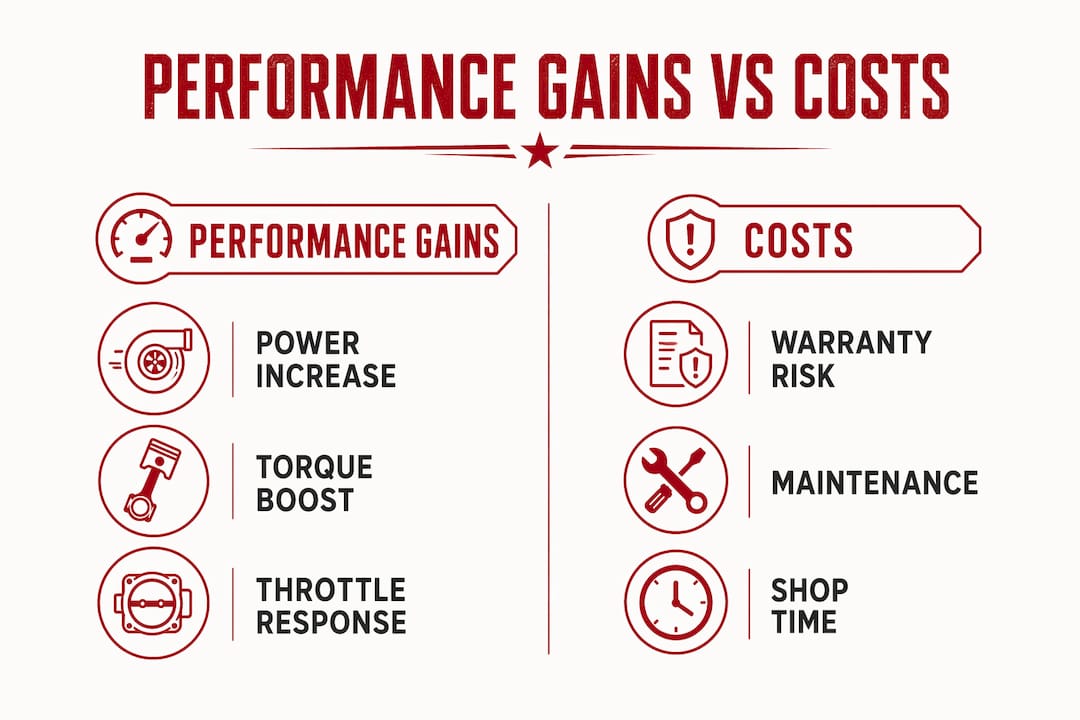
Stage 1 software tuning typically increases turbocharged engine power by 15–25%, adding roughly 25–40 HP and 50–90 NM of torque depending on the platform. That is a meaningful gain you feel immediately in throttle response and mid-range pull. Naturally aspirated engines gain far less, typically 5–8%, because there is no boost pressure to raise. For a naturally aspirated engine, the real benefit is a sharper throttle map and a smoother power delivery curve rather than a dramatic horsepower jump.
The comparison table below breaks down typical gains and costs by engine type.
| Engine Type | Typical Power Gain | Typical Torque Gain | U.S. Cost Range | Shop Time |
|---|---|---|---|---|
| Turbocharged (gas or diesel) | 15–25% / 25–40 HP | 50–90 NM | $300–$600 | 1–2 hours |
| Naturally aspirated | 5–8% | Modest improvement | $300–$600 | 1–2 hours |
| Remote tune (any type) | Same as above | Same as above | $300–$600 | Up to 24 hours |
Stage 1 tuning in the U.S. market costs between $300 and $600 and takes 1–2 hours in a shop or up to 24 hours for a remote tune via a handheld device. Remote tuning is popular because you mail in your ECU or use a device that reads and writes the file at home. The tradeoff is that you wait longer for the tuned file to come back.
A few factors directly affect how much you gain:
- Vehicle condition. Worn spark plugs, a dirty air filter, or a failing mass airflow sensor will limit gains. Fix these first.
- Fuel quality. Premium fuel is required for most gas tunes. Running 87 octane on a tune built for 93 octane risks knock.
- Supporting modifications. A cold air intake or upgraded intercooler gives the tuner more headroom to work with.
- Tuner quality. A generic off-the-shelf map delivers less than a custom dyno-tested file built for your specific vehicle.
What are the pros and cons of performance chips?
The benefits of performance chips are real and well-documented. Recalibration modifies boost, injection timing, and torque limits to produce smoother, sharper engine behavior. Turbocharged vehicles feel transformed. The throttle responds faster, the torque arrives earlier in the RPM range, and the engine pulls harder through the gears. Some tunes also improve fuel economy at highway cruise speeds by optimizing injection timing, though aggressive power tunes typically reduce economy under hard driving.
The downsides are equally real and worth understanding before you commit.
- Warranty risk. Professional tuning is reversible by reflashing the original factory software, but manufacturers may deny warranty claims if modifications are detected. Many dealers use software tools that flag ECU changes.
- Increased mechanical wear. Higher torque and heat output put more stress on pistons, connecting rods, and the transmission. This is manageable but real.
- Emissions compliance. Some tunes alter parameters that affect emissions output. In states with strict smog testing, such as California, a modified ECU can fail an inspection.
- Legal considerations. Check your state’s regulations before tuning. Emissions laws vary significantly across the U.S.
- Reliability depends on the tune. A poorly written calibration file can cause misfires, knock, or even engine damage. Always use a reputable tuner with verifiable results.
Tuning increases engine stress, so maintenance intervals for oil and spark plugs should be shortened after a tune to handle higher torque and heat output. This is not optional. It is the cost of running your engine harder.
Pro Tip: After any tune, drop your oil change interval by at least 25% and inspect spark plugs at the next service. Higher combustion temperatures accelerate wear on both.
How do you install a performance chip safely?
Installing a performance chip means choosing between two main paths: a professional in-shop tune or a remote tune using a handheld device. Both have legitimate uses. The right choice depends on your budget, your location, and how much you want to be involved in the process.
In-shop professional tuning
A professional tuner connects directly to your OBD2 port, reads the stock ECU file, builds or applies a calibration, and writes it back. A good shop will also run the vehicle on a chassis dynamometer to verify power output and check for knock or other issues. This is the most reliable method for a custom tune.
Remote tuning with a handheld device
Remote tuning works by sending your ECU file to a tuner online. You use a handheld device to read the stock file, email it to the tuner, receive the modified file, and write it back yourself. Companies like EFI Live and HP Tuners produce the hardware and software platforms that many remote tuners use. The process takes up to 24 hours but costs the same as an in-shop tune.
For DIYers who want to self-install, follow these steps:
- Check vehicle health first. Fix any existing fault codes, replace worn spark plugs, and confirm your air filter is clean.
- Verify fuel requirements. Confirm the octane rating your tune requires and use only that grade.
- Back up your stock file. Always save the original ECU file before writing anything new. This is your insurance policy.
- Follow the tuner’s write instructions exactly. Do not interrupt the write process. A failed write can brick the ECU.
- Test drive conservatively. After the tune, drive gently for the first 20–30 miles and monitor for any unusual behavior before pushing the engine hard.
- Schedule a follow-up check. Return to the shop or contact your remote tuner after 500 miles to confirm everything is running correctly.
Reversibility is usually possible, but manufacturers may still detect modifications even after a reflash to stock. If your vehicle is under warranty, weigh that risk carefully before proceeding. A fuel injector connector kit and proper wiring connections are worth inspecting before any tune, since weak electrical connections can cause inconsistent fueling that masks or amplifies tuning results.
Key Takeaways
A performance chip delivers real, measurable gains by rewriting ECU calibration maps, but turbocharged engines benefit far more than naturally aspirated ones, and responsible tuning always includes shorter maintenance intervals and honest warranty awareness.
| Point | Details |
|---|---|
| Modern tuning is software-only | Physical chip swaps are obsolete; all gains come from rewriting ECU flash memory via OBD2. |
| Turbo engines gain the most | Expect 15–25% power gains and 50–90 NM of torque on turbocharged platforms. |
| Cost and time are predictable | Stage 1 tunes cost $300–$600 and take 1–2 hours in a shop or up to 24 hours remotely. |
| Warranty risk is real | Tuning is reversible, but manufacturers can detect ECU changes and deny warranty claims. |
| Maintenance must increase | Shorten oil and spark plug intervals after tuning to handle higher heat and torque output. |
What I’ve learned after years of watching enthusiasts tune their builds
The biggest mistake I see is treating a tune as the first modification instead of the last. You get a tune, feel the extra pull, and think you are done. Then six months later the transmission slips because it was never built to handle the new torque, or the engine knocks because the owner switched to cheap gas. A tune is only as good as the hardware supporting it.
The second mistake is chasing horsepower numbers instead of drivability. A naturally aspirated engine gaining 6% on paper sounds underwhelming, but a properly sharpened throttle map on a V8 truck makes that vehicle feel genuinely different to drive. The response is immediate. The power delivery is smoother. That improvement matters more on a daily driver than 15 extra horsepower at the top of the rev range.
My honest advice: get a professional tune from a shop that will show you the before-and-after data. Avoid generic plug-in devices that claim massive gains with no custom calibration. And always, always keep your stock file. The ability to return to factory settings is the one safety net you should never give up. Tuning is a calculated recalibration, not a magic fix. Treat it that way and it will serve you well for years.
— Ozkonic Kustomz
Upgrade your build with the right hardware from Ozkonickustomz
A tune is only part of the equation. The wiring, sensors, and hardware supporting your engine need to be up to the job before you push more power through the system.

Ozkonickustomz carries a full range of automotive hardware and wiring components built for performance builds, including solenoids, wiring harnesses, fuel injector connectors, and instrument systems. Whether you are prepping a classic truck or a modern performance build, having the right parts in place before you tune makes the difference between a reliable build and an expensive repair. Browse the AUTO-LOC solenoid hardware and high-amp alternator kits at Ozkonickustomz to make sure your electrical system is ready to support your upgraded output.
FAQ
What is a performance chip exactly?
A performance chip is a software recalibration of your vehicle’s ECU that adjusts fuel, boost, and torque maps to increase power and improve throttle response. Modern tuning does not involve a physical chip replacement.
How much horsepower does a performance chip add?
Turbocharged engines typically gain 25–40 HP and 50–90 NM of torque from a Stage 1 tune. Naturally aspirated engines gain 5–8%, which shows up more in throttle response than raw horsepower.
What is the difference between a performance chip vs remapping?
Performance chip and remapping describe the same process in modern vehicles. “Chip tuning” is an older term from when tuners physically replaced a ROM chip. Today, both terms refer to rewriting the ECU’s software calibration file.
Will a performance chip void my warranty?
Tuning can void your warranty if the manufacturer detects ECU modifications. Reflashing to stock reduces the risk but does not eliminate it, since some manufacturers use tools that flag prior changes.
Is installing a performance chip safe for daily driving?
A properly written tune from a reputable tuner is safe for daily driving. The key requirements are using the correct fuel octane, shortening maintenance intervals, and ensuring the vehicle is in good mechanical condition before tuning.