

For most enthusiasts tired of choke cables, flooded bowls, and altitude tuning, a Holley Sniper EFI conversion is worth it. You trade carburetor fiddling for a throttle body that tunes itself, and cold starts stop being a negotiation. Holley’s lineup splits into two tiers based on your power goals: the single 4-injector Sniper handles roughly up to 650 hp, while the 8-injector Super Sniper and Sniper 2 configurations stretch to around 1,250 hp. Before you buy, confirm your fuel system and manifold flange can support the swap.
- Verdict: recommended for daily-driven classics and street performance builds
- 4-injector Sniper: up to ~650 hp
- 8-injector Super Sniper/Sniper 2: up to ~1,250 hp
- Do first: check fuel pump capacity and manifold compatibility
Key Takeaways
Holley Sniper EFI delivers its biggest value through consistent starts and driveability, not through peak horsepower, and a careful DIYer can complete the swap in about three days.
| Point | Details |
|---|---|
| Choose the right tier | Pick the 4-injector Sniper for builds up to ~650 hp or the 8-injector Super Sniper/Sniper 2 for builds up to ~1,250 hp. |
| Set a realistic timeline | Plan for a long weekend, and add days if you need to weld an O2 bung or fabricate hardlines. |
| Check fitment before buying | Confirm flange pattern, air cleaner clearance, and throttle linkage compatibility first. |
| Prioritize RFI prevention | Route wiring away from ignition sources and ground the ECU directly to avoid the most common troubleshooting call. |
| Source wiring carefully | Ozkonic Kustomz supplies platform-specific harnesses and fittings vetted for fitment to reduce install risk. |
Table of Contents
- What Does the Holley Sniper EFI Family Include?
- What Are the Real Benefits of Sniper EFI Over a Carburetor?
- How Long Does a Sniper EFI Installation Take?
- Will Sniper EFI Fit Your Engine and Manifold?
- What Causes the Most Common Sniper EFI Problems?
- Is Sniper EFI Right for Your Vehicle?
- How Ozkonic Kustomz Supports Your Sniper EFI Build
- How Do You Wire a Sniper EFI System Correctly?
- What Tuning Options Does Sniper EFI Offer?
- What Does a Sniper EFI Install Actually Cost?
- Where Should You Buy Sniper EFI Parts and Support?
- What Installation Mistakes Should You Avoid?
- What Upgrades Pair Well With Sniper EFI?
- What Most Guides Get Wrong About This Swap
- Get the Right Parts for Your Sniper EFI Conversion
- Frequently Asked Questions
- Sources
What Does the Holley Sniper EFI Family Include?
Every Sniper system centers on a throttle body with the ECU mounted right on top. There’s no laptop tuning required for a basic setup. You bolt it on, wire it up, and run a self-tuning wizard that builds a base fuel map from your engine’s displacement, cam specs, and a handful of prompts.
The lineup breaks into two hardware paths. The standard Sniper uses a single 4-injector throttle body and covers most small-block and mild big-block applications. The Super Sniper and newer Sniper 2 use an 8-injector design for engines pushing serious airflow, with kit levels ranging from a base unit to a master kit that bundles a fuel pump, regulator, and fittings.
Sniper 2 isn’t just a name change. Holley relocated the ECU and reworked internal plumbing to improve compatibility and mitigate RFI issues that plagued some earlier installs, plus updated throttle linkage geometry that fits more factory setups without adapter brackets.
- Self-tuning wizard, no laptop needed for base setup
- 4-injector vs 8-injector split by horsepower target
- Sniper 2 relocates ECU and revises linkage compatibility
What Are the Real Benefits of Sniper EFI Over a Carburetor?
The biggest win shows up the moment you turn the key. Cold starts go from a pump-and-pray ritual to a single crank, and hot restarts stop vapor-locking on a summer afternoon. Idle smooths out and stays consistent whether you’re at sea level or climbing a mountain pass, because the ECU is constantly adjusting instead of relying on jets sized for one altitude.
Dyno data point: Install tests on a 440 cubic-inch engine showed midrange torque gains alongside similar peak horsepower compared to a well-tuned carburetor, with the biggest improvements in throttle response and part-throttle drivability.
That’s the honest expectation to set. Peak horsepower often lands close to what a properly tuned carburetor already made; the real gain is usability, not a dyno chart bragging right.
Pro Tip: Don’t buy Sniper EFI expecting a huge horsepower jump. Buy it because you’re done rejetting for weather changes and want an engine that starts the same way every single time.
How Long Does a Sniper EFI Installation Take?
Budget a long weekend for installation if you’re a reasonably competent DIYer with basic hand tools and some wiring experience. That estimate assumes your fuel system and manifold already cooperate.
Parts you’ll need:
- Wideband or narrowband O2 sensor with a clamp-on or welded bung
- Electric fuel pump (in-tank or inline, depending on master kit choice)
- Fuel feed and return lines rated for EFI pressure
- Wiring harness with power, ground, and RPM trigger connections
- Coolant temperature sensor
- Fuel pressure regulator, if your Sniper 2 build doesn’t include one internally
Core installation sequence:
- Mount the throttle body and connect throttle and kickdown linkage
- Plumb feed and return lines to the tank
- Install O2 and coolant temp sensors
- Wire power, ground, and RPM trigger signal
- Run the self-tuning setup wizard
What stretches the timeline past three days is almost always fabrication work: welding an O2 bung into your exhaust, running new hardline instead of reusing old fuel lines, or adapting a throttle linkage that doesn’t match factory geometry. A master kit that bundles the pump and regulator saves a parts-hunting trip, but sourcing components separately can save money if you already own a compatible pump.
Will Sniper EFI Fit Your Engine and Manifold?
Fitment problems cause more frustration than any tuning issue. Check your intake manifold’s flange pattern first. Dual-plane manifolds sometimes need a spacer, and some carbureted air cleaners won’t clear the taller EFI throttle body without a lower-profile housing.
- Confirm flange pattern matches your manifold, and check air cleaner clearance
- Verify throttle and kickdown linkage compatibility, or budget for conversion brackets
- Identify your ignition trigger type: magnetic pickup, hall effect sensor, or distributor, since Sniper 2 supports hyperSpark ignition interface options for some setups
- Match injector flow capacity to your fuel pump output, and confirm return-line routing is physically possible on your chassis
Pro Tip: Measure air cleaner height before you order anything. A half-inch clearance issue is a cheap fix before installation and an annoying one after you’ve already mounted the throttle body.
What Causes the Most Common Sniper EFI Problems?
RFI and EMI interference top the list of installer complaints, though it’s a minority issue rather than the norm, showing up in an estimated 10 percent of installs according to practitioner reports. Symptoms include sporadic sensor readings and unexpected ECU resets.
- Reroute wiring away from ignition coils and alternators, and ground the ECU properly
- Shorten or cap any unused harness leads instead of letting them dangle as antennas
- Weld a proper O2 sensor bung instead of clamping one near an exhaust leak, since even a tiny leak upstream of the sensor disrupts closed-loop learning
- If you’re using a magnetic pickup distributor, raise the Minimum Signal Value from 0.0V toward 0.35 to 0.65V to filter false triggers
- Call Holley tech support or a shop if learning faults or resets persist after wiring and grounding checks
Most RFI cases resolve with methodical wiring discipline. The stubborn ones usually trace back to a failing ignition component or a long unused wire acting like an antenna.
Is Sniper EFI Right for Your Vehicle?
Daily-driven classics are the clearest fit. If you’re tired of adjusting choke settings every time the weather shifts, or your carburetor floods on hot restarts, Sniper EFI solves both problems immediately. Performance builders who want consistent, repeatable tuning across pump gas and ethanol blends also benefit heavily.
- Convert if: you daily-drive a classic, hate carb maintenance, or want repeatable tune consistency
- Keep the carb if: you’re building a concours or numbers-matching show car where originality outweighs usability
- Fix first: address unresolved mechanical issues like vacuum leaks or low compression, since EFI exposes those problems rather than masking them
How Ozkonic Kustomz Supports Your Sniper EFI Build
Getting the electrical side right is where most Sniper installs go sideways, and that’s exactly where Ozkonic Kustomz fills the gap. A platform-specific harness beats a universal one every time, because it’s built for your engine’s connector layout instead of forcing you to splice and guess.
- The Dakota Digital BIM Expansion Holley Sniper 2 EFI Interface lets you integrate Sniper 2 data into a digital gauge cluster
Every part Ozkonic Kustomz sells comes from vetted manufacturers, so you’re not gambling on a counterfeit sensor or a harness with the wrong pinout showing up two weeks into your build.
Pro Tip: Pick your harness based on your engine’s donor platform, not your chassis year. A mismatched harness is the single most common wiring headache in swap builds.
| Point | Details |
|---|---|
| Fitment vetting matters | Ozkonic Kustomz sources harnesses and fittings from vetted manufacturers to reduce counterfeit and mismatch risk. |
| Platform-specific harnesses | Choose a harness built for your donor engine’s connector layout, not a universal kit. |
| Digital gauge integration | The Dakota Digital BIM interface connects Sniper 2 data to modern gauge clusters. |
How Do You Wire a Sniper EFI System Correctly?
Wiring mistakes cause more comebacks than any other part of the install. The main harness needs a switched 12-volt power source, a constant battery feed for keep-alive memory, and a solid chassis ground, ideally straight to the engine block rather than a random sheet metal point.
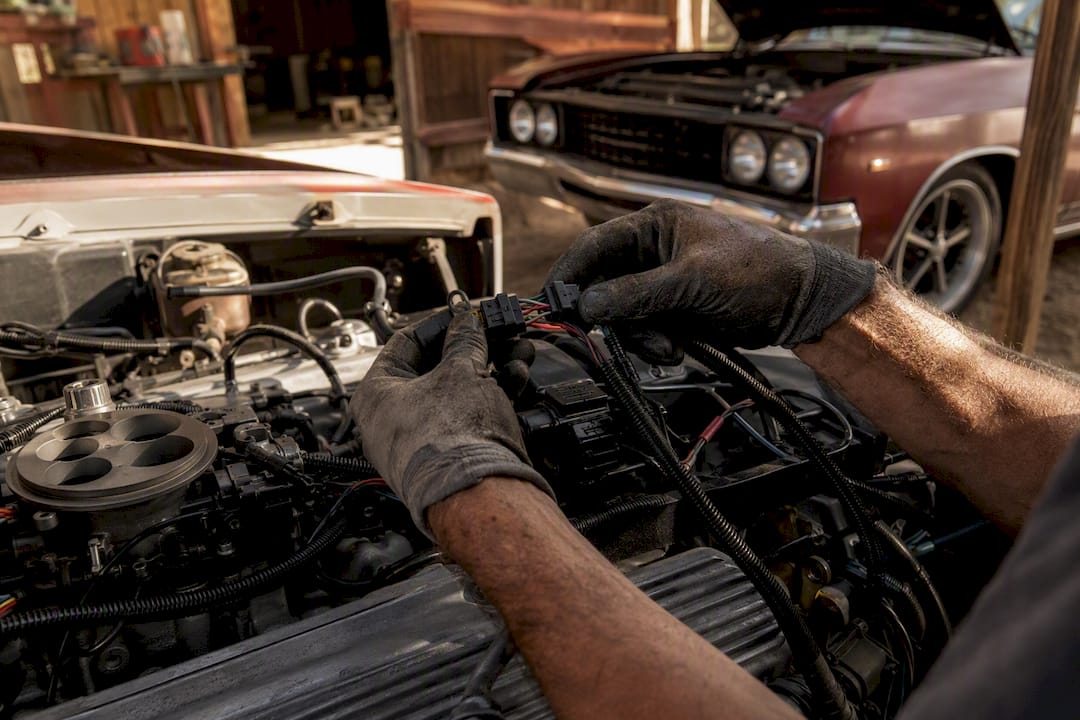
Your RPM trigger signal comes from either a distributor’s magnetic pickup, a hall-effect sensor, or a crank trigger, and the Sniper system needs to know which one it’s reading during setup. Get this wrong and the tach reads erratic or the engine stumbles at idle.
The coolant temperature sensor and O2 sensor each run their own dedicated circuit back to the ECU. Keep these wires away from spark plug wires and the alternator, since both are common noise sources that cause the RFI symptoms covered earlier.
Fuel pump wiring typically routes through a relay triggered by the ECU, not a direct switched feed, which protects the pump circuit and lets the ECU control priming on startup. If you’re running a master kit, the harness usually includes this relay pre-wired. If you’re sourcing components separately, budget time to wire the relay correctly, because skipping it is a common cause of hard-start complaints after installation.
Label every connector as you go. Sniper harnesses use similar-looking connectors for different sensors, and mixing up the coolant temp and O2 sensor leads is an easy mistake that costs an afternoon of troubleshooting later.
What Tuning Options Does Sniper EFI Offer?
The self-tuning wizard handles the heavy lifting for most street builds. You input your engine’s displacement, injector size, and a few basic parameters, and the system builds a safe, driveable base map before you’ve even left the driveway. Shops report this self-learning process routinely produces a usable street tune quickly, cutting down the dyno time needed compared to carburetor jetting sessions.
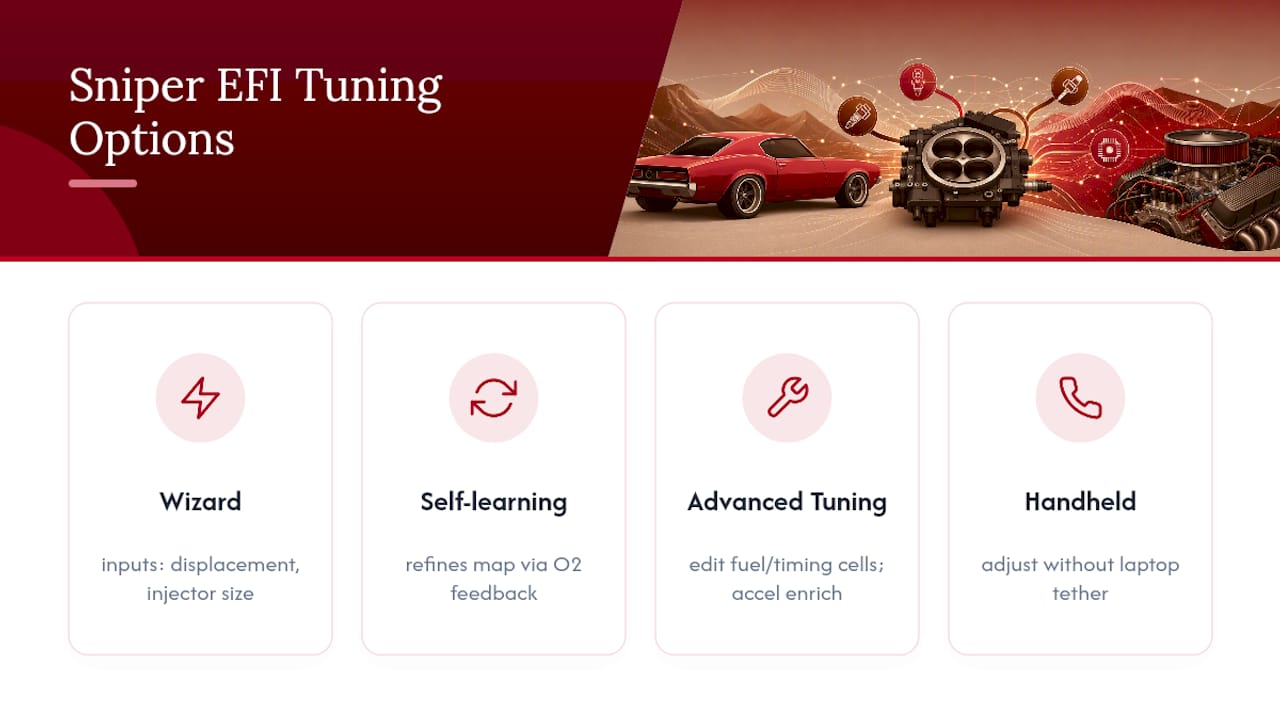
For most daily drivers and street performance builds, the wizard’s output plus a short drive cycle of self-learning is genuinely enough. The system continuously adjusts fuel trims based on your O2 sensor feedback, refining the map every time you drive.
If you want finer control, Holley’s software lets you access individual cells in the fuel and timing tables, adjust acceleration enrichment, set idle air control targets, and configure closed-loop parameters. This is where experienced tuners dial in cold-start behavior or address a flat spot the wizard didn’t fully resolve.
Handheld tuning is also available on most Sniper systems, letting you make adjustments without a laptop tethered to the vehicle. That matters if you’re tuning in a garage without easy computer access or making small tweaks after a test drive.
Most owners never touch advanced tuning parameters. The base wizard plus a few hundred miles of self-learning covers the vast majority of daily-driver and mild-performance applications.
What Does a Sniper EFI Install Actually Cost?
Base Sniper kits start around $999.95, though pricing varies by retailer and configuration. That figure covers the throttle body and ECU, but rarely the full installation cost.
Add an electric fuel pump if you don’t already have one, typically $150 to $400 depending on whether you need in-tank or inline, plus a fuel pressure regulator if your kit doesn’t include one. Fuel line and fittings for the feed and return circuit add another cost, especially if your existing fuel system was designed for a mechanical pump and gravity return.
A wiring harness suited to your specific engine platform is a cost many DIYers underestimate until they’re mid-install. Budget for an O2 sensor bung, whether you’re welding one in or using a clamp-on adapter, and factor in shop labor if you’re outsourcing the exhaust work.
Master kits bundle the pump, regulator, and fittings into one purchase, which usually costs less than buying each piece separately and eliminates compatibility guesswork between components. If you’re already running a capable electric pump, sourcing the throttle body alone and adding fittings piecemeal can save money, but only if you’re confident about matching flow rates and pressure specs correctly.
Where Should You Buy Sniper EFI Parts and Support?
Buy your throttle body kit through an authorized Holley dealer to guarantee warranty coverage and access to official tech support if you run into a stubborn tuning issue. For the wiring, fittings, and accessory components that make the install actually work, Ozkonic Kustomz sources directly from vetted manufacturers, which matters because counterfeit sensors and mismatched harness connectors are a real risk when buying wiring components from unverified online sellers.
Keep your kit’s documentation and any wiring diagrams handy during installation. If you hit a troubleshooting question that isn’t covered in this guide, Holley’s own support line and enthusiast forums remain the best resources for ECU-specific firmware questions.
What Installation Mistakes Should You Avoid?
Skipping the fuel pressure test before startup is the single most common mistake. Prime the system and check for leaks at every fitting before you ever turn the key, because a leak under pressure at idle is far easier to catch on the garage floor than after the engine’s running.
Don’t reuse old carburetor fuel line for the feed circuit. EFI systems run significantly higher pressure than a carbureted mechanical pump, and old rubber line can weep or fail under that load.
Ground the ECU directly to the engine block or a dedicated ground point, not a bolt shared with other accessories. A poor ground is behind a surprising number of “mystery” tuning complaints that have nothing to do with the fuel map.
Route the O2 sensor wire and harness away from spark plug wires from the start, rather than fixing it after you notice erratic readings. Prevention here costs five extra minutes; retrofitting it after diagnosing an RFI issue costs an afternoon.
Finally, don’t skip the self-tuning wizard’s initial questions to save time. Entering accurate injector size, engine displacement, and cam specs up front gives the ECU a far better starting map, which means less time driving around waiting for the system to correct a bad baseline.
What Upgrades Pair Well With Sniper EFI?
A digital gauge cluster that reads directly from your Sniper ECU eliminates the need for separate mechanical gauges cluttering your dash, and the Dakota Digital BIM interface makes that integration straightforward on Sniper 2 systems.
An upgraded ignition system pairs naturally with EFI, since consistent spark quality reduces the kind of electrical noise that causes RFI symptoms in the first place. If you’re already dealing with a marginal ignition coil, upgrading it alongside your EFI install solves two problems in one weekend.
Quality fuel fittings matter more than most builders expect. A proper swivel fitting at the throttle body connection reduces stress on the fuel line and makes future maintenance far less of a fight than a rigid fitting installed at an awkward angle.
For engines making serious power on the 8-injector systems, an upgraded fuel pump beyond the master kit’s included unit ensures you’re not leaving performance on the table due to fuel starvation at high RPM. Match pump output to your injector flow rating before assuming your baseline pump is adequate.
What Most Guides Get Wrong About This Swap
Most write-ups treat Sniper EFI installation like bolting on an intake manifold. It isn’t. The mechanical part is genuinely easy. The wiring and fitment checks are where builds stall out, and that’s the part conventional advice tends to gloss over in a rush to sell the “no laptop needed” pitch.
The horsepower numbers get oversold, too. A properly tuned carburetor and a Sniper system will often land in similar territory on peak power. The real argument for converting is what happens every other day you drive the car: no choke adjustments, no flooding on a hot restart, no rejetting when you drive from sea level to altitude.
If there’s one piece of advice worth repeating, it’s this: fix your mechanical issues before you convert. EFI doesn’t hide a vacuum leak or a tired ignition system, it makes them louder. Spend a weekend diagnosing your engine’s baseline health before spending a weekend on wiring.
Get the Right Parts for Your Sniper EFI Conversion
Ozkonic Kustomz is built for exactly this kind of project: a DIYer who needs wiring and fittings that match their engine platform the first time, not after a return and a second order. Every harness and fitting is sourced from vetted manufacturers, which means you’re not stuck troubleshooting a mismatched connector or a mislabeled pinout halfway through your install weekend.
If your Sniper EFI build needs a platform-correct wiring solution, the modular wiring kit gives you a clean starting point for routing power and ground circuits without splicing into factory wiring you’d rather leave intact. Pair it with the correct fuel fitting for your feed line, and fast shipping means you’re not sitting on a half-finished project waiting on backordered parts. Browse the current EFI wiring and fitting lineup and get your compatible parts list confirmed before you start turning wrenches.
Frequently Asked Questions
Is Holley Sniper EFI better than a carburetor? For daily-driven vehicles, yes, mainly for driveability. Cold starts, hot restarts, and altitude changes stop being tuning problems. Peak horsepower typically stays close to what a well-tuned carburetor already produced.
How long does a Holley Sniper EFI install take? Most competent enthusiasts finish the install in about a long weekend, assuming no major fabrication like welding an O2 bung or running new hardline.
What horsepower can Sniper EFI support? The 4-injector Sniper handles up to approximately 650 hp, while the 8-injector Super Sniper and Sniper 2 systems support up to roughly 1,250 hp.
Why does my Sniper EFI system have erratic readings? RFI or EMI interference is the most common cause, often from wiring routed too close to spark plug wires or the alternator. Grounding the ECU properly and shortening unused harness leads typically resolves it.
Do I need a new fuel pump for Sniper EFI? Most carbureted fuel systems use a mechanical pump that can’t produce the pressure EFI needs, so an electric pump is almost always required unless your car already runs one.
Sources
Recommended
- Real Horsepower Upgrades Under $500 That Actually Work – Ozkonic Kustomz LLC
- Dakota Digital BIM Expansion Holley Sniper 2 EFI Interface – Ozkonic Kustomz LLC
- Types of Fuel System Upgrades for Performance Builds – Ozkonic Kustomz LLC
- Top 4 holley.com Alternatives for Aftermarket Parts 2026 – Ozkonic Kustomz LLC