
Yes, your VIN is the fastest, most reliable way to find the right part. Confirm the full 17-character VIN, decode it in an OEM parts catalog or a VIN-based parts finder, then match the resulting OEM part number against the removed part’s markings, connector layout, and your vehicle’s build date before you buy.
TL;DR:
- Accurate VIN decoding is essential because minor errors can lead to selecting incompatible parts, especially with mid-year design changes or supplier shifts.
- Using OEM parts catalogs and dealer verification ensures the OEM part number matches your vehicle’s build date and configuration, reducing returns.
- VIN-based tools like the NHTSA VPIC decode provide vehicle details but do not supply exact part numbers, so manual cross-checking remains necessary.
- Third-party VIN search engines vary in accuracy depending on their underlying database and lack precise fitment guarantees, requiring additional verification.
- Confirm OEM part numbers, connector details, and build-date qualifiers through physical comparison or dealer contact before purchasing to avoid mismatches.
Table of Contents
- How to Find Parts by VIN: Locating and Verifying Your VIN First
- What Are the Best Tools to Search Parts by VIN?
- Step-by-Step: How to Decode a VIN and Order the Right Part
- Where VIN Matching Falls Short (and How to Catch It)
- How Ozkonic Kustomz Verifies Fitment Before You Order
- The Workflow That Actually Prevents Wrong-Part Returns
- Order Verified Parts Matched to Your VIN
- Sources
How to Find Parts by VIN: Locating and Verifying Your VIN First
A parts search is only as good as the VIN you type into it. Get one character wrong and you’ll pull up a part for a truck that isn’t yours.
The full 17-character VIN typically shows up in several spots:
- Driver-side dashboard, visible through the windshield from outside the vehicle
- Driver door-jamb sticker (open the door and look at the frame)
- Vehicle registration or title
- Insurance card or policy documents
- Sometimes stamped into the engine block or frame rail
Photograph the VIN under good light rather than reading it off a smudged sticker from memory. Certain characters get confused constantly: the letter “B” versus the number “8,” a capital “I” versus the number “1,” “O” versus “0.” Cross-check what you photographed against your registration or title, since a mismatched digit here is one of the most common reasons a parts lookup returns the wrong result before you’ve even started.
What Are the Best Tools to Search Parts by VIN?
Not every VIN lookup tool serves the same purpose, and picking the wrong one for the job wastes time.
OEM parts catalogs and dealer EPCs (electronic parts catalogs) sit at the top of the reliability chain. These systems map your vehicle’s actual factory build sheet to original part numbers and the chain of superseding numbers when a part gets redesigned. An OEM catalog is the closest thing to seeing exactly what left the factory attached to your VIN.
NHTSA’s VPIC decoder is the authoritative government source for raw VIN data. Manufacturers report this information directly, and the VPIC tool will decode plant location, model year, and build attributes even from a partial VIN. It won’t hand you a part number, but it confirms the vehicle facts a parts search depends on.
Third-party VIN-based parts search engines trade some precision for speed. They let you save a vehicle to a digital profile and filter by trim, engine, and factory options in plain language instead of digging through catalog codes. Their accuracy hinges entirely on which professional parts database sits behind them.
Pro Tip: Before trusting any VIN-based parts search, check what database powers it and whether it publishes a fitment guarantee. A tool built on a recognized industry parts database will consistently outperform one that just scrapes generic “compatible with” listings.
For a broader look at how different online sources stack up, see this comparison of aftermarket parts websites.
Step-by-Step: How to Decode a VIN and Order the Right Part
Skipping steps here is exactly how wrong parts end up back in a box headed for return shipping. Follow this order every time.
- Confirm the full 17-character VIN. Photograph it and compare it character by character against your title or registration. This single step eliminates the most common source of lookup errors.
- Decode the VIN in an OEM catalog or NHTSA VPIC. This surfaces your engine size, trim level, and factory-installed options, and gets you into the exploded-view diagrams that show exactly how a part sits on the vehicle.
- Pull the OEM part number. Note any qualifiers attached to it, like “fits after [date]” or “up to VIN [range].” These qualifiers exist because manufacturers change suppliers or designs mid-model-year, and they’re easy to miss if you’re rushing.
- Compare the old part physically. Match its stamped part number, connector pin count, and mounting points against the photos in the catalog or listing before you order the replacement.
- Call the dealership parts counter if anything doesn’t line up. Give them your VIN and the OEM number you found. Dealer parts staff have access to the same electronic parts catalog and can resolve ambiguity a website can’t.
Dropdown-based year/make/model searches routinely miss trim-specific and engine-specific variations that a VIN-based search catches automatically, because a VIN encodes exact factory configuration in a way a generic dropdown simply can’t.
That gap is where most wrong-part returns come from. A dropdown search treats every 2021 half-ton truck the same. Your VIN knows whether yours came with the tow package, the heavy-duty suspension, or the smaller engine option, and that difference is often the entire reason two parts that look identical in a photo don’t actually fit the same way.
Where VIN Matching Falls Short (and How to Catch It)
A VIN tells you how the vehicle left the factory. It says nothing about what happened to it afterward.
- Aftermarket modifications, prior collision repairs, or swapped components won’t show up in any VIN decode.
- Mid-year supplier or design changes mean two trucks with VINs one digit apart can need different parts. Check the build date on the door-jamb sticker against any “fits after” or “up to” notes in the catalog listing.
- Third-party marketplace listings sometimes claim “fits your VIN” without actually cross-referencing OEM numbers or posting real photos. Treat that phrase as a starting point, not proof.
- Always compare the OEM part number, connector pin count, and mounting interface between the old part and the new listing. This one habit catches the vast majority of mismatches before you pay for shipping.
Pro Tip: If a listing can’t show you a clear photo of the part’s connector or an OEM cross-reference number, treat that as a red flag rather than a shortcut. Call the dealer with your VIN before you order.
How Ozkonic Kustomz Verifies Fitment Before You Order
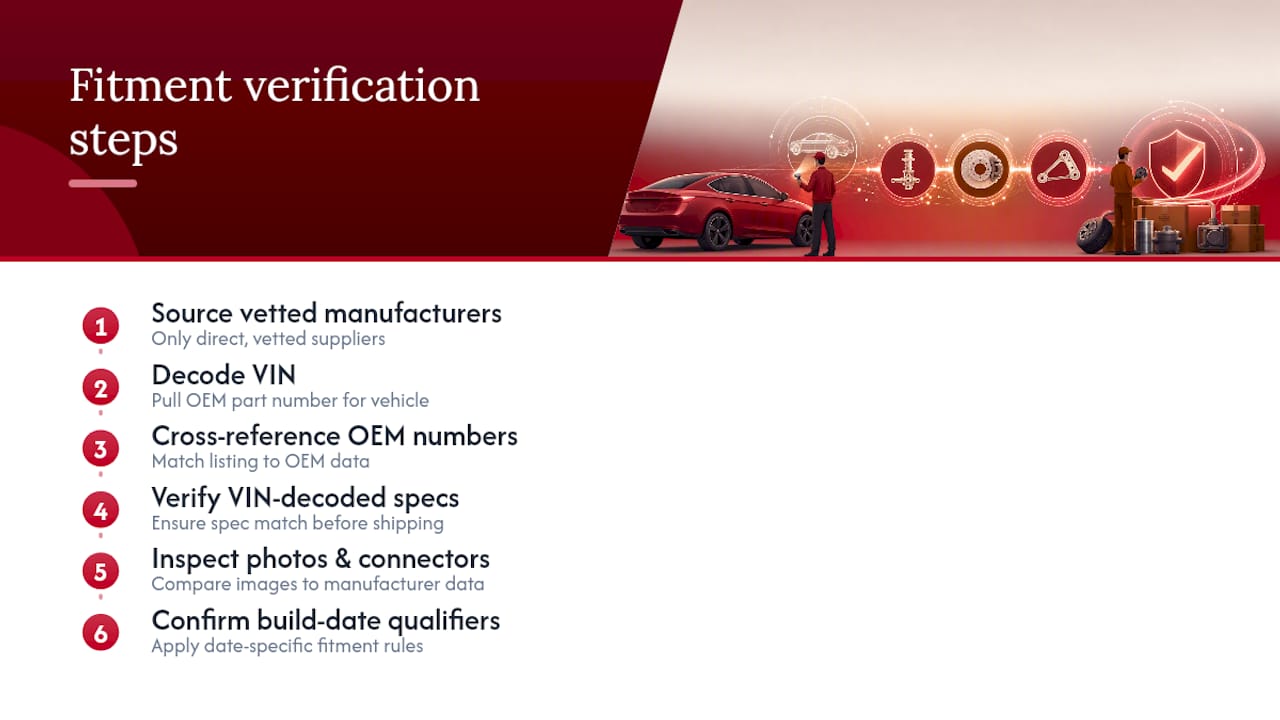
We source directly from vetted manufacturers and cross-reference every listing against OEM part numbers rather than relying on generic “fits most” descriptions. That’s not a marketing line. It’s the same discipline outlined above: decode the vehicle, pull the OEM number, and confirm before anything ships.
Our process runs through the same checks a careful DIYer should run at home. We verify VIN-decoded specs, cross-reference OEM numbers, check photos and connector details against manufacturer data, and confirm build-date qualifiers where they apply. When something’s ambiguous, our support team works through it the same way a dealership parts counter would, before a customer commits to a purchase. Learn more about how we vet reputable aftermarket parts brands as part of that process.
The Workflow That Actually Prevents Wrong-Part Returns
Most guides treat VIN decoding as the finish line. It’s the starting line. The real work, and the step people skip when they’re in a hurry, is the physical comparison at the end: OEM number against OEM number, connector against connector, build date against catalog qualifier.
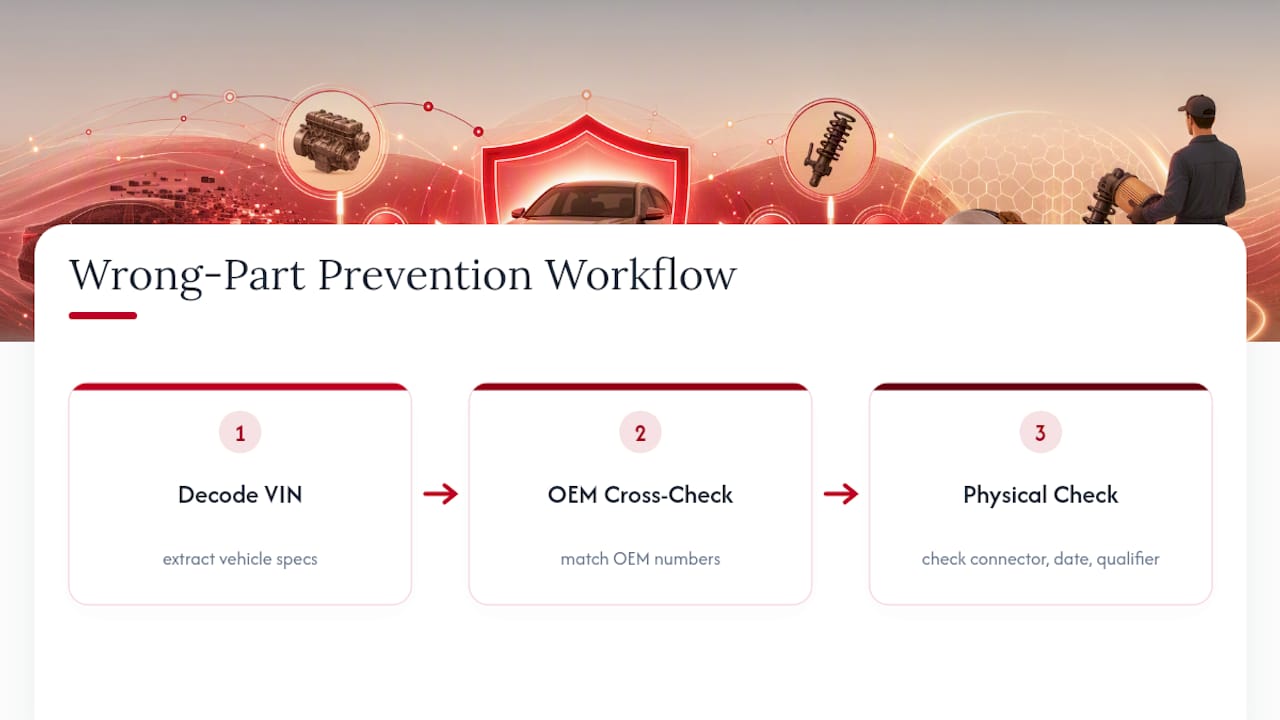
Conventional advice oversells convenience and undersells verification. A VIN-based search will absolutely beat a year/make/model dropdown for accuracy, but no automated tool catches a mid-year supplier change or a prior repair on its own. That’s a human check, every time.
If you take one thing from this, prioritize the dealer-verification loop over the initial search tool. Decode fast, but confirm slow. A five-minute phone call to a parts counter costs less than shipping a wrong part back. Aftermarket sourcing done well follows this exact discipline, and it’s why Ozkonic Kustomz builds the same cross-referencing into every order before it ships.
— Ozkonic Kustomz
Order Verified Parts Matched to Your VIN
We cut out the guesswork of generic online listings by cross-referencing parts against OEM numbers before they reach your cart, helping reduce fitment errors.
Here’s what that looks like when you’re ready to order:
- Parts sourced from vetted manufacturers, not unverified third-party sellers
- OEM cross-referencing and compatibility checks built into the listing process
- Straightforward returns if something still doesn’t line up
- Support available to help confirm fitment against your VIN before you buy
Start with a part you already need. The modular wiring kit and the hood latch kit are two places where OEM cross-referencing matters most, since wiring and latch hardware vary by build date more than most drivers expect. Have your VIN and OEM number ready, and reach out to our team if you want a second check before you check out.