
If you drive mostly pavement and want 33s to sit level, a leveling kit or mild coilover covers it. If you’re running 35s off-road, look at a mid-tier coilover or a moderate lift kit. If you’re building a desert pre-runner, you need long-travel, full stop. Before you spend a dollar, confirm your exact engine, cab, drivetrain, and whether your truck has PowerBoost or CCD, because those options change what actually fits.
- Daily driver, stock to 33s: leveling kit or entry coilover
- Weekend off-roader, 35s: mid-tier coilover, 4 to 6 inch lift
- Serious desert running, 37s+: long-travel or mid-travel kit
- Next step: pull your build sheet and verify PowerBoost/CCD before ordering anything
Key Takeaways
Choosing the right F-150 suspension upgrade starts with target tire size, not lift height, and requires budgeting for alignment, control arms, and CCD or PowerBoost compatibility before ordering.
| Point | Details |
|---|---|
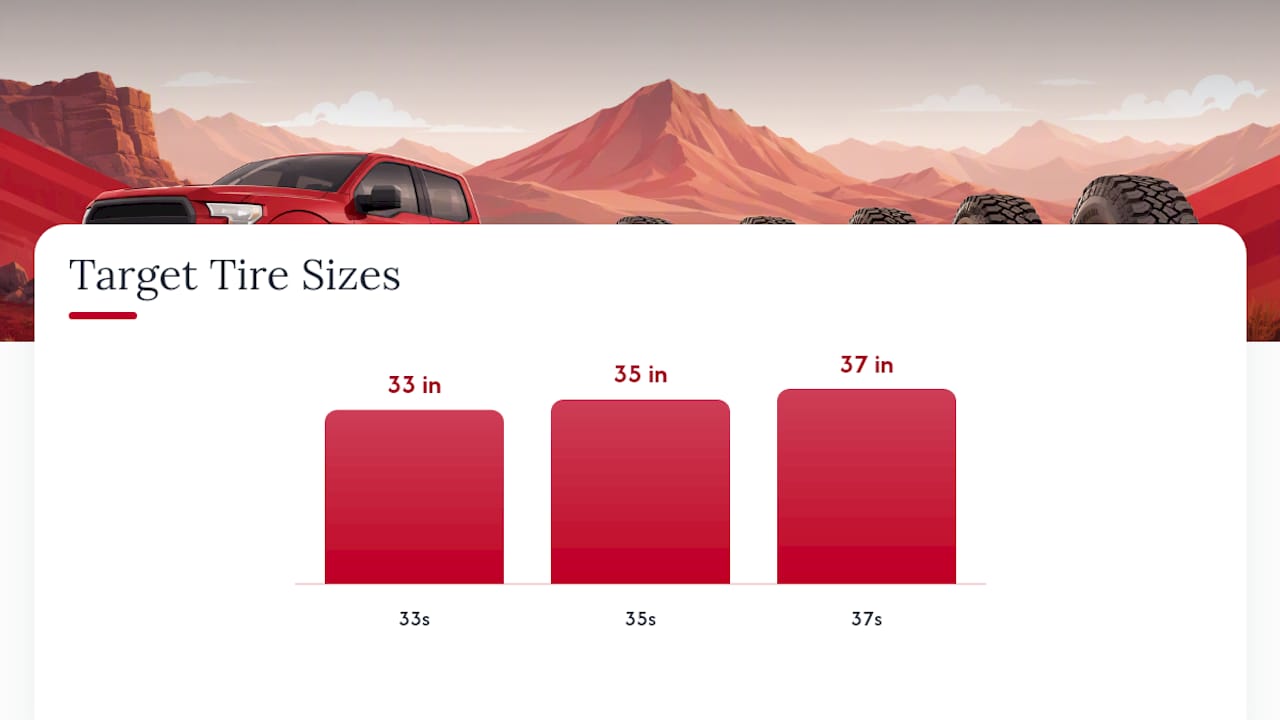
| Start with tire size | Pick 33s, 35s, or 37s first, then choose the kit tier that supports that size. |
| Budget beyond the box | Alignment, UCAs past 3 inches, and regear at 37 inches routinely double the sticker price. |
| Verify PowerBoost and CCD | Confirm your exact truck options before shopping, since many kits exclude CCD trucks. |
| Match shocks to your ride goal | Bilstein 5100 improves control but rides firmer than stock, per owner forum feedback. |
| Get VIN-verified fitment | Ozkonickustomz checks part numbers against your exact VIN and options before shipping. |
Table of Contents
- Which F-150 Suspension Upgrade Tier Fits Your Budget?
- Leveling Kit vs. Suspension Lift vs. Long-Travel: What’s Actually Different?
- What Supporting Parts Actually Cost You
- Does Your 2021+ F-150 Have PowerBoost or CCD Compatibility Issues?
- How Do You Choose the Right Upgrade for Your Truck?
- Real Examples of F-150 Suspension Kits by Tier
- What Should You Ask Your Shop Before Installing?
- Fitment Checks We Rely On Before Any F-150 Install
- What the Install Bay Actually Sees
- Get Your Fitment Verified Before You Order
- Sources
Which F-150 Suspension Upgrade Tier Fits Your Budget?
Most F-150 suspension upgrades fall into four honest categories, and knowing which one you’re actually shopping for saves you from buying twice.
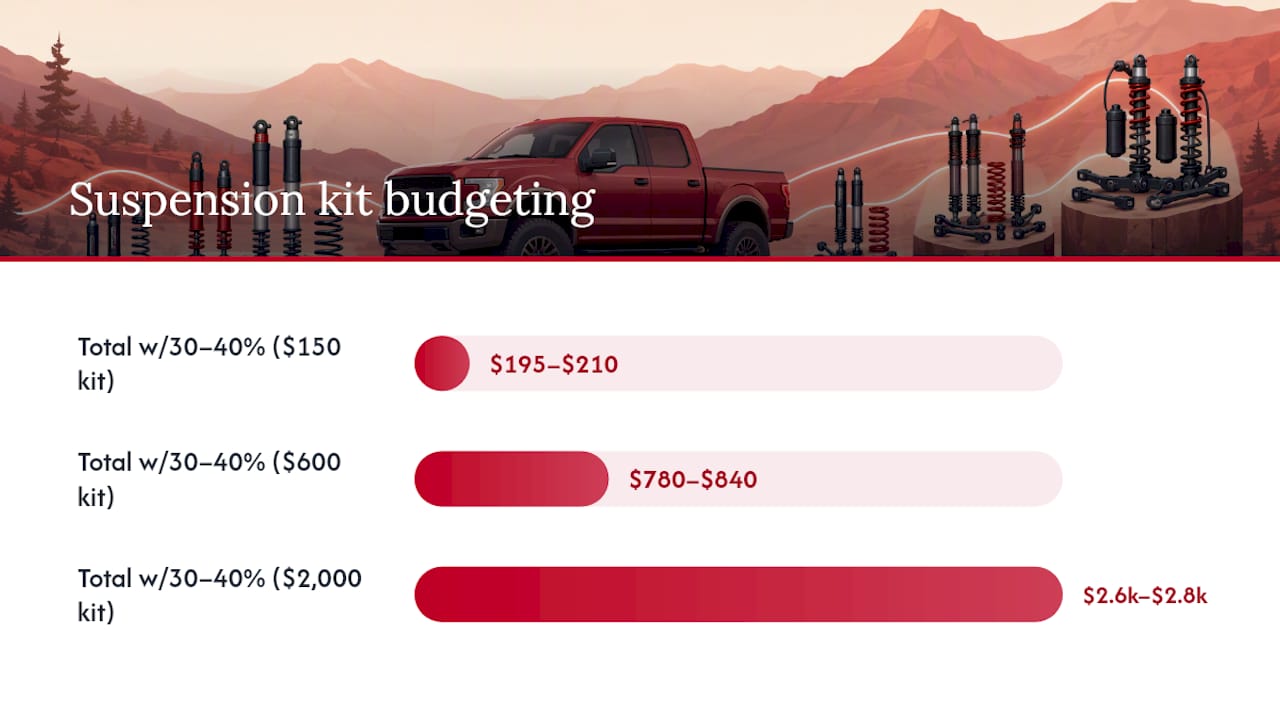
- Leveling tier ($150 to $600): Corrects the factory rake, fits up to 33s comfortably, and asks nothing extra of your wallet beyond an alignment.
- Mid tier: Coilovers or a moderate lift kit, built for 35s and moderate off-road use, usually needs upper control arms.
- Premium tier: Higher-end coilovers with remote reservoirs, better damping control, and real off-road manners at speed.
- Long-travel tier: Full custom or kit-based long-travel arms, built for whoever actually hits whoops and jumps regularly.
Each step up buys more wheel travel and better damping, not just more height. A $2,000 kit that rides worse than your stock shocks isn’t an upgrade, it’s a downgrade with a bigger price tag.
Pro Tip: Budget an extra 30 to 40 percent on top of the kit price for alignment, control arms, and labor. The box price is never the final number.
Leveling Kit vs. Suspension Lift vs. Long-Travel: What’s Actually Different?
These terms get thrown around like they’re interchangeable. They’re not.
- Leveling kit: Raises the front only, typically 1.5 to 2.5 inches, to match the factory rear rake. Fine for 33s, cheap, minimal drama.
- Suspension lift: Raises the whole truck several inches using taller springs, spacers, or new control arms, opening room for larger tires.
- Mid-travel: Extends wheel travel using longer control arms and shocks without a full long-travel conversion, better ride at speed over rough terrain.
- Long-travel: Replaces the entire front geometry, often widening track width, built for desert speed rather than street comfort.
Here’s the rule that saves you money: pick your tire size first, then work backward to the kit that supports it. Lift height is a marketing number. Tire clearance is the real spec.
What Supporting Parts Actually Cost You
The kit is never the whole bill. Skip these and you’ll be back in the shop within a month.
- Alignment: Required after any lift or leveling kit, no exceptions.
- Upper control arms (UCAs): Needed once you go beyond roughly 2.5 to 3 inches of lift to correct CV angle.
- Regear: Larger tires change your effective gear ratio enough that towing and fuel economy suffer without it.
- CV and ball-joint inspection: Steeper angles from a lift accelerate wear if nobody checks them.
- Brake and ABS sensor checks: Wheel speed sensors and brake lines can get stressed by extended travel.
This is where aggregated upgrade guides tend to undersell the real cost. A $400 leveling kit with no alignment and no UCA is not a $400 upgrade, it’s a future alignment shop visit waiting to happen.
Pro Tip: Dropping from 37s to 35s often saves more money in avoided regear and control arm costs than any discount kit will ever save you upfront.
Does Your 2021+ F-150 Have PowerBoost or CCD Compatibility Issues?
If your truck is a 14th-generation F-150, you have two options that quietly wreck fitment assumptions: PowerBoost hybrid and CCD, Ford’s continuously controlled damping system.
- PowerBoost: The hybrid battery and motor add real weight over the rear axle, which changes how much a kit actually settles versus its advertised lift height.
- CCD: Many kits simply exclude CCD-equipped trucks, since the factory electronic dampers use sensors and control modules that non-CCD kits can’t replicate.
- Fitment checklist: engine, cab style, drivetrain, PowerBoost status, and CCD status, in that order, before you click buy.
- Look for kits explicitly labeled “CCD-specific” or “without sensor,” since generic listings often assume the base setup.
How Do You Choose the Right Upgrade for Your Truck?
- Pick your target tire size first. Everything downstream depends on this number.
- Match tire size to tier. 33s lean leveling, 35s lean mid-tier, 37s and up lean premium or long-travel.
- Confirm PowerBoost and CCD status. This alone eliminates half the kits on the market for many 2021+ trucks.
- Budget supporting parts. Alignment always, UCAs past 3 inches, regear at 37 inches.
- Vet your installer. Ask about shock valving experience and warranty terms before you hand over the truck.
If you’re looking at anything beyond about 3 inches of front lift on stock geometry, stop researching alone and call a shop that’s actually installed that specific kit on a CCD or PowerBoost truck before.
Real Examples of F-150 Suspension Kits by Tier
Leveling and entry level: ReadyLIFT and Rough Country both build straightforward leveling kits and small lift kits that fit 33s with minimal fuss, and Eibach Pro-Truck offers lowering and leveling springs for a more street-tuned feel.
Mid tier: Bilstein 5100 shocks are the most commonly recommended upgrade in this range, though owners on F-150 forums note they ride firmer than stock, trading comfort for control. BDS, Fabtech, and Zone all sell 4 to 6 inch lift kits built for 35s.
Premium coilover: Bilstein 6112, ICON, and Fox all produce coilover systems with remote reservoirs or better internal valving for real off-road use, and Ford Performance sells a direct-fit suspension package under its own part number for buyers who want factory-backed compatibility.
Long-travel: King shocks, Cognito, Camburg, and Baja Kits all build long-travel systems, while Bilstein 8112 shocks show up frequently in mid-travel and long-travel builds for their reservoir capacity and heat management.
Pro Tip: A “loaded” strut assembly with the spring already mounted installs faster and rides more predictably than a bare shock you have to pair with a separate spring rate.
What Should You Ask Your Shop Before Installing?
Before you drop the truck off, ask the shop to confirm fitment against your exact VIN and option codes, not just the model year. Ask directly whether they’ve worked on a CCD-equipped truck before, since the sensor wiring trips up installers who haven’t seen it.
- Confirm which supporting parts are included versus billed separately.
- Request a post-install alignment and a short test drive before you leave the lot.
- Ask what the manufacturer warranty covers versus what the installer covers, since those two rarely overlap fully.
Expect a lead time of one to three weeks for the kit to arrive, a single day for most mid-tier installs, and a recheck appointment after 50 to 100 miles to retorque bolts and verify alignment held.
Fitment Checks We Rely On Before Any F-150 Install
Every part number gets cross-checked against the exact VIN before it ships. For CCD trucks, we confirm a CCD-specific version exists rather than assuming a standard kit will work. Anything past 3 inches gets flagged for UCA inclusion automatically.
Pro Tip: After install, retorque all suspension hardware and recheck alignment at 50 to 100 miles, factory torque specs loosen slightly as everything seats.
What the Install Bay Actually Sees
Most buyers underestimate one thing: the tire, not the lift, is what breaks the budget. We see it constantly. Someone budgets for a 6 inch kit but not the regear that comes with 37s, then wonders why the bill doubled. The trucks that ride best long-term usually belong to owners who chose a slightly smaller tire paired with a proper kit over the biggest tire a cheap kit could technically clear.
Get Your Fitment Verified Before You Order
Ordering suspension parts online is a gamble unless someone actually checks your VIN against the part number, and that’s the gap Ozkonickustomz exists to close. We source directly from vetted manufacturers, verify fitment against your exact engine, cab, drivetrain, and CCD or PowerBoost options before anything ships, and back it with straightforward returns if something doesn’t match.
If you’re building out a towing setup, our LoadLifter 5000 air spring kit handles rear sag without touching your ride height, and our rear ride control air bags give you adjustable support for variable loads. Need install hardware too? Check our modular wiring kit for accessory wiring during your build. Reach out with your VIN and target tire size, and we’ll confirm exactly what fits before you spend a dollar.
Sources
- Ride quality upgrade advice (tires/rims/shocks/etc)
- Part Details for M-18000-F15BA
- 8 Best F150 Suspension Upgrades 2026
- Lift Kit vs. Leveling Kit: What’s the Difference? - Les Schwab
Always cross-check any kit’s fitment notes against your own VIN and option codes before ordering, generic year-and-model listings miss the details that actually matter on a 2021 and newer truck.