
For most drivers, the best cat-back exhaust is a vehicle-specific, 304-stainless system with a resonator built in. It balances a deeper tone against everyday livability, and it lasts. If you want a track car scream or a raw, unresonated bark, that’s a valid choice too, but it comes with more cabin drone on the highway.
TL;DR:
- Compatibility with your specific vehicle trim and model year is crucial; verify fitment tables and consult sellers if uncertain before purchasing.
- Choose stainless steel for longevity and resistance in most climates, reserving titanium for weight-conscious track builds due to higher costs.
- Prioritize systems with a resonator to balance aggressive sound and cabin comfort, especially for daily driving, while track use can opt for minimally resonated setups.
- Proper installation usually takes 1 to 2 hours with bolt-on kits, but custom fabrication is more time-consuming and costly, requiring careful fitment checks.
- Seller transparency on fitment, photos, warranty terms, and clear return policies significantly reduces the risk of fitting issues and dissatisfaction.
Table of Contents
- What Makes the Best Cat-Back Exhaust for Most Drivers
- How Do You Choose the Right Cat-Back Exhaust?
- Will a Cat-Back Exhaust Make My Car Louder or Faster?
- Materials, Pricing, and How Long Installation Takes
- Fitment Pitfalls and Common Installation Problems
- Why Fitment-First Sourcing Matters More Than Brand Name
- Which Cat-Back Fits Your Build: Daily, Weekend, or Track
- Get the Right Cat-Back the First Time With Ozkonic Kustomz
- Sources
- FAQ
What Makes the Best Cat-Back Exhaust for Most Drivers
A cat-back exhaust is exactly what the name says: everything from the back of the catalytic converter to the tailpipe. It swaps the factory muffler, resonator, and piping, usually leaving emissions equipment untouched, which is why a properly built cat-back typically stays emissions-compliant even after installation.
The real risk isn’t the exhaust note. It’s fitment. A generic “universal fit” kit forces a shop to cut, weld, and re-hang piping that was never engineered for your chassis, and that’s how you end up with rattles, leaks, or a tip that sits crooked. Buying a kit built and photographed for your exact year, make, and model removes that guesswork before it starts.
Material matters almost as much. 304 stainless steel is the standard for a reason: it resists road salt and heat cycling far better than mild steel, and it holds its finish for years. Titanium shaves weight and looks sharp, but it typically runs 2 to 3 times the cost of stainless, which only makes sense if you’re chasing grams for a track build.
Before buying, a product page should show you:
- A vehicle fitment table listing exact trims and model years, not just a general platform.
- Real install photos, not just a studio shot of the exhaust alone.
- A stated resonator design, since that’s what separates a mellow cruiser from a car that drones at 2,500 RPM.
- A clear warranty on welds, hangers, and finish.
Pro Tip: If a listing doesn’t show a fitment table for your specific trim, email the seller before you buy. A vendor who can’t answer a fitment question in a day is not one you want handling a return.
How Do You Choose the Right Cat-Back Exhaust?
Run through this before you add anything to a cart:
- Confirm fitment first. Match your exact trim, engine, and model year against the listing, not just the general vehicle name.
- Pick a material for your climate and mileage plans. Stainless for anyone keeping the car more than a few years; mild steel only if budget is the deciding factor and you don’t mind replacing it sooner.
- Check pipe diameter against your engine. Bigger isn’t automatically better. Oversizing piping beyond what the engine can actually flow can soften low-end torque instead of adding power.
- Look at the muffler internals. Straight-through designs flow better and sound more aggressive; chambered designs are quieter and more daily-friendly.
- Verify a resonator is included or planned. Skipping it saves a little weight and cost but usually costs you comfort at cruising RPM.
- Read the warranty terms. Weld cracks and hanger failures happen; know what’s covered before something breaks at 30,000 miles.
- Check local noise and inspection rules. Even a compliant, cat-retained system can run loud enough to draw attention in some areas.
Before checkout, ask the seller directly:
- Does this exact kit include a resonator, or is it a straight pipe?
- What pipe diameter does it use, and is that the recommended size for my engine?
- Can you provide install photos on my specific model?
- What’s covered under warranty, and for how long?
A seller who answers all four without hedging is one worth buying from.
Will a Cat-Back Exhaust Make My Car Louder or Faster?
Set your expectations correctly here: a cat-back is a sound and refinement upgrade first, a power upgrade second. On most naturally aspirated cars, expect roughly 5 to 15 horsepower, often less without supporting mods. Turbocharged cars can see more, especially once paired with a tune, since freer flow downstream lets the turbo work with less backpressure.
Tone and drone come almost entirely down to resonator design, not the muffler alone. Resonator selection is the primary lever for controlling cabin drone, and better systems use side-branch or Helmholtz resonators tuned to cancel the specific frequency that resonates through the cabin at highway RPM, rather than just muffling everything indiscriminately.
Quick guide to what changes what:
- Straight-through muffler, no resonator: loudest, most aggressive, most likely to drone on the highway.
- Straight-through with a tuned resonator: aggressive at throttle, calmer at cruise.
- Chambered muffler: quietest option, mellower tone, least likely to fatigue you on a road trip.
If you daily drive the car, resonated wins. Save the raw, unresonated setup for a car that lives mostly at the track or on weekend runs.
Materials, Pricing, and How Long Installation Takes
Three materials dominate the cat-back market, and each one trades cost against longevity differently.
- Mild steel is the cheapest option but rusts fastest, especially in states that salt roads in winter. Expect a shorter service life.
- 304 stainless steel resists corrosion and heat far better, holds its factory shine longer, and is the material most quality kits use as their baseline.
- Titanium is the lightest and most exotic, but at 2 to 3 times the cost of stainless, it’s usually reserved for weight-conscious track builds rather than daily drivers.
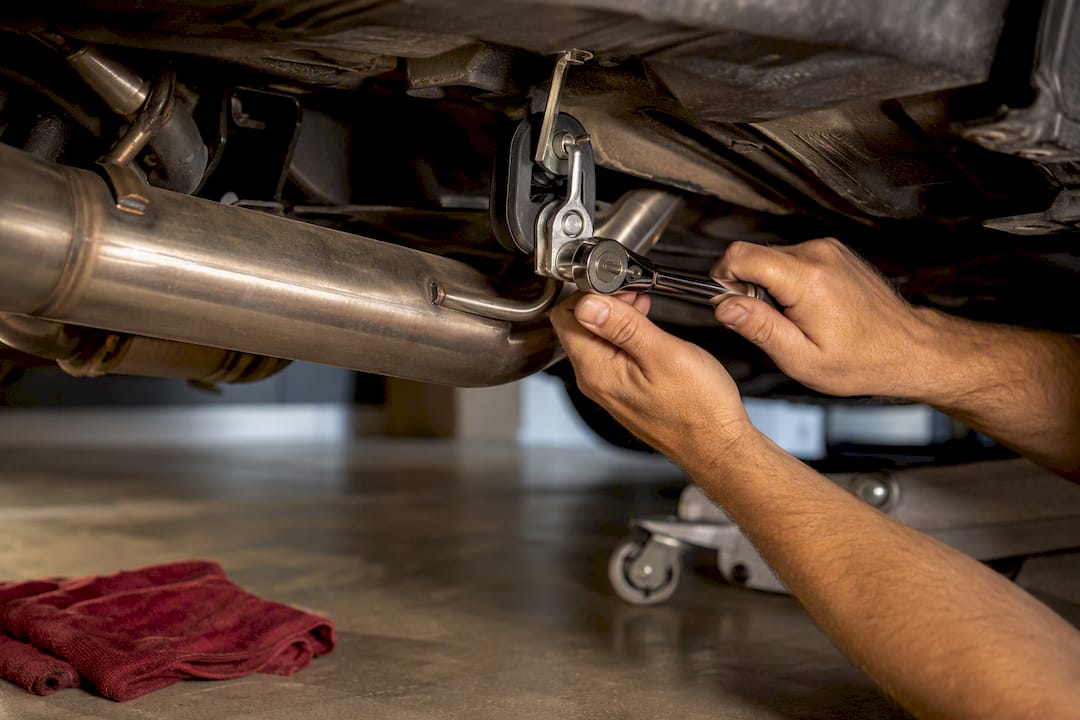
On cost and time, a bolt-on cat-back kit generally installs in 1 to 2 hours with shop labor running $100 to $300, assuming the hangers and flanges match your car without modification. Custom fabrication work, where a shop bends and welds piping to fit a non-standard setup, runs considerably higher and can stretch into a full day depending on complexity.
DIY installation is realistic for anyone comfortable with a socket set and a floor jack, since most bolt-on kits use factory hanger points. Where it gets harder is on cars with tight tip clearance or interference-prone rear bumpers, where a shop’s experience with that exact model saves real frustration.
Fitment Pitfalls and Common Installation Problems
Most cat-back complaints trace back to one thing: a kit that wasn’t actually built for that car. Before you install anything, cross-check the seller’s fitment table against your VIN-specific trim, not just the model name, and compare their install photos against your car’s rear bumper cutout and hanger locations.
Common issues to watch for:
- Hanger mismatch: rubber isolators that don’t line up, causing rattles or sag over time.
- Exhaust leaks at the flange: usually from a gasket that wasn’t replaced or a connection torqued incorrectly.
- Tip clearance problems: tips that sit too close to the bumper cutout, especially on cars with staggered or offset factory openings.
- Muffler-to-frame contact: a sign the kit’s dimensions don’t match your chassis, not a minor annoyance to ignore.
Before buying, confirm the seller’s return window and whether they cover return shipping on a fitment failure. A vendor confident in their fitment data usually offers a straightforward return policy without much pushback.
Why Fitment-First Sourcing Matters More Than Brand Name
Some vendors source cat-back exhausts directly from vetted manufacturers instead of relying on secondhand distributors, which can reduce counterfeit and mismatched-fitment parts found in some marketplace listings. Listings should confirm the part fits your exact vehicle before shipping, avoiding the inconvenience of multiple shipping attempts due to fitment issues.
That approach lines up with what serious buyers actually prioritize. Enthusiast communities consistently value vendor fitment documentation and clear return policies nearly as much as brand reputation, because a well-known name doesn’t help you if the part doesn’t bolt up.
A kit that fits perfectly and sounds decent beats a famous brand that needs a grinder and three trips to the parts store.
What to check before you buy from any seller:
- A documented fitment table specific to your trim and year.
- Clear photos of the actual part, not stock renderings.
- A stated return and warranty policy you can read before purchase, not after.
If your model isn’t listed or you’re unsure about a resonator spec, contact support before ordering rather than guessing.
Which Cat-Back Fits Your Build: Daily, Weekend, or Track
If you daily drive your car, a resonated 304 stainless system is the right default. It handles road salt, holds up over years of commuting, and keeps drone manageable on a two-hour highway drive. That’s not a compromise, it’s the smart trade for a car you actually live in.
Weekend and enthusiast cars have more room to experiment. A lightly resonated or valved system lets you dial in a louder, more aggressive tone for weekend drives while still tolerating the occasional commute. For a deeper look at parts chosen around daily usability, our guide to performance parts for daily drivers covers this tradeoff further.
Track builds are the exception to the resonator rule. Titanium or minimally restricted systems make sense when weight and peak flow matter more than cabin comfort, since nobody’s worried about drone during a track session.
— Ozkonic Kustomz
Get the Right Cat-Back the First Time With Ozkonic Kustomz
The company was started in response to enthusiasts having difficulties installing “universal fit” exhausts that required modifications. Listings typically focus on the key question: does this part fit your vehicle, including exact trim and year before purchase.
Many product pages display fitment notes, real photos, and material specs clearly on the page for user convenience. Pair a new exhaust with supporting work like a stage tune if you’re chasing real power gains rather than just a louder note. Support teams ideally answer questions about resonator design, pipe diameter, or kit clearance before an order is placed.
Browse our current exterior accessory listings, starting with the AUTO-LOC hood latch kit, and check the fitment table against your VIN before you add anything to your cart. If something doesn’t fit once it arrives, our return process is built to be simple, not a fight.
Sources
- Exhaust Systems: Cat-Backs, Headers & Custom Exhaust | WheelPrice
- Best cat-back exhaust (Redline Car Garage)
FAQ
Which exhaust brand is the best?
No single brand wins across every vehicle, since fitment quality and resonator design vary by model. The better question is which vendor documents fitment for your exact trim and backs it with a clear warranty.
Is Flowmaster or Borla better?
Both are established names with different tonal signatures, Flowmaster generally leans deeper and more aggressive, Borla tends toward a smoother, higher-pitched note. The right pick depends on whether you prioritize a raw tone or refined highway comfort, not brand alone.
Which cat-back exhaust system is the loudest?
Straight-through mufflers without a resonator produce the loudest, most aggressive sound but also the most cabin drone at cruising speed. Resonated systems trade some volume for a quieter, more livable highway ride.
Do cat-back exhausts sound better than stock?
Most owners find a quality cat-back sounds noticeably deeper and more refined than a factory system, largely because aftermarket resonator and muffler designs are tuned for tone rather than just noise reduction. Perceived sound quality from real owner clips tends to matter more than raw decibel numbers when judging this.